
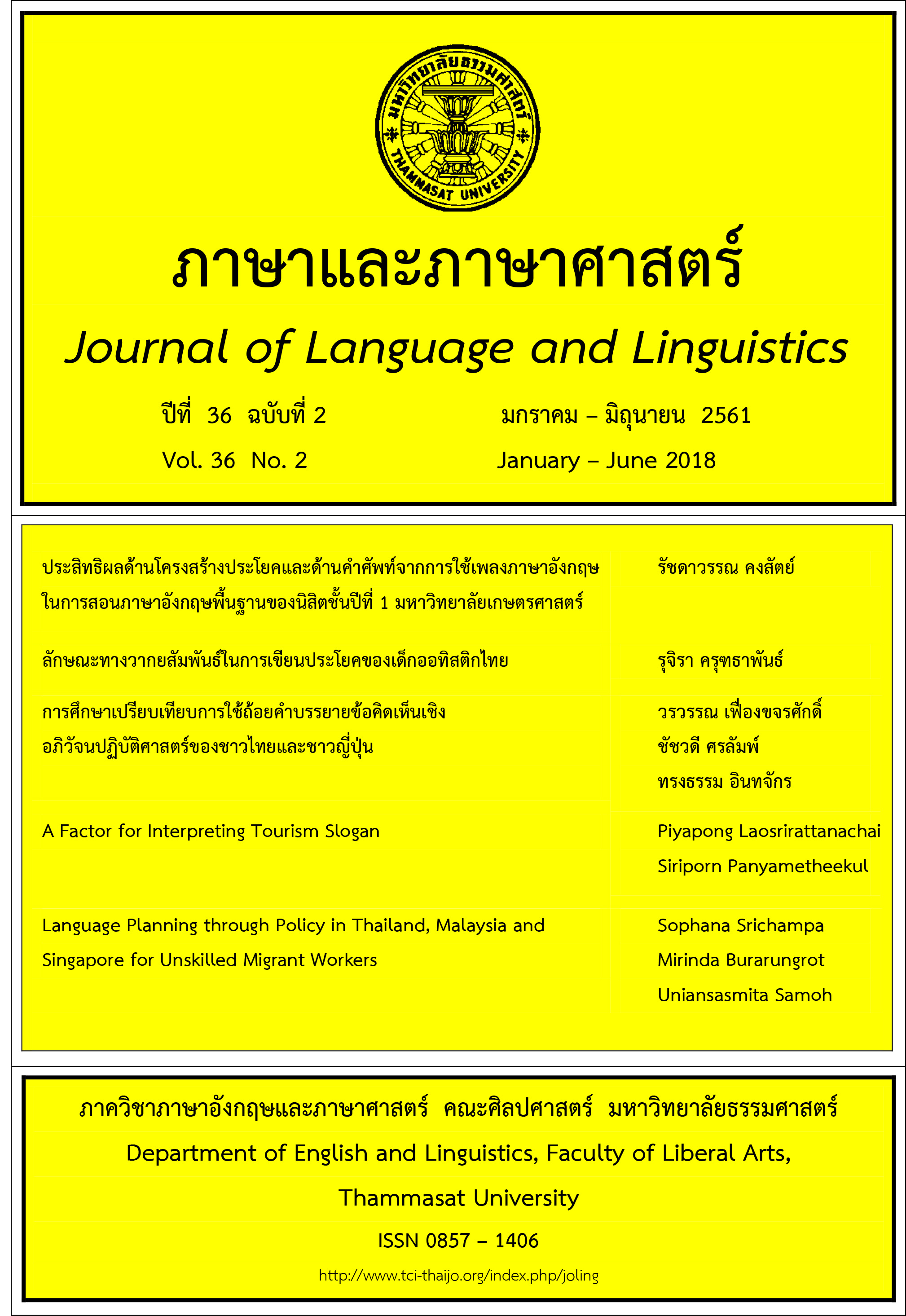
ลักษณะทางวากยสัมพันธ์ในการเขียนประโยคของเด็กออทิสติกไทย
Article Sidebar
เผยแพร่แล้ว:
มิ.ย. 1, 2018
คำสำคัญ:
วากยสัมพันธ์ ประโยค เด็กออทิสติก
Main Article Content
บทคัดย่อ
งานวิจัยนี้มีวัตถุประสงค์เพื่อศึกษาชนิดและโครงสร้างประโยคที่เด็กออทิสติกไทย ชั้นประถมศึกษาปีที่ 6 ใช้ใน การเขียนประโยค ผู้วิจัยเก็บข้อมูลจากเด็กออทิสติกจำนวน 5 คนที่กำลังศึกษาชั้นประถมศึกษาปีที่ 6 ในชั้นการศึกษา พิเศษที่มีความสามารถในการเขียนระดับประโยคได้ โดยให้เด็กแต่ละคนนำคำที่ผู้วิจัยคัดเลือกจากหนังสือแบบเรียน ภาษาไทยจำนวน 100 คำ มาแต่งประโยค 1 คำต่อ 1 ประโยค ผลการศึกษาพบว่า เด็กออทิสติกเขียนประโยคโดยใช้ ประโยค 3 ชนิด ได้แก่ ประโยคความเดียว ประโยคความรวม และประโยคความซ้อน ประโยคความเดียวพบมากที่สุด รองลงมาคือ ประโยคความรวม และประโยคความซ้อนตามลำดับ โดยปรากฏ 12 โครงสร้างในประโยคความเดียว 17 โครงสร้างในประโยคความรวม และพบเพียง 1 โครงสร้างในประโยคความซ้อน
Article Details
รูปแบบการอ้างอิง
ครุฑธาพันธ์ ร. (2018). ลักษณะทางวากยสัมพันธ์ในการเขียนประโยคของเด็กออทิสติกไทย. ภาษาและภาษาศาสตร์, 36(2), 20–40. สืบค้น จาก https://so04.tci-thaijo.org/index.php/joling/article/view/173281
ประเภทบทความ
Articles
บทความทุกบทความเป็นลิขสิทธิ์ของภาษาและภาษาศาสตร์
เอกสารอ้างอิง
กรมสุขภาพจิต. (2560). เร่งวิจัย “ยีน” ต้นเหตุโรคออทิสติก คาดเด็กไทยป่วย 3 แสนคน. สืบค้นจากhttps://www.dmh.go.th/news-dmh/view.asp?id=26705 เมื่อวันที่ 1 กรกฎาคม 2561
นววรรณ พันธุเมธา. (2527). ไวยากรณ์ไทย.กรุงเทพมหานคร: หจก.รุ่งเรืองสาสน์การพิมพ์.
พราวพร อ่วมเจริญ. (2556). การเปรียบเทียบการพูดและการเขียนจากการเล่าเรื่องของเด็กออทิสติก. วิทยานิพนธ์อักษรศาสตรมหาบัณฑิต บัณฑิตวิทยาลัย มหาวิทยาลัยศิลปากร.
ยาใจ ชูวิชา. (2536). ความเป็นประโยคของหน่วยสร้างกริยาเรียงในภาษาไทย. วิทยานิพนธ์ปริญญาดุษฎีบัณฑิต ภาควิชาภาษาศาสตร์ คณะอักษรศาสตร์ จุฬาลงกรณ์มหาวิทยาลัย.
รจนา ทรรทรานนท์. (2527). เด็กออทิสติค: คำแนะนำสำหรับบิดามารดาและนักวิชาการ. กรุงเทพฯ.
วิจินตน์ ภาณุพงศ์. (2538). โครงสร้างของภาษาไทย: ระบบไวยากรณ์. กรุงเทพมหานคร: โรงพิมพ์มหาวิทยาลัยรามคำแหง.
สำนักคณะกรรมการการศึกษาขั้นพื้นฐาน กระทรวงศึกษาธิการ. (2557). หนังสือเรียน รายวิชาพื้นฐานภาษาไทย ชุด ภาษาเพื่อชีวิต ภาษาพาที ชั้นประถมศึกษาปีที่ 6.กรุงเทพมหานคร: โรงพิมพ์ สกสค.
อุปกิตศิลปสาร, พระยา. (2539). หลักภาษาไทย. กรุงเทพมหานคร: ไทยวัฒนาพาณิชย์.
Aarons, M. & Gittens, T. (1999). The handbook of autism: A guide for parents and professionals. (2nd ed.). New Fetter Lane, London: Routledge.
Anderson, K., Lord, C., Risi, S., DiLavore, P. S., Shulman, C., Thurm, A., Welch, K., & Pickles, A. (2007). Patterns of growth in verbal abilities among children with autism
spectrum Disorder. Journal of Counseling and Clinical Psychology, 75, 594-604.
Charman, T., Drew, A.., Baird, C., & Baird, G. (2003). Measuring early language development in preschool children with autism spectrum disorder using the
MacArthur Communicative Development Inventory (Infant Form). Journal of Child Language, 30, 213-236.
Gernsbacher, M. A., Morson, E. M., & Grace, E. J. (2015). Language development in autism. neurobiology of language, 879-886.
Kenworthy, L., Wallace, G. L., Powell, K., Anselmo, C., Martin, A., & Black, D. O. (2012). Early language milestones predict later language, but not autism symptoms in
higher functioning children with autism spectrum disorder. Research in Autism Spectrum Disorders, 6, 1194-1202.
Matson, J. L., Mahan, S., Koslowski, A. M., & Shoemaker, M. (2010). Developmental milestones in toddlers with autistic disorder, pervasive development disordernot otherwise specified, and atypical development. Developmental Neurorehabilitation, 13, 239-247.
Pry, R., Peterson, A. F., & Baghdadli, A. M. (2011). On general and specific markers of lexical development in children with autism from 5 to 8 years of age. Research
in Autism Spectrum Disorder, 5, 1243-1252.
Wing, L. (1981). Sex ratios in early childhood autism and related conditions. Journal of Psychiatry Research 5(2), 129-137.
Wiggins, K. I. (2010). Spelling errors in children with autism. Master of Science Department of Communication Science and Disorders College of Behavioral and Community
Science University of South Florida.
Wodka, E. L., Mathy, P., & Kalb, L. (2013). Predictors of phrase fluent speech in children with autism and severe language delay. Pediatrics, 131, e1128-e1134.
นววรรณ พันธุเมธา. (2527). ไวยากรณ์ไทย.กรุงเทพมหานคร: หจก.รุ่งเรืองสาสน์การพิมพ์.
พราวพร อ่วมเจริญ. (2556). การเปรียบเทียบการพูดและการเขียนจากการเล่าเรื่องของเด็กออทิสติก. วิทยานิพนธ์อักษรศาสตรมหาบัณฑิต บัณฑิตวิทยาลัย มหาวิทยาลัยศิลปากร.
ยาใจ ชูวิชา. (2536). ความเป็นประโยคของหน่วยสร้างกริยาเรียงในภาษาไทย. วิทยานิพนธ์ปริญญาดุษฎีบัณฑิต ภาควิชาภาษาศาสตร์ คณะอักษรศาสตร์ จุฬาลงกรณ์มหาวิทยาลัย.
รจนา ทรรทรานนท์. (2527). เด็กออทิสติค: คำแนะนำสำหรับบิดามารดาและนักวิชาการ. กรุงเทพฯ.
วิจินตน์ ภาณุพงศ์. (2538). โครงสร้างของภาษาไทย: ระบบไวยากรณ์. กรุงเทพมหานคร: โรงพิมพ์มหาวิทยาลัยรามคำแหง.
สำนักคณะกรรมการการศึกษาขั้นพื้นฐาน กระทรวงศึกษาธิการ. (2557). หนังสือเรียน รายวิชาพื้นฐานภาษาไทย ชุด ภาษาเพื่อชีวิต ภาษาพาที ชั้นประถมศึกษาปีที่ 6.กรุงเทพมหานคร: โรงพิมพ์ สกสค.
อุปกิตศิลปสาร, พระยา. (2539). หลักภาษาไทย. กรุงเทพมหานคร: ไทยวัฒนาพาณิชย์.
Aarons, M. & Gittens, T. (1999). The handbook of autism: A guide for parents and professionals. (2nd ed.). New Fetter Lane, London: Routledge.
Anderson, K., Lord, C., Risi, S., DiLavore, P. S., Shulman, C., Thurm, A., Welch, K., & Pickles, A. (2007). Patterns of growth in verbal abilities among children with autism
spectrum Disorder. Journal of Counseling and Clinical Psychology, 75, 594-604.
Charman, T., Drew, A.., Baird, C., & Baird, G. (2003). Measuring early language development in preschool children with autism spectrum disorder using the
MacArthur Communicative Development Inventory (Infant Form). Journal of Child Language, 30, 213-236.
Gernsbacher, M. A., Morson, E. M., & Grace, E. J. (2015). Language development in autism. neurobiology of language, 879-886.
Kenworthy, L., Wallace, G. L., Powell, K., Anselmo, C., Martin, A., & Black, D. O. (2012). Early language milestones predict later language, but not autism symptoms in
higher functioning children with autism spectrum disorder. Research in Autism Spectrum Disorders, 6, 1194-1202.
Matson, J. L., Mahan, S., Koslowski, A. M., & Shoemaker, M. (2010). Developmental milestones in toddlers with autistic disorder, pervasive development disordernot otherwise specified, and atypical development. Developmental Neurorehabilitation, 13, 239-247.
Pry, R., Peterson, A. F., & Baghdadli, A. M. (2011). On general and specific markers of lexical development in children with autism from 5 to 8 years of age. Research
in Autism Spectrum Disorder, 5, 1243-1252.
Wing, L. (1981). Sex ratios in early childhood autism and related conditions. Journal of Psychiatry Research 5(2), 129-137.
Wiggins, K. I. (2010). Spelling errors in children with autism. Master of Science Department of Communication Science and Disorders College of Behavioral and Community
Science University of South Florida.
Wodka, E. L., Mathy, P., & Kalb, L. (2013). Predictors of phrase fluent speech in children with autism and severe language delay. Pediatrics, 131, e1128-e1134.
