Thematic Patterns in The Economist Explains’ Articles
Article Sidebar
Main Article Content
บทคัดย่อ
งานวิจัยนี้ศึกษารูปแบบใจความหลักในบทความ The Economist explains โดยมีวัตถุประสงค์เพื่อเป็นการสาธิตว่ารูปแบบใจความหลักสามารถช่วยในการอ่านเพื่อความเข้าใจได้อย่างไร ข้อมูลการวิจัยประกอบด้วยบทความ The Economist explains ออนไลน์ จำนวน 10 บทความ มีจำนวนย่อหน้ารวมทั้งสิ้น 47 ย่อหน้า วิเคราะห์ข้อมูลโดยการรวมแนวคิดของฮอลลิเดย์ (Halliday & Matthiessen, 2014) และแนวคิดของทอมพ์สัน (Thompson, 2014) เข้าด้วยกัน จากการวิเคราะห์พบว่าหน้าที่ของย่อหน้ามีทั้งหมด 6 หน้าที่ด้วยกัน ซึ่งแต่ละหน้าที่ก็จะแสดงรูปแบบใจความหลักแตกต่างกันไป รูปแบบใจความหลักแต่ละอันจะแสดงข้อมูลสำคัญที่จะนำไปใช้ในการทำความเข้าใจเนื้อหาของย่อหน้านั้น ดังนั้นรูปแบบใจความหลักจึงช่วยในการพัฒนาการอ่านเพื่อความเข้าใจ
Article Details

อนุญาตภายใต้เงื่อนไข Creative Commons Attribution-NonCommercial-NoDerivatives 4.0 International License.
บทความทุกบทความเป็นลิขสิทธิ์ของภาษาและภาษาศาสตร์
เอกสารอ้างอิง
Alotaibi, H. S. (2020). The thematic structure in research article abstracts: Variations across disciplines. Cogent Arts & Humanities, 7(1), 1-12.
Berry, M. (2019). The clause: An overview of the lexicogrammar. In G. Thompson, W. L. Bowcher, L. Fontaine, & D. Schönthal (Eds.), The Cambridge handbook of systemic functional linguistics (pp. 92-117). Cambridge University Press.
Chan, E., & Zhang, Z. (2017). Teaching reading through multimodal texts. In H. P. Widodo, A. Wood, & D. Gupta (Eds.), Asian English language classrooms: Where theory and practice meet (pp. 49-70). Routledge.
Chen, Q. (2019). Theme-Rheme structure in Chinese doctoral students' research writing—from the first draft to the published paper. Journal of English for Academic Purpose, 37, 154-167.
Forey, G., & Sampson, N. (2017). Textual metafunction and theme: What’s ‘it’ about?. In T. Bartlett & G. O’Grady (Eds.), The Routledge handbook of systemic functional linguistics (pp. 131-145). Routledge.
Halliday, M. A. K., & Matthiessen, C. (2014). Halliday’s introduction to functional grammar (4th ed.). Routledge.
How to knit a sports car with carbon fibre. (2019, April 13). The Economist. https://www.economist.com/science-and-technology/2019/04/13/how-to-knit-a-sports-car-with-carbon-fibre
Leong, A. P. (2015). Topical themes and thematic progression: The “picture” of research articles. Text & Talk, 35(3), 289-315.
Leong, A. P., Toh, A. L. L., & Chin, S. F. (2018). Examining structure in scientific research articles: A study of thematic progression and thematic density. Written Communication, 35(3), 1-29.
Martinez-Insua, A. E. (2019). Scientific writing and the contentfulness of Subject Themes. How science was explained to (lay) audiences. Journal of Pragmatics, 139, 216-230.
Martinez-Insua, E., & Perez-Guerra, J. (2018). Text types, audience and thematic organization in the recent history of English. In D. Legallois, T. Charnois, & M. Larjavaara (Eds.), The grammar of genres and styles: From discrete to non-discrete units (pp. 14-38). De Gruyter Mouton.
Neumann, S., Wegener, R., Fest, J., Niemietz, P., & Hützen, N. (2017). Challenging boundaries and bending rules: An introduction. In S. Neumann, R. Wegener, J. Fest, P. Niemietz, & N. Hützen (Eds.), Challenging boundaries in linguistics: Systemic functional perspectives (pp. 9-15). Peter Lang.
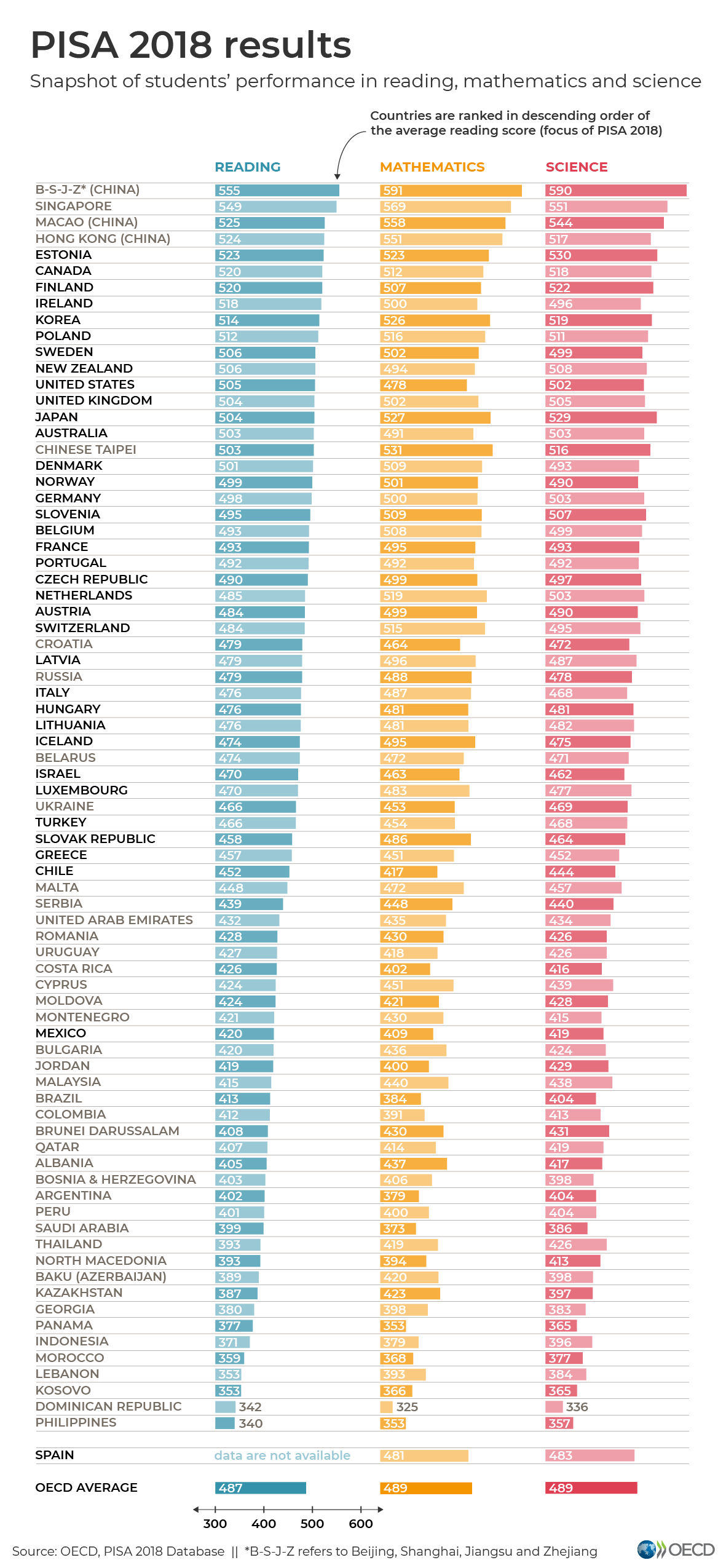
OECD (2019). PISA 2018 Results. https://www.oecd.org/pisa/PISA-results_ENGLISH.png
Taboada, M. (2019). Cohesion and conjunction. In G. Thompson, W. L. Bowcher, L. Fontaine, & D. Schönthal (Eds.), The Cambridge handbook of systemic functional linguistics (pp. 311-332). Cambridge University Press.
Thompson, G. (2014). Introducing functional grammar (3nd ed.). Routledge.
Vathanavisuth, S. (2019, December 18). Reading as a way to a better life. Bangkok Post.