
Urban Dynamics of Nakhon Ratchasima's Historic Quarter: Transformations and the Roles of Ethnic Groups
Article Sidebar
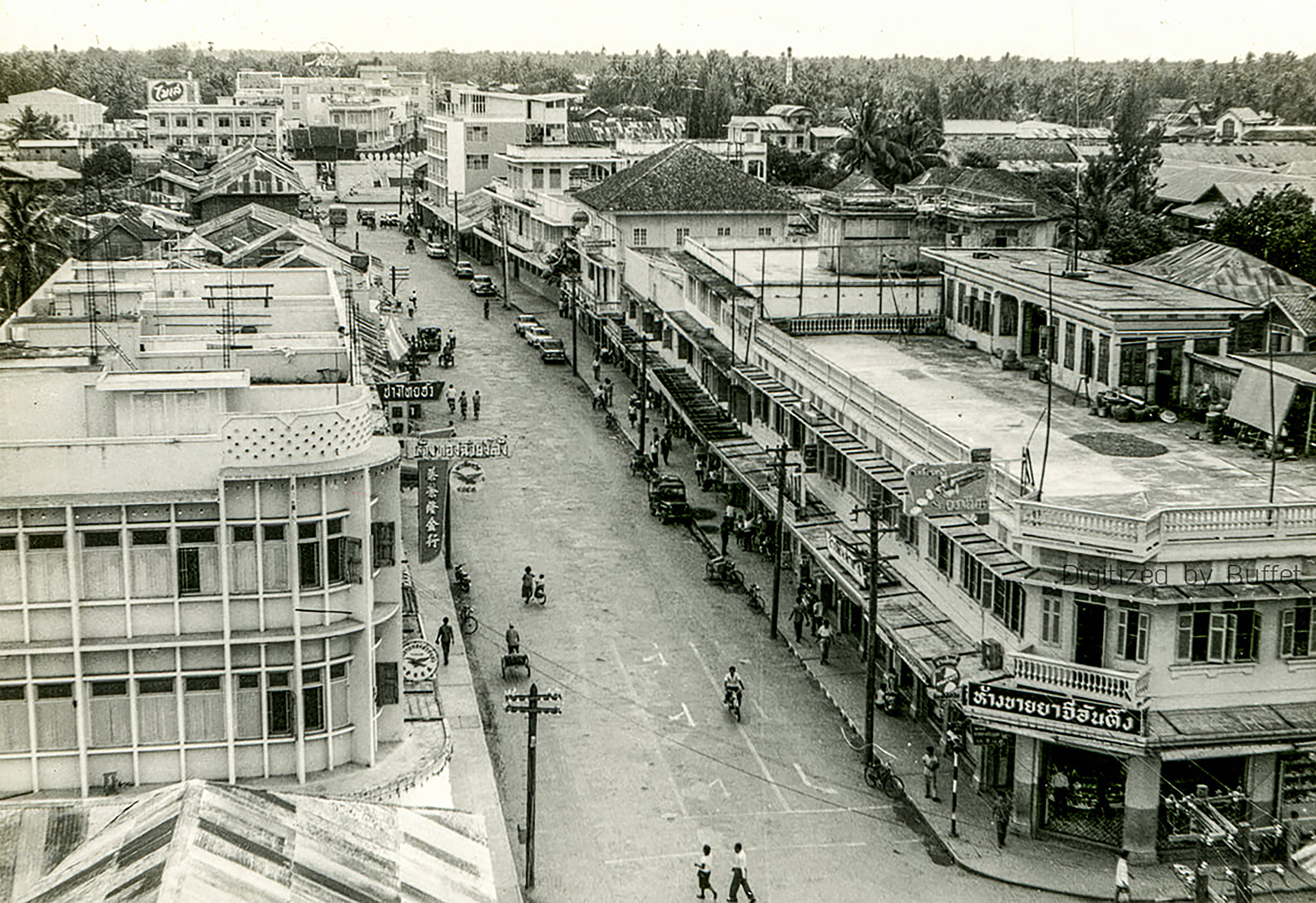
Main Article Content
Abstract
This article examines the urban dynamics of the historic quarter of Nakhon Ratchasima and the roles of ethnic groups in driving socio-economic transformation. The study applies the concept of the production of space proposed by Henri Lefebvre, combined with historical document analysis, field surveys, and in-depth interviews with representatives of ethnic groups in the area. The analysis covers the period from 1656 CE to the present and can be divided into three main phases. The first phase, prior to 1657 CE, represents the formative period of the historic urban area and the initial settlement of early ethnic groups, characterized by a stratified social structure and an agrarian-based economy. The second phase, from 1657 CE to 1900 CE, marks the emergence of ethnic diversity, particularly with the migration of Chinese communities and the transition toward a trade-based economy. A significant turning point occurred with the opening of the Bangkok–Nakhon Ratchasima railway in 1900 CE, which accelerated migration and commercial expansion. The third phase, from 1900 CE to the present, reflects the transformation of the area into a multicultural society and a commercial center. The findings reveal that the production of social space in the historic quarter of Nakhon Ratchasima follows a discernible sequence. It begins with conceived space shaped by the centralized planning of the Siamese state, followed by perceived space formed through settlement patterns and economic activities of various ethnic groups, and finally lived space emerging from collective experiences and shared memories of the community. However, the process of space production in a multicultural context is not strictly linear but rather complex and interconnected. Notably, lived space can resist and negotiate state control, as reflected in the adaptive strategies of Thai-Chinese communities during the nationalist policies of 1941 CE. Each ethnic group has played a distinct role in shaping urban space. Thai-Chinese communities have been the primary drivers of economic development, establishing new commercial areas and transforming spatial power structures. Thai-Sikh communities have contributed to diversity in both economic and cultural dimensions, while ethnic groups of Mon, Lao, Vietnamese, and Khmer descent have laid the cultural foundations and social hybridity of the area. Although the historic quarter has shifted from a city-level commercial hub to a community-level commercial district due to urban expansion, it continues to reflect the significant roles of ethnic groups in urban development across different periods. This study highlights the importance of inclusive participation and collaborative mechanisms in urban planning to guide future development while preserving cultural diversity.
Downloads
Article Details

This work is licensed under a Creative Commons Attribution-NonCommercial-NoDerivatives 4.0 International License.
References
Anat Jaisamran, Vice President for International Affairs, Nakhon Ratchasima Rajabhat University, and Owner of Siao Siao restaurant. Interview, April 10, 2021.
Askew, Marc. Bangkok: Place, Practice and Representation. London: Routledge, 2002.
Aymonier, Étienne.Banthưk kāndœ̄̄ nthāng nai Lāo phāk nưng Phō̜̄ .Sō̜̄. sō̜̄ngphansīrō̜̄isāmsippǣt [Voyage dans le Laos: Tome Premier 1895]. Translated by ThongsamutDore and Sommai Premchit.ChiangMai: Social Research Institute, Chiang MaiUniversity, 1996.
Committee on Document Compilation and Archives under the Executive Committee for the Celebration in Honor of His Majesty the King. Watthanatham phatthanākān thāng prawattisāt ʻēkkalak læ phūmpanyā čhangwat Nakhō̜̄n Rātchasīmā [Culture, Historical Development, Identity, and Wisdom of Nakhon Ratchasima Province]. Bangkok: Committee on Document Compilation and Archives under the Executive Committee for he Celebration in Honor of His Majesty the King, 2000.
Gurabachasing Sethi, Fabric shop owner. Interview, January 28, 2022.
Jitramanee Deeudomchan, Lecturer at the Department of Interior Architecture, Rajamangala University of Technology Isan. Interview, October 22, 2019.
Khun Mahavichai (Chan). “Rư̄̄ ang pai thīeo hūa mư̄̄ ang Lāo fāi tawanʻō̜̄ k [Travelling to the Eastern Lao Region].” Wachirayan 5, 25 (October 25, 1896): 2544.
King, Ross. Reading Bangkok. Singapore: NUS Press, 2011.
Krom Luang Sanpasitthiprasong. “Rư̄̄ ang krommư̄̄ n Sanpasitthi prasong song čhat rātchakān na mư̄̄ ang Nakhō̜̄n Rātchasīmā Rō̜̄. Sō̜̄. nưngrō̜̄isip thưng nưngrō̜̄isipʻet (Phō̜̄. Sō̜̄. sō̜̄ngphansīrō̜̄isāmsipsī thưng sō̜̄ngphan sīrō̜̄isāmsiphā) [The Story of Krom Muen Sanpasitthi
prasong Managing Official Affairs at Nakhon Ratchasima R.S. 110-111 (1891-1892 A.D.)].” In Rūam rư̄̄ ang mư̄̄ ang Nakhō̜̄ n Rātchasīmā [Collected Stories of Nakhon Ratchasima]. Phra Nakhon: Prachakwittaya, 1968.
La Loubère, Simon de. Du Royaume de Siam. Paris: Chez La Veuve de Jean Baptiste Coignard, 1691.
Lefebvre, Henri. The Production of Space. Translated by Donald Nicholson-Smith. Oxford: Blackwell, 1991.
Marisa Hiranteeyakul. “Kān plīanplǣng læ khong yū khō̜̄ng ʻattalak thin thī mư̄̄ ang Khōrāt phān mummō̜̄ng klum chātphan [Persistence and Change in Place Identity of Korat City from the Perspective of Ethnic Groups].” Ph.D. Dissertation, Khon Kaen University, 2022.
Masee Saowara, Fabric and fragrance store owner. Interview, January 10, 2020.
Meuan Tangjorhor, Construction contractor. Interview, May 8, 2019.
Nakhon Ratchasima Chamber of Commerce. Yō̜̄ nrō̜̄ i nưngrō̜̄ i pī Khōrāt Wanit [Tracing 100 Years of Korat Commerce]. Bangkok: Future Press and Media Company Limited, 1999.
Nakrob Narksuwan. “ʻAttalak chāo Thai Sik: kān sadǣng tūa ton nai sangkhom [Thai Sikh Identity: Self-representation in Society].” Dusit Thani College Journal 11, Special Issue (2017): 377-390.
Nitra Suwan, Retired government official. Interview, October 1, 2019.
Office of Arts and Culture, Nakhon Ratchasima Rajabhat Institute. Khō̜̄ ngdī Khōrāt lem nưng sākhā manutsayasāt [The Best of Korat, Volume 1 Humanities]. Bangkok: Fuengfah Printing Company Limited, 1998.
Pallegoix, Jean-Baptiste. Lao rư̄̄ ang krung Sayām [Description du Royaume Thai ou Siam]. Translated by San T. Komonbut. Nonthaburi: Sri Panya, 2006.
Phiphu Busabok. Phatthanākān khō̜̄ ng klum thun Čhīn nai phāk ʻĪsān tō̜̄ n bon khō̜̄ ng prathēt Thai Khō̜̄ . Sō̜̄ . nưngphankāorō̜̄ isāmsipʻet thưng sō̜̄ ngphansiphok ( Phō̜̄ .Sō̜̄ . sō̜̄ ngphansīrō̜̄ ičhetsipsī thưng sō̜̄ ngphan hārō̜̄ ihāsipkāo) [Development of Chinese Capital Groups in the Upper Northeastern Region of Thailand in 1931-2016]. Bangkok: The Thailand Research Fund, 2017.
“Phlak dan lǣng bōrānnakhadī Nōn Phon Lān Kamphǣng Mư̄̄ ang Khōrāt khưn mō̜̄radok lōk [Pushing Forward the Nomination of Non Phon Lan Archaeological Site, Korat City Wall for World Heritage Site].” Korat Daily, June 15-July 14, 2024. https://koratdaily.com/blog.php?id=17067
Phraya Phetphani. Čhotmāihēt rư̄̄ ang monthon Nakhō̜̄n Rātchasīmā Phō̜̄ .Sō̜̄ . sō̜̄ngphansīrō̜̄ ihoksipčhet [Chronicle of Nakhon Ratchasima County in 1924]. Phra Nakhon: Sophonphiphatthanakon Press, 1924.
Pipad Krajaejun. Prawattisāt phūkhon bon sēn phrom dǣn Khao Phra Wihān [The History of People on the Border of Khao Phra Wihan]. Bangkok: Matichon, 2013.
Praphat Chuwichian. “Phūkhon læ chātphan lum nam Khōng nai ngān khonkhwā khō̜̄ ng somdet... krom phrayā Damrong Rāchānuphāp [People and Ethnic Groups in the Mekong River Basin in the Research of Prince Damrong Rajanubhab].” Damrong Journal of the Faculty of Archaeology Silpakorn University 11, 2 (2012): 153-180.
Provincial Office of Natural Resources and Environment Nakhon Ratchasima. Phǣn mǣbot læ phang mǣbot kān ʻanurak læ phatthanā bō̜̄riwēn mư̄̄ ang kao Nakhō̜̄n Rātchasīmā [Masterplan for the Conservation and Development of Nakhon Ratchasima Old Town]. Nakhon Ratchasima: Provincial Office of Natural Resources and Environment Nakhon Ratchasima, 2018.
Puangkhaimuk Kunaratanapruk. “Khwāmsamkhan khō̜̄ng mư̄̄ang Nakhō̜̄n Rātchasīmā nai ratchasamai phra bāt somdet phra Čhunlačhō̜̄mklao čhao yū hūa (Phō̜̄ .Sō̜̄ . sō̜̄ngphansīrō̜̄isipʻet thưng sō̜̄ngphanssīrō̜̄hāsipsām) [The Importance of Nakhon Ratchasima during the Reign of King Chulalongkorn (1868-1910 A.D.)].” Master’s Thesis, Chulalongkorn University, 1978.
Thongchai Winichakul. Kamnoē̄ t Sayām čhāk phǣnthī: prawattisāt phūm kā yā khōng chāt [Siam Mapped: A History of the Geo-Body of a Nation]. Translated by Puangthong Pawakapan, Ida Aroonwong, and Ponglert Pongwanan. Bangkok: Read (Aan) Publishing, 2013.
Wales, Quaritch. Kān pokkhrō̜̄ ng læ kānbō̜̄ rihān khō̜̄ ng Thai samai bōrān [The Government and Administration of Ancient Thailand]. Translated by Kanchanee La-ongsri and Yupa Chumchantra. Bangkok: The Social Sciences and Humanities Textbook Foundation, 1984.
