
Door Frame: The Iconography and Architectural Style in Indian and Southeast Asian Art
Article Sidebar
Main Article Content
Abstract
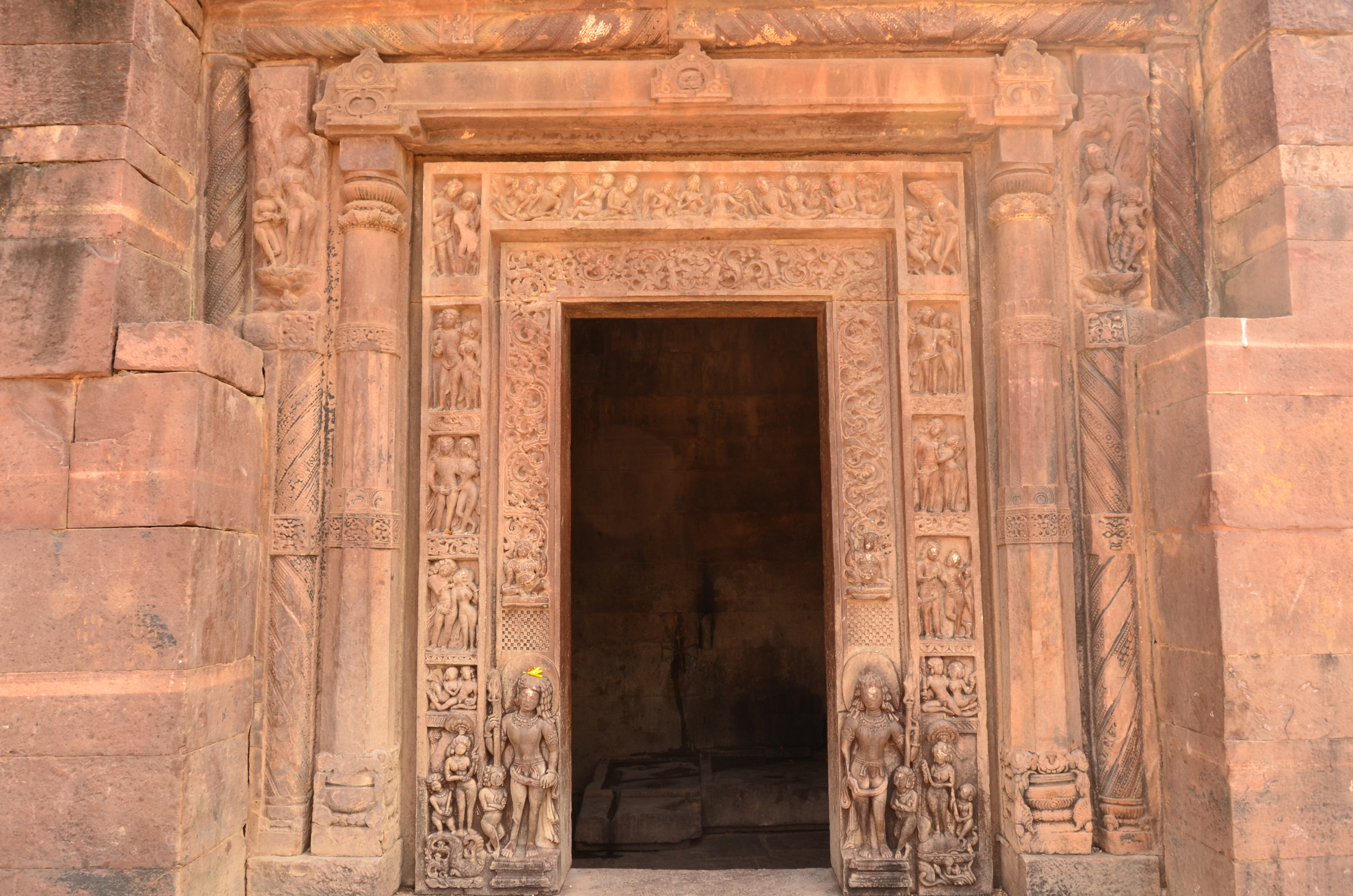
This research focuses on the doorframe, an architectural component of the door that is regarded as one of the most sacred elements in Hindu and Buddhist architecture, both in Indian and Southeast Asian art. Previous studies have discussed the iconography and styles of the doorframe, such as Stella Kramrisch (1946) and Parul Pandya Dhar (2009). However, their iconography and stylistic connections to India and Southeast Asia have not been widely explored. The aim of this study is to explore the iconography and stylistic connections between Indian and Southeast Asian doorframes prior to the 13th century CE. The findings can be summarized into four main topics: 1) Definition of the Enclosure, Wall, Gateway, Door, and Doorframe: the study classifies the “enclosure”, accompanied by a gateway, and the “wall” of a sanctum, which features a doorframe or “Dvāraśākhā.” 2) Iconographic Meaning of the Doorframe: as devotees peer into the sanctum to glimpse the deity, the doorframe assumes various iconographic meanings. It symbolizes the multiplication of the supreme god, the blessings of abundance, and the deity's power to eradicate evil and provide protection. 3) Development of Doorframes in Indian Art: the Gupta period introduces the Dvāraśākhā system, characterized by concentric frames. The Vakāṭaka period brings forth the Makara Toraṇa, an arch flanked by two Makaras. The Dvāraśākhā system has evolved through several schools of Indian art, particularly in North India, while the Makara Toraṇa has remained prevalent in South India. And 4) Evolution of Doorframes in Southeast Asian Art with Indian Comparisons: doorframes in Southeast Asia exhibit localized characteristics. Khmer lintels evolved from the Makara Toraṇa to arches adorned with foliate motifs and Kāla masks. Central Javanese doorframes are primarily decorated with Kāla and Makaras, whereas Bagan doorframes uniquely follow the Dvāraśākhā system.
Downloads
Article Details

This work is licensed under a Creative Commons Attribution-NonCommercial-NoDerivatives 4.0 International License.
References
Acharya, Prasanna Kumar. A Dictionary of Hindu Architecture: Manasara Series, Volume 1. Delhi: Low Price Publications, 1997.
Bénisti, Mireille. Stylistics of Early Khmer Art, Volume 1. New Delhi: Indira Gandhi National Centre for the Arts, 2003.
Bosch, F.D.K. The Golden Germ: An Introduction to Indian Symbolism. The Hague: Mouton & Co., 1960.
Darian, Steven G. “Ganga Shiva and Hindu Temple.” In The Ganges in Myth and History. Delhi: Motilal Banarsidass, 2001.
Dhar, Parul Pandya. The Toraṇa in Indian and Southeast Asian Architecture. New Delhi: D.K. Print World, 2010.
Kempers, A. J. Bernet. Ancient Indonesian Art. Amsterdam: C.P.J. Van Der Peet, 1959.
Kramrisch, Stella. “Symbols of Entry and Exit: The Doors and Its Images.” In The Hindu Temple, Volume 2. Delhi: Motilal Banarsidass, 1976.
Mahāpātra, Nirañjana. Śilparatnakośa: A Glossary of Orissan Temple Architecture. Translated by Bettina Baumer and Rajendra Prasad Das. New Delhi: Indira Gandhi National Centre for the Arts, 1994.
Mayamatam, Volume 1. Translated by Bruno Dagens. New Delhi: Indira Gandhi National Centre for the Arts, 2007.
Stadtner, Donald M. Ancient Pagan: Buddhist Plain of Merit. Bangkok: River Books, 2005.
Zimmer, Heinrich. “The Elephant.” In Myths and Symbols in Indian Art and Civilization, edited by Joseph Campbell. Delhi: Motilal Banarsidass, 1999.
