
Anuvit Charoensupkul: On Space, Symbolism, and A Single Tree Can Also Be Architecture
Article Sidebar
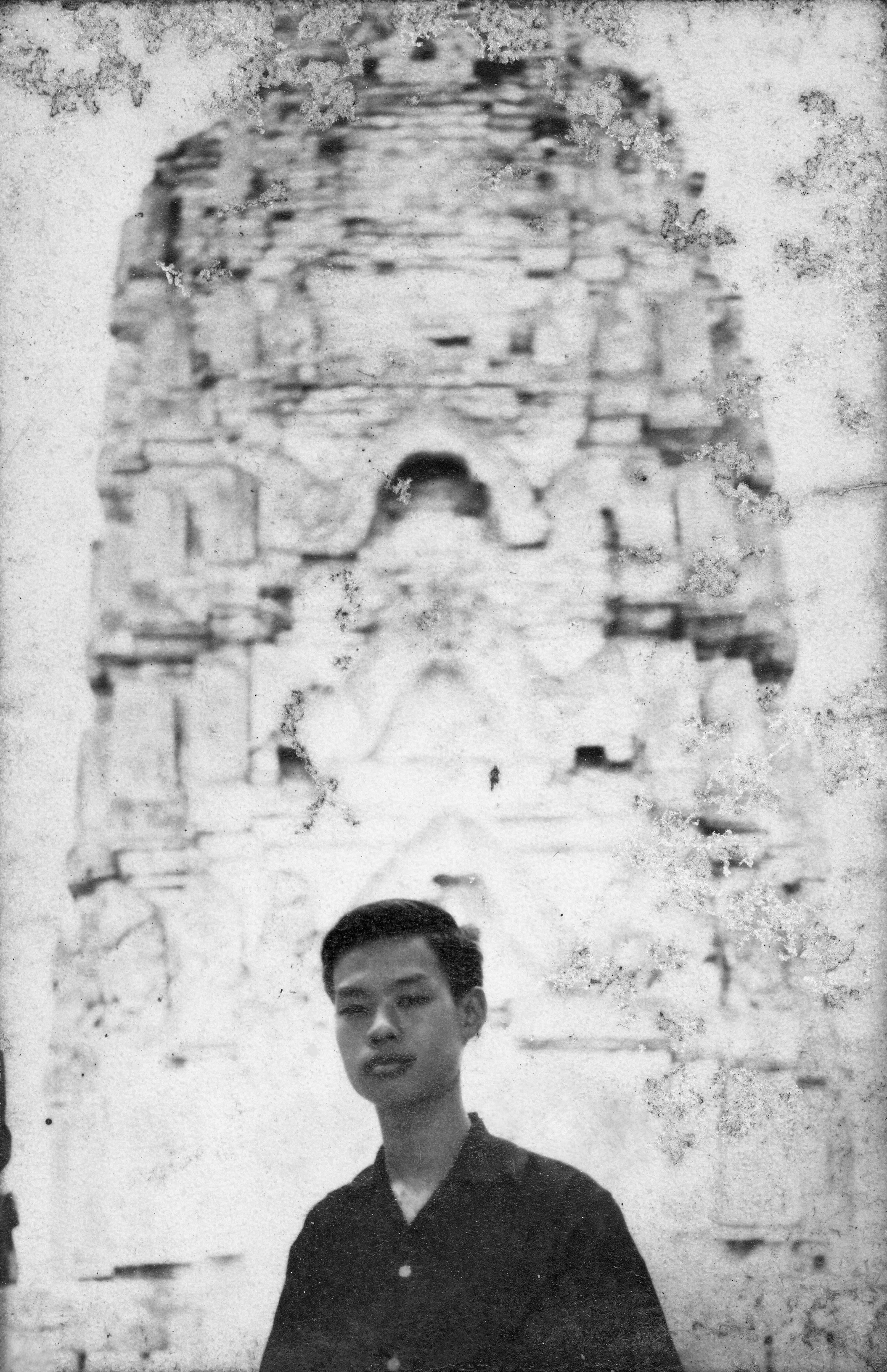
Main Article Content
Abstract
For over half a century, Anuvit Charoensupkul has cultivated a mindset for architecture students, encouraging them to approach design with a vision rooted in their own culture. He began his journey at the Faculty of Thai Architecture, Silpakorn University, during its pioneering era, before pursuing a Master’s degree at Rice University in the United States at a time when the tide of Modernism was at its peak. However, what remained deeply ingrained in his philosophy was not the imitation of Western "Modernity," but a critical question: how can a country with a unique cultural background like Thailand create contemporary architecture with its own "identity," much like the success achieved by Japan?
This conversation reflects a significant turning point: upon returning to Thailand, Anuvit initially aspired to be a professional architect, but conflicts with developers led him to abandon that path without hesitation to dedicate himself entirely to the academic world. Driven by the spirit of a determined researcher who refused to compromise with the superficiality of “careless” academics, Anuvit embarked on extensive nationwide fieldwork alongside scholars such as Prayoon Uroochadha, Pathom Puapunsakul, Wiwat Temiyaphan, and Sone Simatrang, to understand architecture through "the real thing".
Anuvit ’s academic trajectory defies any conventional framework. He was raised amidst the traditional Chinese values of his household, complemented by an immersion in the grace and refinement of Thai aristocratic circles. As a straightforward individual grounded in principles, he consistently questioned the education system from his days as a student to his tenure as a professor. He was a staunch critic of reductive “Applied Thai” architecture that focused only on the exterior shell and was never satisfied with ready-made answers. Instead, he firmly believed that any meaningful creation must stem from a true understanding of a society’s cultural structure.
In an era when architectural education still focused primarily on formalism and function, Anuvit was a pioneer in contemporary architectural pedagogy, emphasizing the creation of “space” and “meaning” (symbolism). In his academic work, Anuvit challenged the conventional study of Khmer architecture, which traditionally focused on the stylistic interpretation of lintels and pediments. By proposing a “Design Framework” through his landmark case study of Prasat Muang Tam—a project spanning over 20 years—he proved that architecture is an “organism” characterized by a complex creative order, comprehensible only through a systematic analysis of both design and symbolism.
The following conversation took place five years after his retirement from regular teaching. It marks the re-emergence of a modest thinker whose insights, nevertheless, remain as sharp as ever.
Downloads
Article Details

This work is licensed under a Creative Commons Attribution-NonCommercial-NoDerivatives 4.0 International License.
