ความเป็นพิษในองค์การ: สถานการณ์อันเจ็บปวดและผลกระทบที่เกิดขึ้นในที่ทำงานของพนักงานขายดีเด่น
DOI:
https://doi.org/10.14456/ncrj.2024.8คำสำคัญ:
ความเป็นพิษในองค์การ, บรรยากาศในที่ทำงาน, การจัดการทรัพยากรมนุษย์บทคัดย่อ
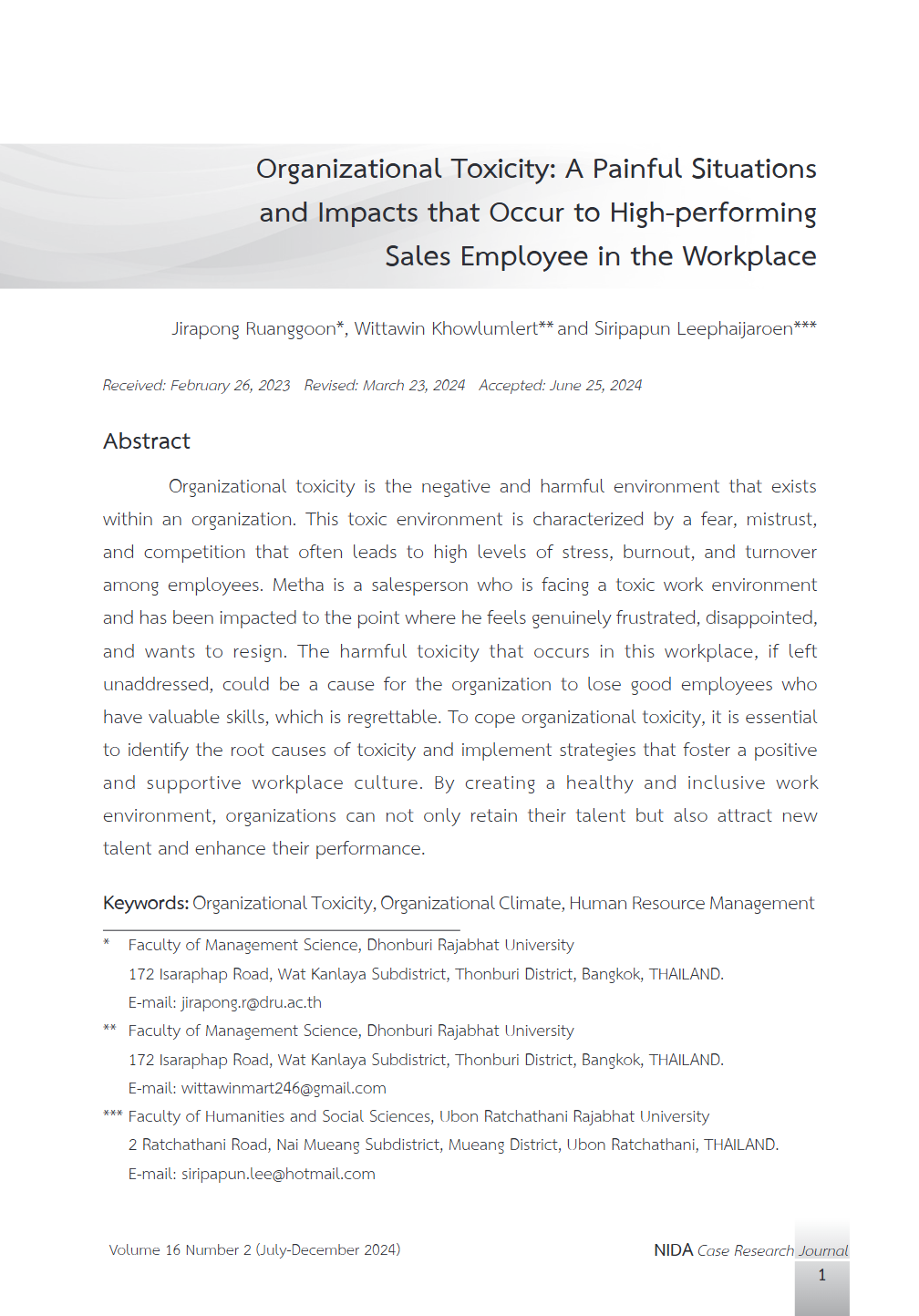
ความเป็นพิษในองค์การ คือ สภาพแวดล้อมที่เป็นลบและไม่เป็นมิตรที่เกิดขึ้นในที่ทำงาน สภาพแวดล้อมที่เป็นพิษนี้สะท้อนจากความวิตกกังวล ความไม่ไว้วางใจ และการแข่งขันของพนักงาน ส่งผลให้เกิดความเครียด ภาวะหมดไฟ และการลาออก เมธาเป็นพนักงานขายที่ต้องเผชิญกับ สภาพแวดล้อมการทำงานที่เป็นพิษ เป็นผู้ที่ได้รับผลกระทบจนถึงจุดที่เขารู้สึกผิดหวังและอยาก ที่จะลาออกจากองค์การ กล่าวได้ว่า หากพิษในที่ทำงานไม่ได้รับการแก้ไข ความเป็นพิษในองค์การ จะเป็นสาเหตุให้องค์การสูญเสียพนักงานที่ดีและมีความสามารถ ซึ่งเป็นเรื่องที่น่าเสียดาย การรับมือกับ ความเป็นพิษในองค์การจึงเป็นสิ่งจำเป็น โดยต้องตระหนักถึงสาเหตุหลักของความพิษและนำกลยุทธ์ ที่ส่งเสริมวัฒนธรรมการทำงานที่เชิงบวกและสนับสนุนซึ่งกันและกันเข้ามาใช้ สร้างสภาพแวดล้อม การทำงานที่มีสุขภาวะเพื่อที่องค์การจะสามารถดึงดูดและรักษาพนักงานที่ผลการปฏิบัติงานโดดเด่น เพิ่มพูนผลการปฏิบัติงานขององค์การ
เอกสารอ้างอิง
Abbas, M., & Saad, G. B. (2020). An empirical investigation of toxic leadership traits impacts on workplace climate and harassment. Talent Development & Excellence, 12(3), 2317-2333.
Alvesson, M., & Sveningsson, S. (2015). Changing organizational culture: Cultural change work in progress. Routledge.
Edmondson, A., & Lei, Z. (2014). Psychological safety: The history, renaissance, and future of an interpersonal construct. Annual Review of Organizational Psychology and Organizational Behavior, 1, 23-43.
Einarsen, S., Skogstad, A., Rørvik, E., Lande, Å. B., & Nielsen, M. B. (2018). Climate for conflict management, exposure to workplace bullying and work engagement: A moderated mediation analysis. European Journal of Work and Organizational Psychology, 27(5), 580-591.
Follett, M. P. (1940). Constructive conflict. In H. C. Metcalf & L. Urwick (Eds.), Dynamic administration: The collected papers of Mary Parker Follett (pp. 30-49). New York: Harper & Row.
Kasalak, G. (2019). Toxic behaviors in workplace: Examining the effects of the demographic factors on faculty members' perceptions of organizational toxicity. International Journal of Research in Education and Science (IJRES), 5(1), 272-282.
Levy, P. E., Tseng, S. T., Rosen, C. C., & Lueke, S. B. (2017). Performance management: A marriage between practice and science-Just say "I do". In Research in personnel and human resources management (pp. 155-213). Emerald Publishing Limited.
Men, L. R. (2014). Strategic internal communication: Transformational leadership, communication channels, and employee satisfaction. Management communication quarterly, 28(2), 264-284.
Mir, H., Nastiezaie, N. (2022). The effect of organizational toxic climate on teachers' imaging management with the role of mediator probability of work. Management and Educational Perspective, 3(4),37 -58.
Rahim, A., Civelek, I., & Liang, F. H. (2018). A process model of social intelligence and problem-solving style for conflict management. International Journal of Conflict Management, 29(4), 487-499.
Sundt, J. L. (2016). The effect of administrative segregation on prison order and organizational culture. In M. Garcia (Ed.), Restrictive housing in the U.S. (pp. 297-330). Washington, DC: National Institute of Justice.
Sull, D., Sull, C., Cipolli, W. and Brighenti, C. (2022), Why every leader needs to worry about toxic culture. MIT Sloan Management Review, Retrieved from: https:// sloanreview.mit.edu/article/why-everyleader-needs-to-worry-about-toxic-culture/
Tepper, B. J. (2007). Abusive supervision in work organizations: Review, synthesis, and research agenda. Journal of Management, 33(3), 261-289.
ดาวน์โหลด
เผยแพร่แล้ว
รูปแบบการอ้างอิง
ฉบับ
ประเภทบทความ
สัญญาอนุญาต
ลิขสิทธิ์ (c) 2025 NIDA Case Research Journal

อนุญาตภายใต้เงื่อนไข Creative Commons Attribution-NonCommercial-NoDerivatives 4.0 International License.