หลักอิทธิบาท 4 กับการกำกับดูแลทรัพยากรมนุษย์เชิงบูรณาการ
คำสำคัญ:
อิทธิบาท 4, การกำกับดูแลทรัพยากรมนุษย์, การบริหารทรัพยากรมนุษย์บทคัดย่อ
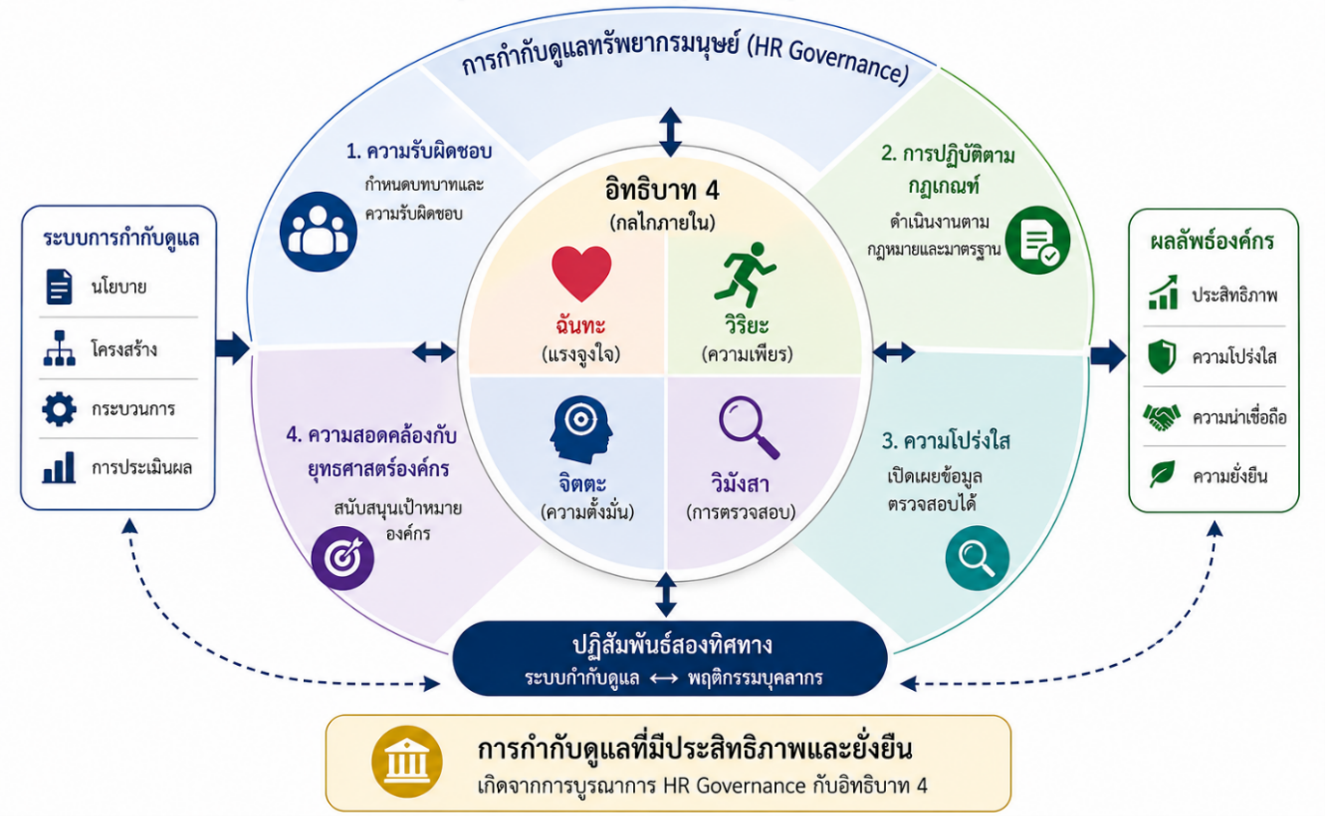
บทความวิชาการนี้มีวัตถุประสงค์เพื่อทบทวนและสังเคราะห์หลักอิทธิบาท 4 ควบคู่กับแนวคิดการกำกับดูแลทรัพยากรมนุษย์ (Human Resource Governance: HR Governance) เพื่อเสนอกรอบอธิบายการกำกับดูแลทรัพยากรมนุษย์ที่ครอบคลุมทั้งโครงสร้างองค์กรและพฤติกรรมของบุคลากร เนื้อหาอาศัยการทบทวนวรรณกรรมและการเรียบเรียงแนวคิดจากแหล่งข้อมูลทางวิชาการที่เกี่ยวข้อง ทั้งด้านการกำกับดูแลองค์กร การบริหารทรัพยากรมนุษย์ และหลักพุทธธรรม จากการทบทวนพบว่า HR Governance ให้ความสำคัญกับการกำหนดกรอบและกลไกในการควบคุมการตัดสินใจด้านบุคลากร โดยมีหลักการสำคัญ ได้แก่ ความรับผิดชอบ การปฏิบัติตามกฎเกณฑ์ ความโปร่งใส และความสอดคล้องกับยุทธศาสตร์องค์กร ซึ่งทำหน้าที่กำหนดทิศทางการดำเนินงาน ขณะเดียวกัน หลักอิทธิบาท 4 ซึ่งประกอบด้วย ฉันทะ วิริยะ จิตตะ และวิมังสา สะท้อนแรงขับภายในของบุคคลที่เกี่ยวข้องกับแรงจูงใจ ความเพียร ความตั้งใจ และการพิจารณาไตร่ตรอง ซึ่งส่งผลต่อพฤติกรรมการปฏิบัติงาน เมื่อพิจารณาร่วมกันพบว่า การเชื่อมโยง HR Governance กับอิทธิบาท 4 ช่วยทำให้การอธิบายการกำกับดูแลทรัพยากรมนุษย์มีความชัดเจนมากขึ้น โดย HR Governance กำหนดกรอบและทิศทางขององค์กร ส่วนอิทธิบาท 4 อธิบายพฤติกรรมของบุคลากรให้สอดคล้องกับกรอบดังกล่าว ทั้งสองส่วนมีความสัมพันธ์ต่อเนื่องกัน กล่าวคือ ระบบการกำกับดูแลมีอิทธิพลต่อพฤติกรรมของบุคลากร และพฤติกรรมของบุคลากรก็ส่งผลย้อนกลับต่อประสิทธิภาพของการกำกับดูแล องค์ความรู้ที่ได้จากบทความนี้คือกรอบแนวคิดการกำกับดูแลทรัพยากรมนุษย์เชิงบูรณาการ ซึ่งชี้ให้เห็นว่า การกำกับดูแลจะมีประสิทธิภาพมากขึ้นเมื่อพิจารณาทั้งโครงสร้างองค์กรและแรงขับภายในของบุคลากรควบคู่กัน แนวคิดดังกล่าวช่วยอธิบายความสัมพันธ์ระหว่างระบบการกำกับดูแลกับพฤติกรรมการทำงาน และสะท้อนผลลัพธ์ขององค์กรผ่านประสิทธิภาพ ความโปร่งใส ความน่าเชื่อถือ และความยั่งยืน
เอกสารอ้างอิง
ณิชาพัฒน์ คำดี. (2566). หลักอิทธิบาท 4 เพื่อพัฒนาประสิทธิภาพการปฏิบัติงาน. วารสารสหวิทยาการนวัตกรรมปริทรรศน์, 6(5), 242–253.
พระธรรมปิฎก (ป.อ. ปยุตฺโต). (2546). พจนานุกรมพุทธศาสตร์ ฉบับประมวลธรรม (พิมพ์ครั้งที่ 12). กรุงเทพฯ: โรงพิมพ์มหาจุฬาลงกรณราชวิทยาลัย.
_____. (2546). ภาวะผู้นำ : ความสำคัญต่อการพัฒนาคน พัฒนาประเทศ. กรุงเทพฯ: ธรรมสภาและสถาบันลือธรรม.
พิทูร มลิวัลย์. (2540). แบบเรียนวิชาธรรมและนักธรรมชั้นตรี. กรุงเทพฯ: กรมการศาสนา.
พิมพ์ลภัส จิตต์ธรรม. (2568). อิทธิบาท 4 ในการพัฒนาทรัพยากรมนุษย์สู่ความสำเร็จขององค์การ. วารสารบัณฑิตศึกษาวิชาการ, 3(2), 49-58.
มลธิดา อุบลรัตน์. (2565). หลักอิทธิบาท 4 : เพิ่มประสิทธิภาพการปฏิบัติงานให้มีความสุข. วารสารสหวิทยาการนวัตกรรมปริทรรศน์, 5(2), A150-A161.
มหาจุฬาลงกรณราชวิทยาลัย. (2539). พระไตรปิฎกฉบับภาษาไทย ฉบับมหาจุฬาลงกรณราชวิทยาลัย. กรุงเทพฯ: โรงพิมพ์มหาจุฬาลงกรณราชวิทยาลัย.
สมชาย ศุภธาดา. (2554). การกำกับดูแลกิจการด้านการบริหารทรัพยากรมนุษย์. วารสารวิชาชีพบัญชี, 7(18), 14–17.
สำนักงานคณะกรรมการข้าราชการพลเรือน. (2544). คู่มือการสร้างระบบบริหารกิจการบ้านเมืองและสังคมที่ดีตามระเบียบสำนักนายกรัฐมนตรีว่าด้วย การสร้างระบบบริหารกิจการบ้านเมืองและสังคมที่ดี พ.ศ. 2542. กรุงเทพฯ: พี.เอ.ลีฟวิ่ง.
สุธีร์ เครือวรรณ์. (2566). อิทธิบาท 4 : ความรับผิดชอบ. วารสาร มจร บาฬีศึกษาพุทธโฆสปริทรรศน์, 9(3), 238–250.
สุรวัฒน์ เดวา. (2565). เข้าใจ HR Governance ฟันเฟืองสำคัญที่ HR ยุคใหม่ต้องรู้. สืบค้นเมื่อ 23 มีนาคม 2569 จาก https://hand.co.th/blog/LoveMonday101_20221115.
แสงอรุณ โปร่งธุระ. (2539). พุทธศาสน์. กรุงเทพฯ: ฝ่ายเอกสารตำรา สำนักส่งเสริมวิชาการ สถาบันราชภัฏธนบุรี.
อนัญญา นิตย์โชติ. (2566). หลักอิทธิบาท 4: การเพิ่มประสิทธิภาพในการปฏิบัติงาน. วารสารพุทธนวัตกรรมปริทรรศน์, 4(1), 108-118.
Aguilera, R. V. et al. (2008). An organizational approach to comparative corporate governance: Costs, contingencies, and complementarities. Organization Science, 19(3), 475–492.
Beatty, R. W. et al. (2003). HR’s role in corporate governance: Present and prospective. Human Resource Management, 42(3), 257–269.
Day, R. & Woodward, T. (2004). Disclosure of information about employees in the directors' report of UK published financial statements: Substantive or symbolic?. Accounting Forum 28(1), 43–59.
Eisenhardt, K. M. (1989). Agency theory: An assessment and review. Academy of Management Review, 14(1), 57–74.
Farndale, E. et al. (2010). An exploratory study of governance in the intra-firm human resources supply chain. Human Resource Management, 49 (5), 849–868.
Hilb, M. (2006). New corporate governance: Successful board management tools (2nd ed.). Berlin, Heidelberg: Springer.
Holistique Training. (2024). What is HR Governance? Definition and Its Importance. Retrieved March 23, 2026, from https://holistiquetraining.com/en/news/hr-governance-definition-importance.
Kaehler, B. & Grundei, J. (2019). HR governance: A theoretical introduction. Cham, Switzerland: Springer.
Lima, L. & Galleli, B. (2021). Human resources management and corporate governance: Integration perspectives and future directions. European Management Journal, 39(6), 731–744.
Noor, N. A. M. et al. (2022). Human Governance: Unpacking the Meaning of Human. Retrieved March 23, 2026, from https://www.neuroquantology.com/open-access/Human+Governance%253A+Unpacking+the+Meaning+of++Human_2679/#.
ดาวน์โหลด
เผยแพร่แล้ว
รูปแบบการอ้างอิง
ฉบับ
ประเภทบทความ
สัญญาอนุญาต
ลิขสิทธิ์ (c) 2026 วารสารสหวิทยาการนวัตกรรมปริทรรศน์

อนุญาตภายใต้เงื่อนไข Creative Commons Attribution-NonCommercial-NoDerivatives 4.0 International License.
เพื่อให้เป็นไปตามกฎหมายลิขสิทธิ์ ผู้นิพนธ์ทุกท่านต้องลงลายมือชื่อในแบบฟอร์มใบมอบลิขสิทธิ์บทความให้แก่วารสารฯ พร้อมกับบทความต้นฉบับที่ได้แก้ไขครั้งสุดท้าย นอกจากนี้ ผู้นิพนธ์ทุกท่านต้องยืนยันว่าบทความต้นฉบับที่ส่งมาตีพิมพ์นั้น ได้ส่งมาตีพิมพ์เฉพาะในวารสารสหวิทยาการนวัตกรรมปริทรรศน์ เพียงแห่งเดียวเท่านั้น หากมีการใช้ภาพหรือตารางหรือเนื้อหาอื่นๆ ของผู้นิพนธ์อื่นที่ปรากฏในสิ่งตีพิมพ์อื่นมาแล้ว ผู้นิพนธ์ต้องขออนุญาตเจ้าของลิขสิทธิ์ก่อน พร้อมทั้งแสดงหนังสือที่ได้รับการยินยอมต่อบรรณาธิการ ก่อนที่บทความจะได้รับการตีพิมพ์ หากไม่เป็นไปตามข้อกำหนดเบื้องต้น ทางวารสารจะถอดบทความของท่านออกโดยไม่มีข้อยกเว้นใดๆ ทั้งสิ้น