พฤติกรรมจริยธรรมในเนื้อหากับการใช้สื่อออนไลน์ ทางแพลตฟอร์ม : กรณีศึกษา คอนเทนต์ครีเอเตอร์ นักศึกษา/ภาคเหนือ
Article Sidebar
Main Article Content
บทคัดย่อ
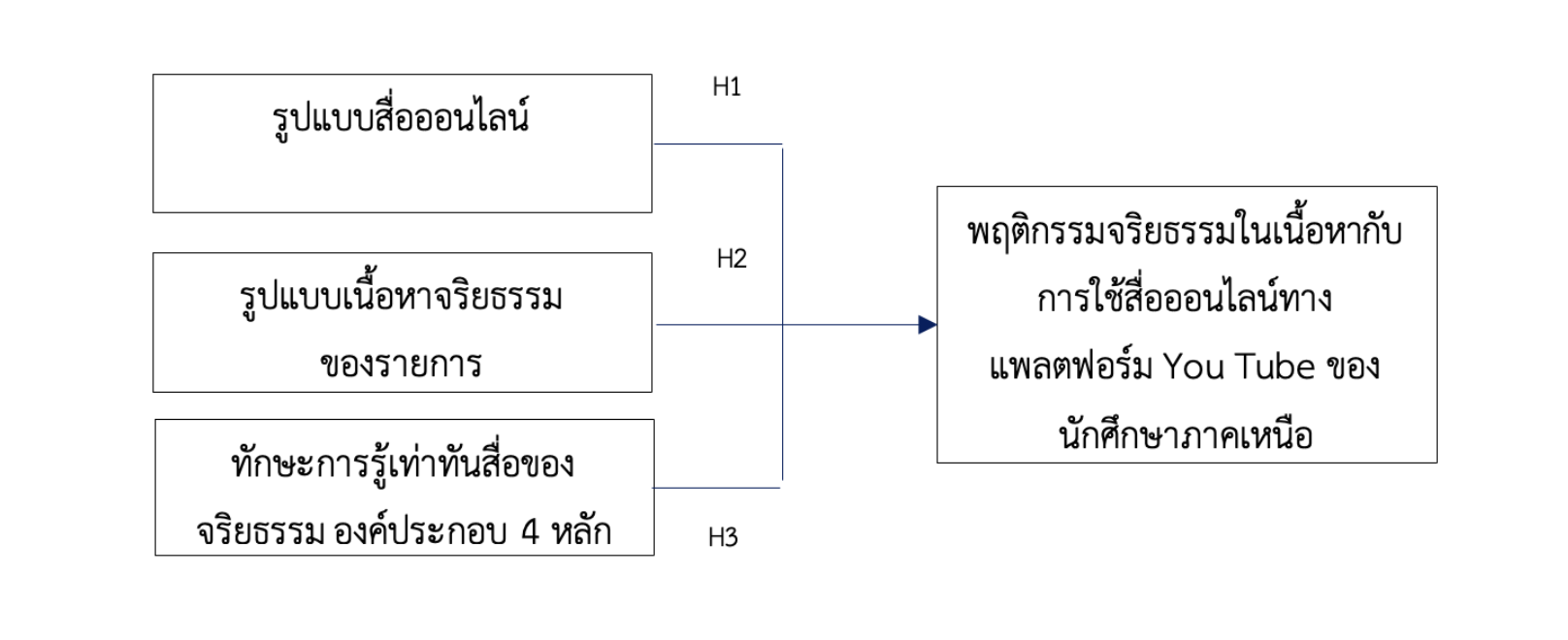
การวิจัยครั้งนี้มีวัตถุประสงค์ 1) เพื่อศึกษาความสัมพันธ์ระหว่างรูปแบบสื่อออนไลน์มีความสัมพันธ์กับพฤติกรรมจริยธรรมในเนื้อหากับการใช้สื่อออนไลน์ทางแพลตฟอร์ม You Tube 2) เพื่อศึกษาความสัมพันธ์ระหว่างรูปแบบเนื้อหาจริยธรรมของรายการมีความสัมพันธ์กับพฤติกรรมจริยธรรมในเนื้อหากับการใช้สื่อออนไลน์ทางแพลตฟอร์ม You Tube และ 3) เพื่อศึกษาความสัมพันธ์ระหว่างทักษะการรู้เท่าทันสื่อของจริยธรรม องค์ประกอบ 4 หลัก มีความสัมพันธ์กับพฤติกรรมจริยธรรมในเนื้อหากับการใช้สื่อออนไลน์ทางแพลตฟอร์ม You Tube ของนักศึกษาภาคเหนือ งานวิจัยนี้เป็นงานวิจัยแบบผสมผสานการวิจัยเชิงคุณภาพและวิจัยเชิงปริมาณในรูปแบบการวิจัยแบบพร้อมกัน โดยใช้แบบสอบถามเป็นเครื่องมือในการเก็บรวบรวมข้อมูลทางไปรษณีย์ จากนักศึกษาภาคเหนือ จํานวน 389 คน โดยสุ่มตัวอย่างแบบง่าย และใช้ตารางเลขสุ่มในการสุ่มตัวอย่าง และใช้แบบสัมภาษณ์เป็นเครื่องมือในการเก็บรวบรวมข้อมูลจากผู้ให้ข้อมูลหลักที่เป็นผู้เชี่ยวชาญด้านการสื่อสาร ด้วยการสัมภาษณ์เชิงลึก จำนวน 6 คน คัดเลือกจากหลักเกณฑ์ที่เข้าเงื่อนไขทุกข้อ คืออยู่ในสังกัดมหาวิทยาลัยภาคเหนือ และเป็นผู้เชี่ยวชาญด้านการสื่อสาร กลยุทธ์การประชาสัมพันธ์ ผู้ผลิตหรือผู้สร้างวีดีโอต่างๆ คอนเทนต์ครีเอเตอร์ ตัวแปรที่ใช้ในการวิจัย ประกอบด้วย ตัวแปรอิสระ จำนวน 3 ตัวแปร คือ รูปแบบสื่อออนไลน์ รูปแบบเนื้อหาจริยธรรมของรายการ และทักษะการรู้เท่าทันสื่อของจริยธรรม องค์ประกอบ 4 หลัก และตัวแปรตาม จำนวน 1 ตัวแปร คือ พฤติกรรมจริยธรรมในเนื้อหากับการใช้สื่อออนไลน์ทางแพลตฟอร์ม You Tube ซึ่งแบบสอบถามมีค่า IOC อยู่ระหว่าง 0.67-1 ค่าความน่าเชื่อถือของแบบสอบถามอยู่ระหว่าง 0.887-0.937 และใช้การวิเคราะห์การถดถอยพหุคูณในการวิเคราะห์ข้อมูลในการวิจัย
ผลการวิจัยเชิงปริมาณและการวิจัยคุณภาพมีความสอดคล้องกัน พบว่า 1) รูปแบบสื่อออนไลน์มีความสัมพันธ์กับพฤติกรรมจริยธรรมในเนื้อหากับการใช้สื่อออนไลน์ทางแพลตฟอร์ม You Tube 2) รูปแบบเนื้อหาจริยธรรมของรายการมีความสัมพันธ์กับพฤติกรรมจริยธรรมในเนื้อหากับการใช้สื่อออนไลน์ทางแพลตฟอร์ม You Tube และ 3) ทักษะการรู้เท่าทันสื่อของจริยธรรม องค์ประกอบ 4 หลัก มีความสัมพันธ์กับพฤติกรรมจริยธรรมในเนื้อหากับการใช้สื่อออนไลน์ทางแพลตฟอร์ม You Tube
โดยสรุป รูปแบบสื่อออนไลน์ รูปแบบเนื้อหาจริยธรรมของรายการ และทักษะการรู้เท่าทันสื่อของจริยธรรม องค์ประกอบ 4 หลัก มีความสัมพันธ์กับพฤติกรรมจริยธรรมในเนื้อหากับการใช้สื่อออนไลน์ทางแพลตฟอร์ม You Tube ดังนั้น ผู้ผลิตรายการควรคำนึงถึงเนื้อหาสาระของรายการที่มีจริยธรรม และนำเสนอข้อมูลตามสถานการณ์ และเป็นข้อมูลที่เป็นจริง เพื่อให้ผู้เข้ารับชมสามารถวิเคราะห์ สังเคราะห์ พิจารณาเลือกรับชมรายการจากข้อมูลที่เป็นจริง ไม่บิดเบือน จะทำให้ผู้เข้ารับชมรายการผ่านสื่อออนไลน์ทางแพลตฟอร์ม You Tube มีทักษะการรู้เท่าทัน สื่อของจริยธรรมมากขึ้น และจะช่วยให้ผู้ผลิตรายการได้รับความนิยมจากการกดติดตามและการแชร์ต่อเนื้อหามากขึ้น
Downloads
Article Details
เอกสารอ้างอิง
Chen, L., & Miller, B. (2023). Internet and globalization: A study on information access and communication. International Journal of Communication, 17(4), 567-580.
D'Heer, L., & Van, D. B. H. (2023). The continued relevance of traditional media: How legacy media organisations navigate the digital age. Journal of Communication, 73(5), 598–617.
Day. (2006). Ethics in Media Communication: Cases and Controversies. British Psychological Society.
Kaewthep, K. (1997). Mass media in the year 2000. Chulalongkorn University Press.
Kaewthep, K. (2012). New media studies handbook. Office of the Thailand Research Fund.
Kaewthep, K. (2013). Mass communication: Theory and approaches to study. Phappim Partnership Limited.
Kaewthep, K., & Chaichumpon, N. (2012). New media studies handbook. Office of the Thailand Research Fund.
Ketuweerapong, R. (2021). Media exposure, popular entertainment program content characteristics, and expectations towards entertainment programs among Thai teenagers today [Unpublished master's thesis]. Chiang Mai Rajabhat University.
Kohlberg, L. (1976). Moral development and behavior: Theory, research and social issues. Holt, Rinehart and Winston.
McDaniel, M. A., Roediger, H. L., & McDermott, K. B. (2012). Using quizzes to enhance summative- assessment performance in a web-based class: An experimental study. Journal of Applied Cognitive Psychology, 26(4), 514-522.
Ministry of Digital Economy and Society. (2023, February 5). Continuous report on internet user behavior survey in Thailand. https://www.etda.or.th/th/pr-news/ETDA-released-IUB-2021.aspx
Sirichoen, N. (2014). Communication for media and information literacy from internet media [Unpublished dissertation] Sukhothaithammathirat Open University.
Srimanta, D. (2018). Knowledge seeking, attitudes, and communication behavior through online social networks of elderly people in Bang Kaew Subdistrict, Bang Phli District, Samut Prakan Province. Dhurakij Pundit University Journal of Business Communication, 12(2), 42-51.
Sukhtat, C., & Klinkesorn, P. (2022). Development of a curriculum to enhance online social media literacy among students at the School of Law and Politics. Journal of Learning Innovation and Society, 5(3), 1-15.
Suwajittanont, W. (2019). Communication processes through online media of grade 10 students at Nangrong School, Nangrong District, Buriram Province [Unpublished master's thesis]. Khon Kaen University.
Townsend, L., & Wallace, C. (n.d.). Media research: A guide to ethics. The University of Aberdeen.
Waesaehae, A. (2021). Media literacy: Skills that must be known and applied in the era of online social media. Academic Journal of Faculty of Business Administration and Accounting, Rajamangala University of Technology Phra Nakhon, 3(1), 1-12.
Wattanaphon, R. (2024). Guidelines for using online social media in public relations for small and medium enterprises in the digital age. Journal of Communication Arts, Sukhothaithammathirat Open University, 20(1), 80-95.
Wongsuphap, W., & Kaewprasert, C. (2024). Media exposure and utilization of online social media: A case study of platform development for organizational communication. Academic Journal of Mass Communication, 15(2), 45-60.
Wongsuree, B., Yangyuen, M., & Lertpaisarn, R. (2023). A study of online social media usage behavior for developing digital era learning among higher education students. Thonburi University Academic Journal, 17(3), 105-119.
Wongmonta, S. (n.d.). Principles and theories of communication. Sukhothaithammathirat Open University Press.
Yara, W., & Teaspoon, A. (2024). A study of communication process components of young people to create mutual understanding in the digital era. Academic Journal of Faculty of Business Administration, Rajamangala University of Technology Thanyaburi, 19(1), 162–176.
