FACTORS EFFECTING THAI ARTISTS' DECISION TO SELL DIGITAL ART WORKS VIA NFT PLATFORM
Article Sidebar
Main Article Content
Abstract
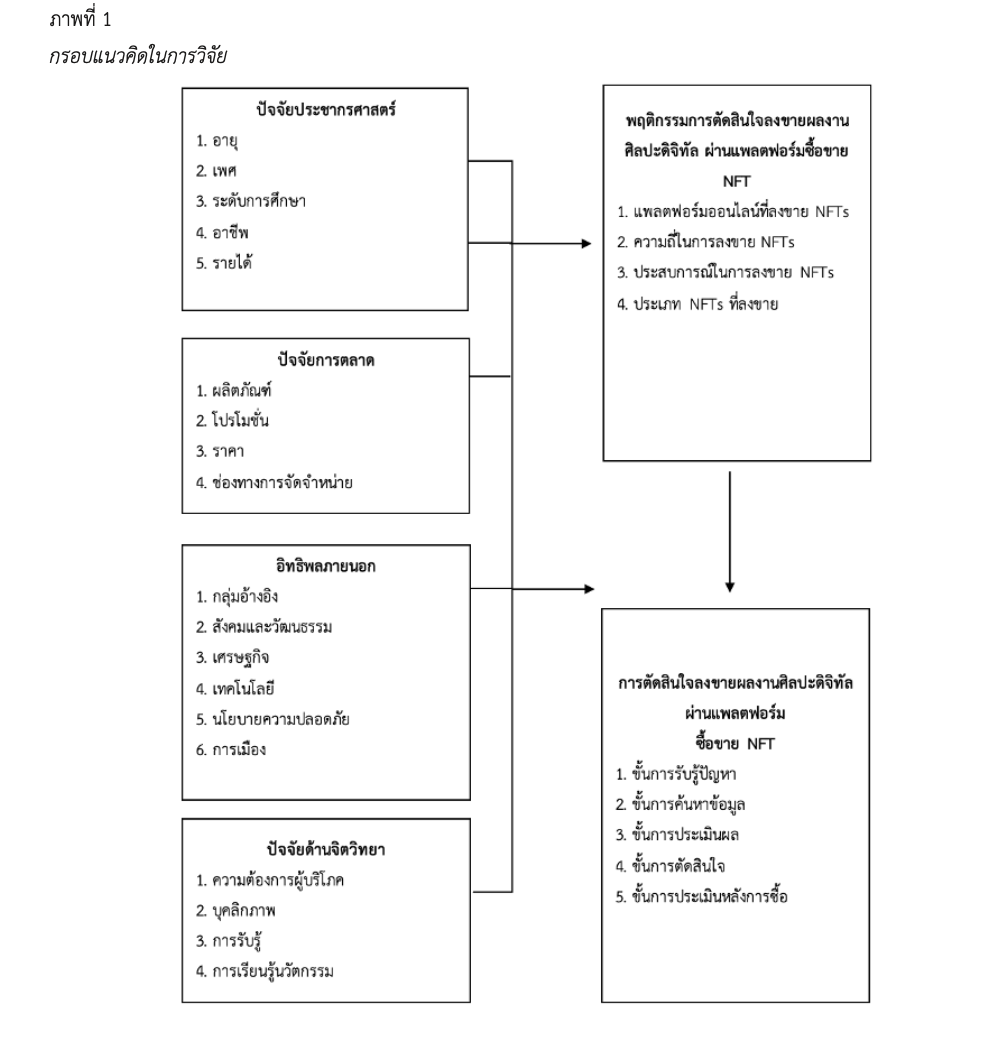
The purpose of this research is to study factors that affect the decision to sell digital artworks via NFT platforms and the selling decisions they influence. The data were collected from 400 Thai artists who used to sell digital artworks via NFT platforms through online questionnaires.
Different NFT selling behaviors are exhibited by sample groups categorized by demographic factors such as occupation. Regarding marketing, selling NFTs showcases three distinct behaviors concerning price and various product attributes. NFTs marketplaces vary in terms of average monthly sales frequency, types of NFTs available, and pricing strategies. These online platforms are influenced by external factors, namely economics, security policies, and governmental regulations, each contributing to a unique selling experience. Mental factors, including personality traits, also impact NFTs selling approaches. The decision-making process of selling digital art through NFT marketplaces is influenced by demographic, marketing, psychological factors, and external influences, resulting in diverse experiences at every decision-making stage
Downloads
Article Details
References
ตรีรัตน์ อรอมรรัตน์. (2559). การศึกษาพฤติกรรมการตัดสินใจซื้ออาหารแมวสำเร็จรูประดับพรีเมี่ยม. [การค้นคว้าอิสระปริญญาบริหารธุรกิจมหาบัณฑิต ไม่ได้ตีพิมพ์]. มหาวิทยาลัยธรรมศาสตร์.
บุณยนุช เอื้อศิรินุเคราะห์. (2558). พฤติกรรมการซื้อและความคิดเห็นเกี่ยวกับปัจจัยที่มีผลต่อการตัดสินใจซื้อหนังสือการ์ตูนญี่ปุ่นของประชาชน ในเขตกรุงเทพมหานคร. [การค้นคว้าอิสระปริญญาบริหารธุรกิจมหาบัณฑิต ไม่ได้ตีพิมพ์]. มหาวิทยาลัยธรรมศาสตร์.
วิพัฒน์พร ภัทรเสฏฐ์โสภณ. (2560). ปัจจัยส่วนประสมทางการตลาดที่ส่งผลต่อความพึงพอใจของลูกค้าแผนกเครื่องมือวิเคราะห์ทางวิทยาศาสตร์ของบริษัทเอกชนแห่งหนึ่ง. [การค้นคว้าอิสระปริญญาบริหารธุรกิจมหาบัณฑิต ไม่ได้ตีพิมพ์]. มหาวิทยาลัยธรรมศาสตร์.
สุทธาศิณี ดวงสุข. (2557). การศึกษาความแตกต่างด้านความพึงพอใจต่อส่วนประสมทางการตลาดของกลุ่มผู้บริโภคระหว่างกลุ่มลูกค้า Tesco Lotus Express และกลุ่มลูกค้า Mini Big C ในเขตกรุงเทพมหานคร. [การศึกษาด้วยตนเองปริญญามหาบัณฑิต ไม่ได้ตีพิมพ์]. มหาวิทยาลัยหอการค้าไทย.
สมภพ ศักดิ์จิรพาพงษ์. (2558). ปัจจัยที่มีผลต่อความพึงพอใจในการซื้อสินค้าของแม็กซ์แวลู ซูเปอร์มาร์เก็ต (Maxvalu Supermarket) ของผู้บริโภคในเขตกรุงเทพมหานคร และปริมณฑล. [การค้นคว้าอิสระปริญญามหาบัณฑิต ไม่ได้ตีพิมพ์]. มหาวิทยาลัยธรรมศาสตร์.
สำนักงานคณะกรรมการกำกับหลักทรัพย์และตลาดหลักทรัพย์. (6 มกราคม 2565). Non-Fungible Token (NFT) และการกำกับดูแลของ ก.ล.ต. https://www.sec.or.th/TH/Template3/Articles/2565/060165.pdf
อภิสิทธิ์ ไล่สัตรูไกล. (14 ตุลาคม 2564). NFT พลิกโฉมอุตสาหกรรมสร้างสรรค์ สู่ตลาดศิลปะดิจิทัล.https://www.thaipr.net/business/3108556.
อรพัทธ์ วงศาโรจน์. (2565). Non-Fungible Token และการคุ้มครองตามกฎหมายไทย. วารสารกฎหมายนิติพัฒน์ นิด้า, 11(1), 35-51.
Anna Fleck. (2022, Jun 3). Where Most NFT Users Live. https://www.statista.com/chart/27571/where-nft-users-live/
Antier Solutions. (2021, September 10). The Future of NFT Marketplaces.
https://antiersolutions.medium.com/the-future-of-nft-marketplaces-7c6ead7e512f
Finder. (2022, October 3). Key US NFT adoption trends for September 2022 report. https://www.finder.com/nft-statistics
Kotler. (1997). Marketing Management: Analysis, Planning, Implementation, and Control. Saddle River.
Kotler and Keller. (2014). Marketing Management. Saddle River.
Wang et al. (2021, October 25). Non-Fungible Token (NFT): Overview, Evaluation, Opportunities and Challenges. https://arxiv.org/pdf/2105.07447.pdf
Workpointtoday. (2021 November 4). สรุป NFT ฉบับอัปเดตประเทศไทย ตั้งแต่ความรู้เริ่มต้นจนถึงโอกาสศิลปิน.https://bit.ly/3JDqGmc.
