FACTORS INFLUENCING THE ADOPTION OF DRONES FOR RICE FARMING AMONG LARGE-SCALE RICE FARMERS, PATHUM THANI
Article Sidebar
Main Article Content
Abstract
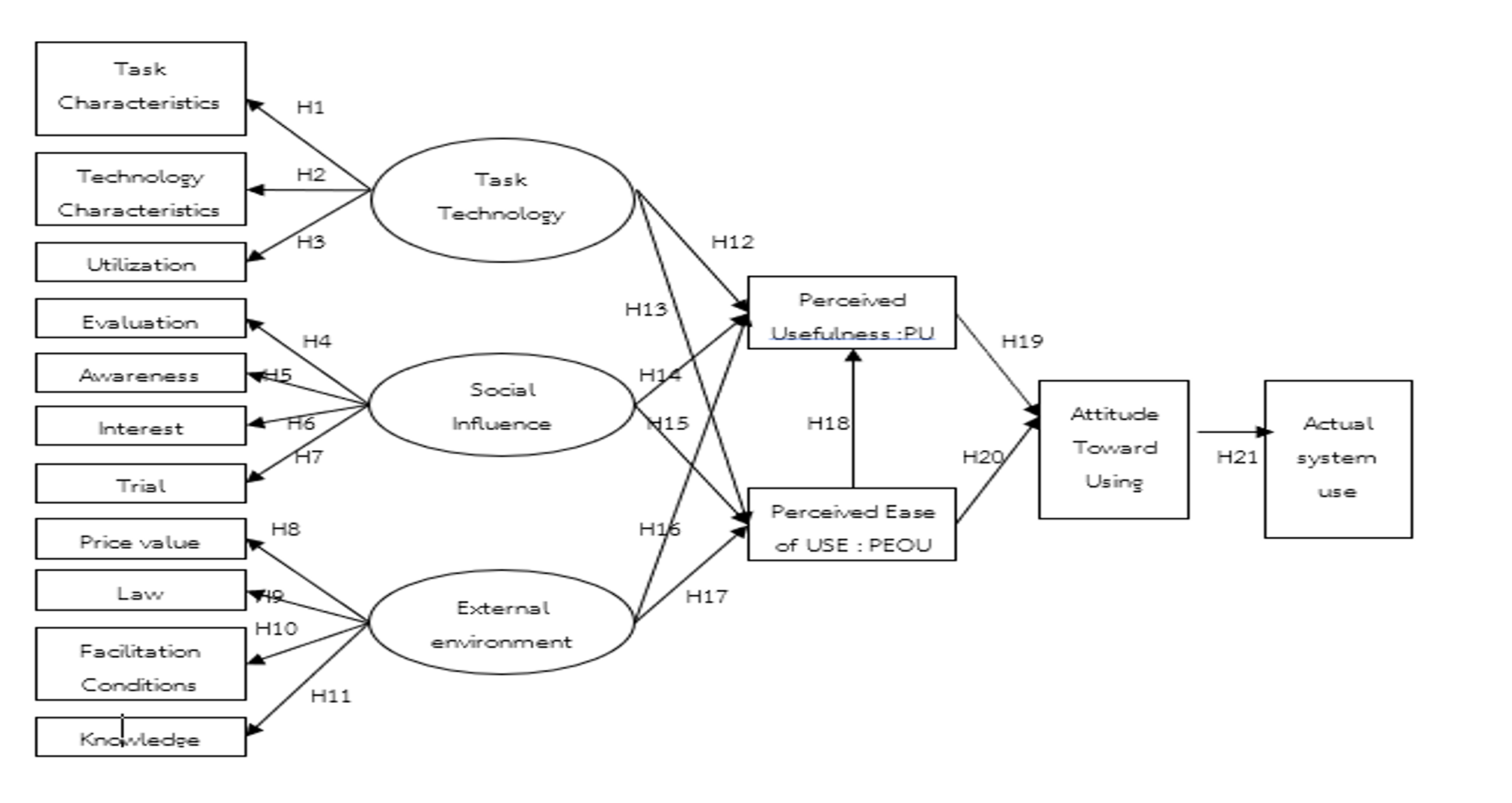
The objective of this research is to study the factors influencing the Use of agricultural drones in large-scale farming among farmers in Pathum Thani province. The study for Used on a sample group of large-scale farmers in Pathum Thani province and applied the Technology Acceptance Model (TAM), Task-Technology Fit (TTF) model, and theories of motivation. The sample consists of 329 rice farmers, and data is collected through a closed-ended questionnaire with 63 items measuring 7 factors. Statistical analysis includes descriptive statistics, confirmatory factor analysis (CFA), and structural equation modeling (SEM) to examine variables and test research hypotheses.
The findings reveal that :
the direct factors influencing the acceptance and actual use of the technology (Actual System Use) are attitudes towards using, mediated by perceived ease of use. Task-Technology Fit, external environmental factors, and social influence also play a role. This research contributes to the development of proposals to enhance farmers' attitudes and acceptance of technology, aligning with the government's policies to drive the agricultural sector as part of Thailand 4.0. Additionally, farmers choose to use technology that is user-friendly, not complicated, reasonably priced, and has been tested and used before
Article Details
References
ธงชัย วจะสุวรรณ และเจษฎา วงศ์แสนสุขเจริญ. (2565). การยอมรับเทคโนโลยีและนวัตกรรมที่ส่งผลต่อความตั้งใช้โดรน เพื่อการเกษตร, วารสารปัญญาภิวัฒน์, 14(1), 143-157.
นิพนธ์ พัวพงศกร และคณะ. (2563). นโยบายเทคโนโลยีการเกษตร 4.0 (Farming 4.0 Policy). สถาบันวิจัยเพื่อการพัฒนาประเทศไทย.
พงศ์เทพ จิระโร. (2559). การสังเคราะห์งานวิจัยระดับบัณฑิตศึกษา คณะศึกษาศาสตร์ มหาวิทยาลัยบูรพา เพื่อกำหนดมโนทัศน์และกลยุทธ์ส่งเสริมการทำวิจัย ,วารสารวิชาการและวิจัยสังคมศาสตร์, 20(1), 59-79.
สถาบันการมองอนาคตนวัตกรรม. (2562, 5 กันยายน). 5 Disruptive Digital Technology. จาก https://ifi.nia.or.th/.
สำนักงานเศรษฐกิจการเกษตร. (2565, 2 กุมภาพันธ์ ). สัมมนา Year End ประจำปี แถลงบทสรุปภาวะเศรษฐกิจการเกษตรปี 2565 และแนวโน้มปี 2566. https://www.oae.go.th/view/1
สำนักงานเศรษฐกิจการเกษตร. (2561, 10 สิงหาคม). การปรับโครงสร้างการผลิตเป็นแปลงใหญ่. https://www.oae.go.th/maim.php?filename=csr
สำนักงานส่งเสริมเศรษฐกิจดิจิทัล. 2562. โดรนกับเกษตรไทย Tech Series: Drone for Smart Farming. แหล่งข้อมูล: https://www.depa.or.th/. ค้นเมื่อ 25 กันยายน 2565
อันนตพร วงศ์คำ และคณะ. (2021). การศึกษาการยอมรับเทคโนโลยีสารสนเทศ สำหรับวิสาหกิจชุมชนขนาดกลางและขนาดย่อมในภาคเกษตรกรรม: กรณีศึกษาเกษตรกรในจังหวัดสุพรรณบุรี วารสารสันติศึกษาปริทรรศน์. มหาวิทยาลัยมหาจุฬาลงกรณราชวิทยาลัย, 9(1), 253-264.
Dishaw, M.T.& Strong, D.M. (1998). Extending the technology acceptance model with task-technology fit Constructs. Information & Society, 21(2), 13-27.
F. D. Davis. (1989). Perceived Usefulness, Perceived Ease of Use, and User Acceptance of Information Technology. MIS Quarterly, 13(3), 319-339.
Goodhue, D.L. & Thompson, R.L. (1995). Task-Technology Fit and Individual Performance. MIS Quarterly. 19(2), 213-236.
Roger, E.M. (1983). Diffusion of innovations. The Free Press.
