ข้อเสนอเชิงนโยบาย: การสื่อสาร “เมืองน่าอยู่” พื้นที่สามจังหวัดชายแดนใต้
Article Sidebar
Main Article Content
บทคัดย่อ
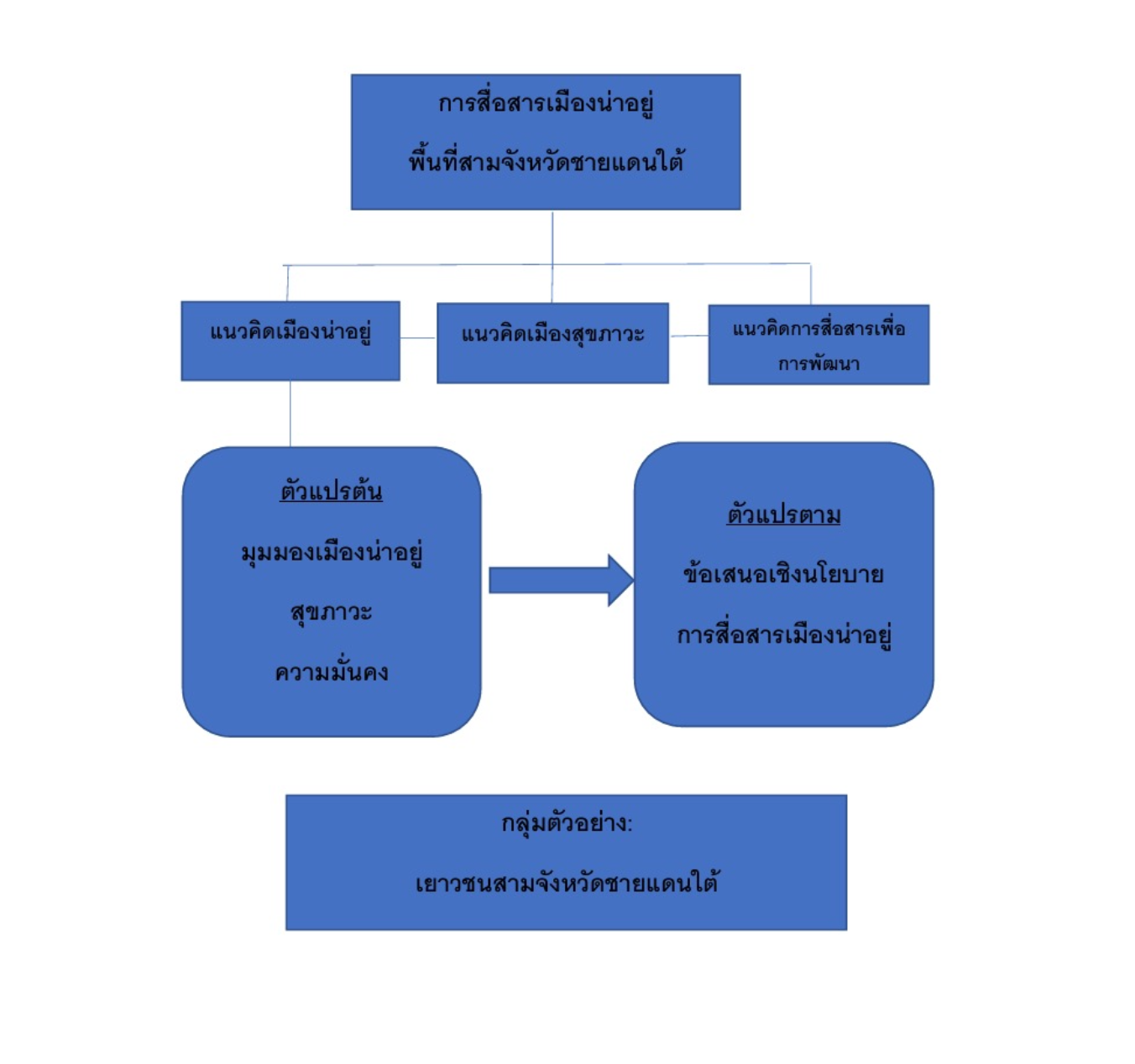
บทนำ: การวิจัยเรื่อง "ข้อเสนอเชิงนโยบาย: การสื่อสารเมืองน่าอยู่ในพื้นที่สามจังหวัดชายแดนภาคใต้" เป็นส่วนหนึ่งของชุดโครงการวิจัยแวรุงมลายูกับเรื่องเล่าใหม่: น่าอยู่ น่าเที่ยว น่าลงทุน ในสามจังหวัดชายแดนใต้ วัตถุประสงค์การวิจัย: เพื่อศึกษาระดับของการเป็นเมืองน่าอยู่ตามมุมมองของเยาวชนในพื้นที่และนำเสนอข้อเสนอเชิงนโยบายเพื่อส่งเสริมการพัฒนาเมืองในลักษณะที่ยั่งยืน ครอบคลุมประเด็นด้านคุณภาพชีวิต สุขภาวะ และความมั่นคงในมิติต่างๆผ่านการสื่อสารระเบียบวิธีวิจัย: เป็นเชิงปริมาณ (Quantitative research) โดยการศึกษาวิเคราะห์เนื้อหา (Content analysis) เพื่อนำมาสู่การออกแบบการวิจัยเชิงสำรวจ (Survey research) โดยใช้แบบสอบถาม (Questionaire) ผลการวิจัย: พบว่า ทุกด้านของการเป็นเมืองน่าอยู่ในพื้นที่สามจังหวัดชายแดนภาคใต้ได้รับการประเมินในระดับ "มาก" จากเยาวชน แต่ยังไม่มีด้านใดที่อยู่ในระดับ "มากที่สุด" ซึ่งสะท้อนให้เห็นถึงช่องว่างในการพัฒนา โดยเฉพาะด้านความมั่นคงทางการเมืองและเศรษฐกิจซึ่งได้รับค่าเฉลี่ยต่ำสุด (3.82) ขณะที่ด้านวัฒนธรรมและสิ่งแวดล้อมเป็นจุดแข็งของพื้นที่ (ค่าเฉลี่ย 4.00) ในด้านสุขภาวะตามแนวคิด Healthy Cities ขององค์การอนามัยโลก สาขายุโรป พบว่าแต่ละประเด็นได้รับการประเมินอยู่ในระดับมาก (3.85–3.94) โดยเฉพาะการสืบสานมรดกทางวัฒนธรรมซึ่งได้รับคะแนนสูงสุด (3.94) อย่างไรก็ตาม ประเด็นด้านการมีส่วนร่วมของชุมชน การควบคุมรูปทรงเมือง และนวัตกรรมทางเศรษฐกิจยังอยู่ในระดับที่ต้องพัฒนา ซึ่งเน้นถึงความจำเป็นของการส่งเสริมบทบาทเยาวชนในการอนุรักษ์วัฒนธรรม และเพิ่มกลไกการมีส่วนร่วมในการพัฒนาเมือง สำหรับปัจจัยด้านความมั่นคงที่ส่งผลต่อการตัดสินใจอยู่อาศัยในพื้นที่ พบว่าทุกปัจจัยได้รับการประเมินในระดับมาก (3.62–3.89) โดยไม่มีปัจจัยใดโดดเด่นกว่ากันอย่างชัดเจน แต่ความแตกต่างทางภาษาและวัฒนธรรมเป็นประเด็นที่ได้รับคะแนนต่ำสุดสะท้อนถึงความจำเป็นในการส่งเสริมความเข้าใจข้ามวัฒนธรรมในพื้นที่ที่มีความหลากหลายเช่นนี้ สรุป: การพัฒนาเมืองน่าอยู่ผ่านนโยบายแบบบูรณาการที่เชื่อมโยงทุกมิติ โดยเฉพาะความปลอดภัย เศรษฐกิจ และวัฒนธรรม การส่งเสริมบทบาทของชุมชนในการตัดสินใจ การจัดลำดับความสำคัญในด้านที่ยังอ่อนแอ เช่น ความแตกต่างทางภาษาและการติดตามประเมินผลอย่างต่อเนื่อง แนวทางการพัฒนาเมืองน่าอยู่และเมืองสุขภาวะในสามจังหวัดชายแดนภาคใต้จะต้องสอดคล้องกับบริบทพื้นที่ และตอกย้ำถึงความสำคัญของการมีส่วนร่วมจากเยาวชนและทุกภาคส่วนในการขับเคลื่อนการพัฒนาอย่างยั่งยืนและรอบด้าน
Downloads
Article Details
เอกสารอ้างอิง
King Prajadhipok's Institute. (2020). Communication for Peace Building in the Three Southern Border Provinces. King Prajadhipok's Institute.
Southern Border Provinces Administrative Centre (SBPAC). (2021). Southern Border Provinces Development Strategy Report B.E. 2021-2024.
Sirisoontron, A. (2016). The concept of a livable city with sustainable urban planning. Urban Planning Journal, 12(2), 45-60.
Gehl, J. (2010). Cities for People. Island Press.
United Nations Human Settlements Programme (UN-Habitat). (2016). Urbanization and
Development: Emerging Futures.
World Health Organization. (1998). Healthy Cities and the City Planning Process: A
Background Document on Links Between Health and Urban Planning. WHO Regional Office for Europe.
