
FACTORS AFFECTING THE DECISION TO CHOOSE ONLINE PLATFORM FOR HEALTH INFORMATION
Article Sidebar
Main Article Content
Abstract
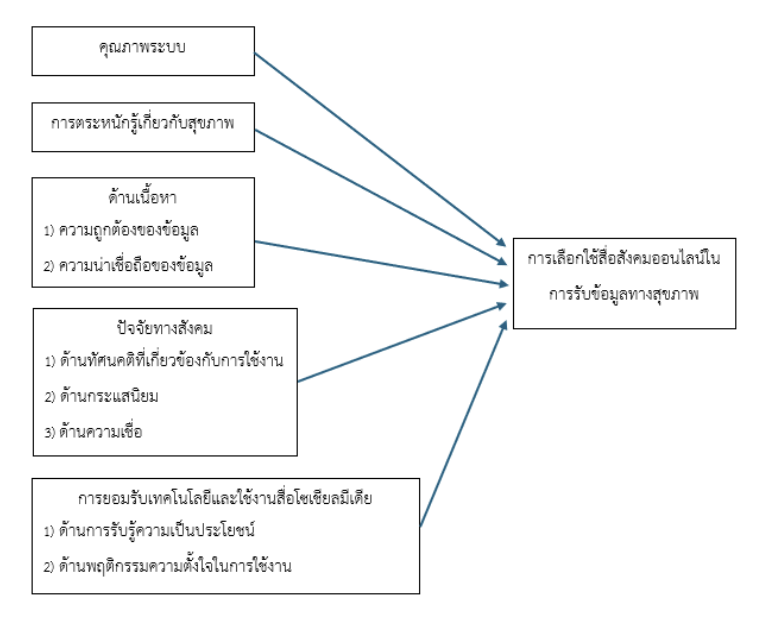
Introduction: Social media has become an important channel for disseminating health information, enabling the public to access health-related content conveniently and rapidly. However, the selection of online platforms for obtaining health information is influenced by various factors. Therefore, it is essential to investigate the factors affecting individuals’ decisions to choose online platforms for health information to provide guidelines for developing effective health communication media. Objectives: 1. To investigate the factors influencing individuals' decisions when choosing online platforms for receiving health information. 2. To propose guidelines for developing health education media in formats suitable for the online channels that audiences prefer, such as using infographics to summarize information on Facebook or clear storytelling videos on YouTube. Methods: This quantitative survey research used a questionnaire to collect data from 417 people living in the Bangkok metropolitan area who use the internet for health care purposes. The data were collected from service users at Siriraj Hospital and members of various health-related social media groups. The data were analyzed using descriptive statistics and multiple regression analysis, and expert opinions were requested to jointly discuss the results. Results: 1. Technology acceptance and social media usage, social factors (attitudes and beliefs), and Platform Quality all significantly influence the choice to use online social media for receiving health information. 2. To appropriately develop health education media and increase audience engagement, it should begin with fostering the acceptance and skills for self-directed health information seeking, promoting accurate beliefs, and developing health content across various channels to be easily understood by the audience. Conclusion: The findings indicate that technology acceptance, social factors, and platform quality are key factors influencing the decision to choose online platforms for receiving health information. The results can serve as practical guidelines for developing health communication media that better meet audience needs and improve the effectiveness of health information dissemination.
Downloads
Article Details
References
Buranthaveekoon, N. (2020). Thai people's behavior using the Internet and the reasons for its growth. Marketeer. https://marketeeronline.co/archives/155464
Davis, F. D. (1989). Perceived usefulness, perceived ease of use, and user acceptance of information technology. MIS Quarterly, 13(3), 319-340. https://doi.org/10.2307/249008
Digimusketeers. (2024). Social Media : How many types are there and what is important for a branding person to know.https://digimusketeers.co.th/blogs/online-marketing/social-media
Katz, E., Blumler, J. G., & Gurevitch, M. (1973). Uses and gratifications research. Public Opinion Quarterly, 37(4), 509–523. https://doi.org/10.1086/268109
Kemp, S. (2024). Digital 2024: Thailand. DataReportal. https://datareportal.com/reports/digital-2024-thailand/
Knobloch-Westerwick, S. (2014). Choice and preference in media use: Advances in selective exposure theory and research. Routledge. https://doi.org/10.4324/9781315771359
Rogers, E. M. (2003). Diffusion of innovations (5th ed.). Free Press.
Rosenstock, I. M. (1974). Historical origins of the health belief model. Health Education Monographs, 2(4), 328–335. https://doi.org/10.1177/109019817400200403
World Health Organization. (1948). Constitution of the World Health Organization. Official Records of the World Health Organization, (2), 100. https://apps.who.int/gb/bd/PDF/bd48/basic-documents-48th-edition-en.pdf.
