DIGITAL TECHNOLOGY AND EDUCATION MANAGEMENT IN THE 21ST CENTURY
Keywords:
Digital Technology, Educational Administration, 21st CenturyAbstract
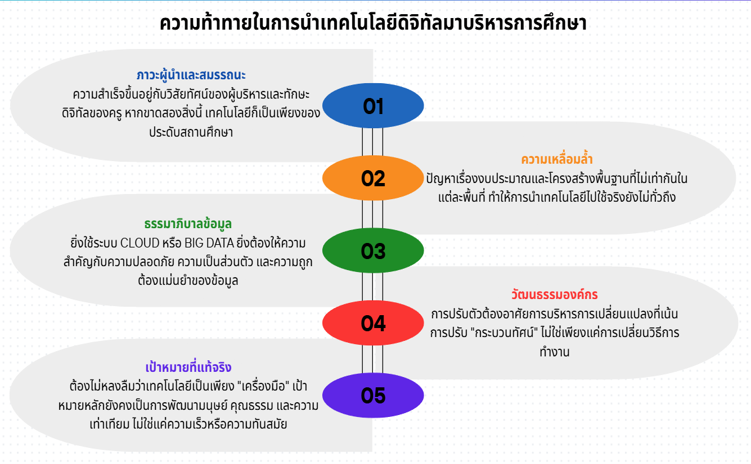
This article aims to analyze approaches to educational institution management in the digital era, with a focus on systematically integrating digital technology into the core missions of schools. These encompass seven key areas: learning process development, curriculum development, promotion of innovation and instructional media, research for educational quality improvement, measurement and evaluation, quality assurance, and the promotion of academic collaboration with communities. Digital technology serves as a crucial mechanism for enhancing administrative efficiency and holistically improving student quality. The application of digital technology facilitates flexible learning, enabling access anytime and anywhere, supports data-driven management, and fosters effective collaboration networks between educational institutions and communities. However, implementation faces several significant challenges, including the readiness of personnel’s digital competencies, inequalities in resources and infrastructure, data management and information security, and the need to transform organizational culture to align with the digital context. Therefore, successful management of educational institutions in the digital era requires visionary leadership, strategic planning, and continuous professional development of personnel, alongside the ethical and balanced use of technology. This ensures the development of learners with both digital competencies and well-rounded human qualities, enabling them to live effectively and sustainably in a digital society.
References
จันทร์พิมพ์ วงศ์ประชารัตน์ และคณะ. (2568). การใช้เทคโนโลยีดิจิทัลในการบริหารงานวิชาการสำหรับผู้บริหารสถานศึกษาในศตวรรษที่ 21 สังกัดสำนักงานเขตพื้นที่การศึกษาประถมศึกษาเพชรบุรี เขต 1. วารสาร มจร เพชรบุรีปริทรรศน์, 8(1), 56–72.
ใจทิพย์ ณ สงขลา. (2561). การออกแบบการเรียนแนวดิจิทัล Digital Learning Design. กรุงเทพฯ: จุฬาลงกรณ์มหาวิทยาลัย.
ธีรศักดิ์ อุปไมยอธิชัย และสุชาติ บางวิเศษ. (2563). การบริหารและการจัดการศึกษาสู่การพัฒนาที่ยั่งยืน. เชียงใหม่: บริษัท กู๊ดเฮด พริ้นท์ติ้ง แอนด์ แพคเกจจิ้ง กรุ๊ป จำกัด.
เพชรประภาร์ ชุมสาย. (2559). การจัดการศึกษาตามหลักปรัชญาของเศรษฐกิจพอเพียงในสถานศึกษา สังกัดสำนักงานเขตพื้นที่การศึกษามัธยมศึกษา เขต 17 (วิทยานิพนธ์ปริญญาครุศาสตรมหาบัณฑิต สาขาวิชาการบริหารการศึกษา). จันทบุรี: มหาวิทยาลัยรำไพพรรณี.
เพชรสุภัค กิจสกุล และคณะ. (2566). การพัฒนานวัตกรรมการบริหารการศึกษาในยุคดิจิทัล. Journal of Administrative and Management Innovation, 11(2), 147–158.
ภัทรพันธุ์ นิธิวรัตน์สกุล และคณะ. (2566). “การเรียนรู้ดิจิทัลสำหรับครูยุคใหม่”. วารสารนวัตกรรมการศึกษาและการวิจัย, 7(2), 677–686.
รัตนาวดี เที่ยงตรง. (2564). การศึกษาการใช้เทคโนโลยีดิจิทัลเพื่อการจัดการเรียนรู้ของครูในสถานศึกษา สังกัดสำนักงานเขตพื้นที่การศึกษาประถมศึกษาสุโขทัย เขต 2 (การค้นคว้าอิสระตามหลักสูตรการศึกษามหาบัณฑิต สาขาวิชาการบริหารการศึกษา). พิษณุโลก: มหาวิทยาลัยนเรศวร.
สุปรีดา โกษาแสง และคณะ. (2565). เทคโนโลยีดิจิทัลสำหรับการบริหารสถานศึกษาในยุค Digital Transformation. วารสารบริหารการศึกษา มศว, 19(37), 242–250.
อรุณี ทองนพคุณ. (2558). การศึกษาบทบาทการบริหารงานของผู้บริหารสถานศึกษา สังกัดสำนักงานเขตพื้นที่การศึกษาประถมศึกษาฉะเชิงเทรา (วิทยานิพนธ์ปริญญาครุศาสตรมหาบัณฑิต สาขาวิชาการบริหารการศึกษา). จันทบุรี: มหาวิทยาลัยรำไพพรรณี.
เอกชัย กี่สุขพันธ์. (2559). การบริหารสถานศึกษายุคดิจิทัล (School Management in Digital Era). สืบค้นเมื่อ 3 มีนาคม 2569 จาก https://www.trueplookpanya.com/education/content/52232.
Downloads
Published
How to Cite
Issue
Section
License
Copyright (c) 2026 Journal of Interdisciplinary Innovation Review

This work is licensed under a Creative Commons Attribution-NonCommercial-NoDerivatives 4.0 International License.
In order to conform the copyright law, all article authors must sign the consignment agreement to transfer the copyright to the Journal including the finally revised original articles. Besides, the article authors must declare that the articles will be printed in only the Journal of interdisciplinary Innovation Review. If there are pictures, tables or contents that were printed before, the article authors must receive permission from the authors in writing and show the evidence to the editor before the article is printed. If it does not conform to the set criteria, the editor will remove the article from the Journal without any exceptions.