BUDDHADHAMMA INTEGRATION FOR STRENGTHENING COMMUNITY'S STRENGTH OF THE COMMITTEE OF BAN YOD VOLUNTEER DEVELOPMENT AND SELF-DEFENSE VILLAGE, YOD SUB-DISTRICT, SONGKHWAE DISTRICT, NAN PROVINCE
Keywords:
Buddhadhamma Integration, Aparihaniyadhamma Principles, Community StrengtheningAbstract
This research article aimed to: 1. to study the level of community strength; 2. to examine the relationship between Aparihaniyadhamma principles and community strength; and 3. to propose a Buddhist-integrated approach for strengthening the community of the Central Committee of Ban Yot Village Volunteer Development and Self-Defense Group, Yot Subdistrict, Song Khwae District, Nan Province. This study employed a mixed-methods research design. Quantitative data were collected through questionnaires from 185 respondents and analyzed using frequency, percentage, mean, and standard deviation. Qualitative data were obtained through in-depth interviews with 10 key informants and analyzed using content analysis. The findings were presented in descriptive form and frequency distribution tables to support the quantitative results.
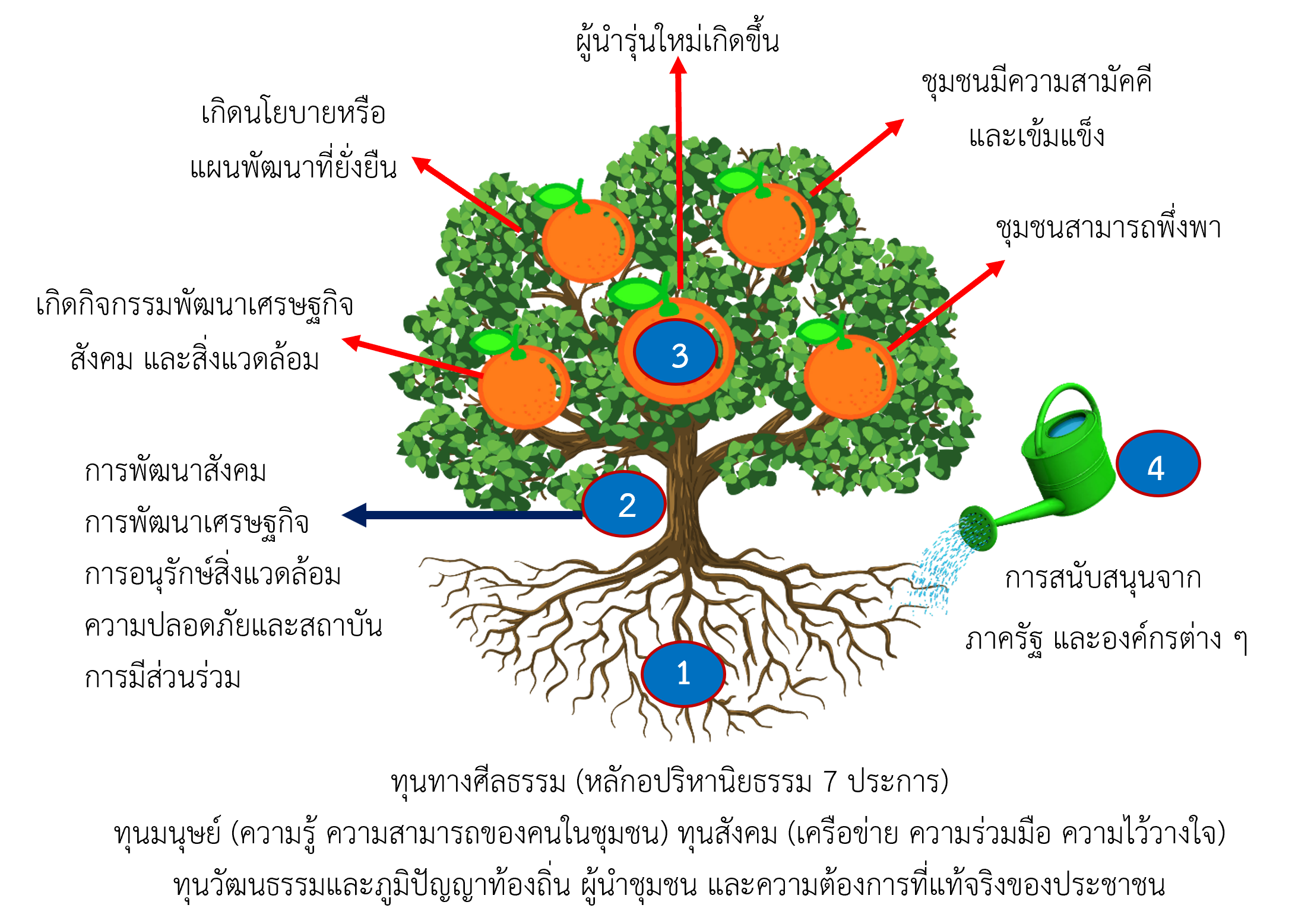
The findings revealed that: 1. the overall level of community strength was at the highest level in all aspects; 2. the relationship between Aparihaniyadhamma principles and community strength was positive at a very high level, with statistical significance at the 0.01 level; and 3. the Buddhist-integrated approach for strengthening the community was based on the application of Aparihaniyadhamma principles as practical guidelines for driving village development successfully across five dimensions: social development through improving the quality of life of all citizens; economic development through establishing a sustainable community-based economic system; environmental conservation through promoting a balanced coexistence between people and nature; security and institutional development through creating community surveillance systems and fostering loyalty to national institutions; and participation through encouraging people of all age groups to express opinions and engage in community activities collectively.
References
กัมพล เพ็ชรล้อมทอง และคณะ. (2564). กระบวนการสร้างชุมชนเข้มแข็งอย่างยั่งยืนแบบพึ่งพาตน. Journal of Roi Kaensarn Academi, 6(12), 354–368.
ฉันทณา แสงสุวรรณถาวร. (2565). การพัฒนาชุมชนเข้มแข็งเพื่อยกระดับเป็นหมู่บ้านรักษาศีล 5 ต้นแบบ : กรณีศึกษา บ้านกำแพงดิน อำเภอสามง่าม จังหวัดพิจิตร. Journal of Roi Kaensarn Academi, 7(2), 56–69.
พระคำรณ อติภทฺโท (ทองน้อย) และพระครูนิวิฐศีลขันธ์. (2563). การบริหารจัดการเชิงเครือข่ายเศรษฐกิจชุมชนของกลุ่มเกษตรกรผู้ปลูกข่า ตามหลักอปริหานิยธรรมในเขตเทศบาลตำบลทุ่งน้อย อำเภอโพทะเล จังหวัดพิจิตร. วารสารวิจยวิชาการ, 3(2), 27–40.
พระราชบัญญัติจัดระเบียบบริหารหมู่บ้านอาสาพัฒนาและป้องกันตนเอง พ.ศ. 2522. (2522, 10 พฤษภาคม). ราชกิจจานุเบกษา. เล่ม 96 ตอนที่ 75. หน้า 18.
มหาจุฬาลงกรณราชวิทยาลัย. (2539). พระไตรปิฎกฉบับภาษาไทย ฉบับมหาจุฬาลงกรณราชวิทยาลัย. กรุงเทพฯ: โรงพิมพ์มหาจุฬาลงกรณราชวิทยาลัย.
เมธิชัย ริมสกุล และคณะ. (2568). การส่งเสริมการมีส่วนร่วมของประชาชนในการจัดทำแผนพัฒนาท้องถิ่น แบบบูรณาการขององค์การบริหารส่วนตำบลส้าน อำเภอเวียงสา จังหวัดน่าน โดยการประยุกต์ตามหลักอปริหานิยธรรม. วารสารสันตยาภิวัฒน์, 3(2), 228–243.
สำนักกิจการความมั่นคงภายใน. (2567). ทำความรู้จัก !! หมู่บ้านอาสาพัฒนาและป้องกันตนเอง (หมู่บ้าน อพป.). สืบค้นเมื่อ 12 พฤศจิกายน 2567 จาก https://multi.dopa.go.th/isab/news/cate8/view536.
สำนักงานสถิติจังหวัดน่าน. (2567). รายงานสถิติจังหวัดน่าน พ.ศ. 2567. น่าน: สำนักงานสถิติจังหวัดน่าน.
Yamane, T. (1973) Statistics: An Introductory Analysis (3rd ed.). New York: Harper and Row.
Downloads
Published
How to Cite
Issue
Section
License
Copyright (c) 2026 Journal of Interdisciplinary Innovation Review

This work is licensed under a Creative Commons Attribution-NonCommercial-NoDerivatives 4.0 International License.
In order to conform the copyright law, all article authors must sign the consignment agreement to transfer the copyright to the Journal including the finally revised original articles. Besides, the article authors must declare that the articles will be printed in only the Journal of interdisciplinary Innovation Review. If there are pictures, tables or contents that were printed before, the article authors must receive permission from the authors in writing and show the evidence to the editor before the article is printed. If it does not conform to the set criteria, the editor will remove the article from the Journal without any exceptions.