ที่มา การก่อตั้ง และวิวัฒนาการของศาลปกครองไทย: การพัฒนากระบวนการยุติธรรมดิจิทัลภายใต้หลักนิติธรรม
คำสำคัญ:
ศาลปกครองไทย, วิวัฒนาการศาลปกครอง, กระบวนการยุติธรรมดิจิทัล, หลักนิติธรรม, กฎหมายมหาชนบทคัดย่อ
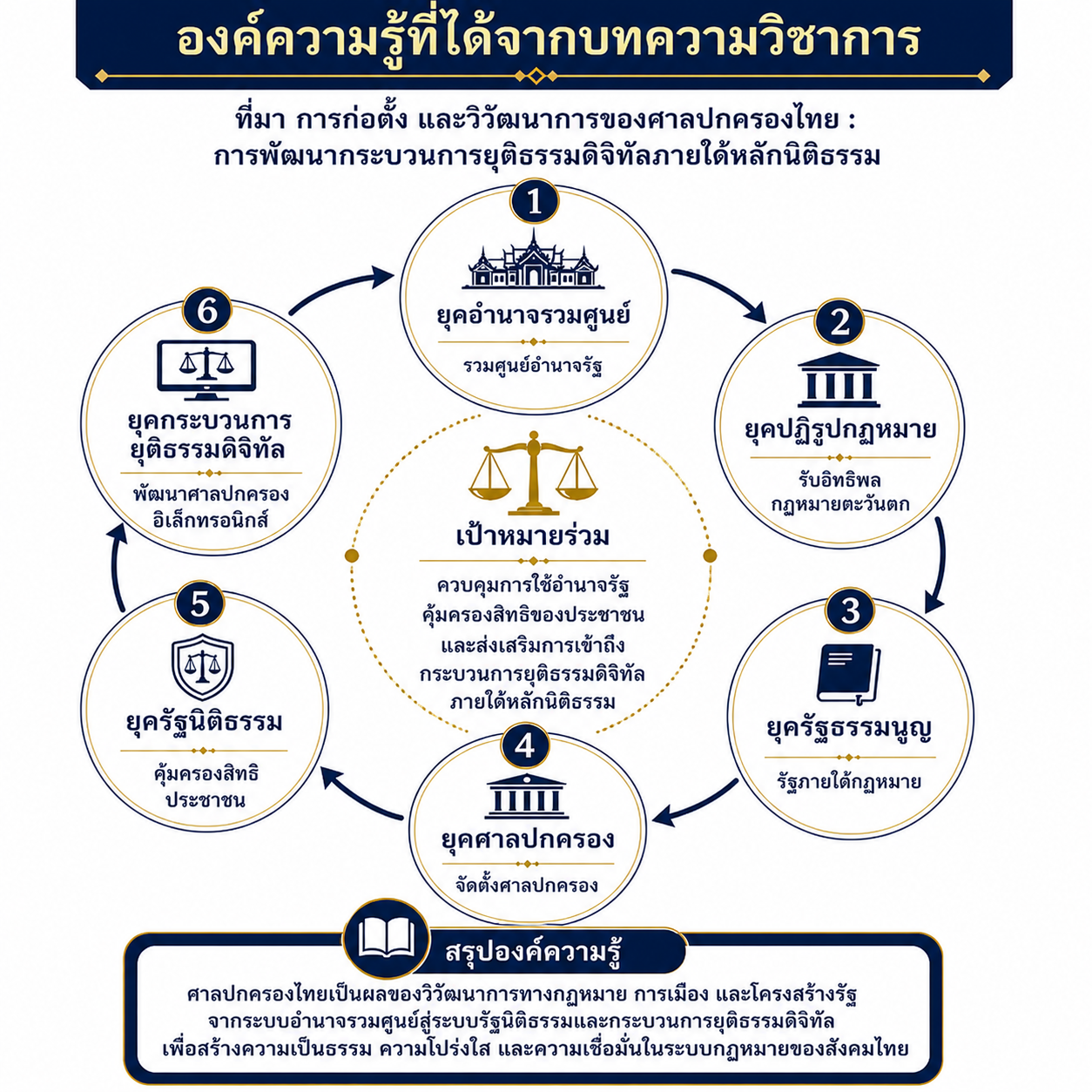
บทความวิชาการนี้มุ่งศึกษาที่มา การก่อตั้ง และวิวัฒนาการของศาลปกครองไทย รวมถึงพัฒนาการของกระบวนการยุติธรรมทางปกครองสู่ยุคดิจิทัลภายใต้หลักนิติธรรม โดยใช้วิธีวิเคราะห์เอกสารทางกฎหมาย เอกสารวิชาการ และการสังเคราะห์เชิงนิติศาสตร์ ผลการศึกษาพบว่า ศาลปกครองไทยเป็นผลของพัฒนาการทางกฎหมายมหาชนและโครงสร้างรัฐ จากยุคอำนาจรวมศูนย์ การปฏิรูปกฎหมายในสมัยรัชกาลที่ 5 อิทธิพลของระบบกฎหมายมหาชนยุโรป โดยเฉพาะแนวคิดสภาแห่งรัฐของฝรั่งเศส และการพัฒนาหลักนิติธรรมภายหลัง พ.ศ. 2475 จนนำไปสู่การจัดตั้งศาลปกครองตามรัฐธรรมนูญแห่งราชอาณาจักรไทย พุทธศักราช 2540 และพระราชบัญญัติจัดตั้งศาลปกครองและวิธีพิจารณาคดีปกครอง พ.ศ. 2542 ศาลปกครองมีบทบาทในการควบคุมการใช้อำนาจฝ่ายปกครอง คุ้มครองสิทธิของประชาชน และส่งเสริมหลักนิติธรรม ขณะเดียวกันได้พัฒนากระบวนการยุติธรรมดิจิทัลผ่านการใช้เทคโนโลยีในการดำเนินคดีและให้บริการประชาชน เพื่อเพิ่มประสิทธิภาพ ความโปร่งใส การตรวจสอบได้ และการเข้าถึงกระบวนการยุติธรรม องค์ความรู้ที่ได้ชี้ว่า ศาลปกครองไทยพัฒนาจากระบบอำนาจรวมศูนย์สู่รัฐนิติธรรม และต่อยอดสู่กระบวนการยุติธรรมดิจิทัลควบคู่กับหลักนิติธรรม
เอกสารอ้างอิง
กนกวรรณ อิทธิวิภาต. (2552). ศาลปกครองกับหลักกฎหมายทั่วไปในทางปกครอง (ศึกษาเปรียบเทียบประเทศฝรั่งเศสและประเทศไทย) (วิทยานิพนธ์ปริญญานิติศาสตรมหาบัณฑิต สาขาวิชานิติศาสตร์). กรุงเทพฯ: จุฬาลงกรณ์มหาวิทยาลัย.
ธเนศ อาภรณ์สุวรรณ. (2556). “สิทธิ” และ “เสรีภาพ” ในประวัติศาสตร์การเมืองไทย. กรุงเทพฯ: สำนักพิมพ์มหาวิทยาลัยธรรมศาสตร์.
ธีระ สุธีวรางกูร. (2566). ระบบศาลและการพิจารณาคดีของศาลในทางกฎหมายมหาชน (พิมพ์ครั้งที่ 2). กรุงเทพฯ: โครงการตำราและเอกสารประกอบการสอน คณะนิติศาสตร์ มหาวิทยาลัยธรรมศาสตร์.
พระอุดมสิทธินายก (กำพล คุณงฺกโร). (2561). พุทธธรรมาธิปไตย. วารสาร มจร สังคมศาสตร์ปริทรรศน์, 7(2), 239-246.
เพลินตา ตันรังสรรค์. (2560). บทบาทของศาลปกครองในการคุ้มครองสิทธิและเสรีภาพของประชาชนตามรัฐธรรมนูญฉบับใหม่. วารสารจุลนิติ, 14(5), 73-87.
ไพฑูรย์ รักษ์ประเทศ. (2565.) หลักนิติธรรมกับบทบาทของศาลปกครองในการพัฒนาหลักนิติธรรมในสังคมไทย (เอกสารวิชาการส่วนบุคคล). กรุงเทพฯ: สำนักงานศาลรัฐธรรมนูญ.
วรเจตน์ ภาคีรัตน์. (2565). คำสอนว่าด้วยรัฐและหลักกฎหมายมหาชน (พิมพ์ครั้งที่ 3). กรุงเทพฯ: สำนักพิมพ์อ่านกฎหมาย.
วิชชา เนตรหัสนัยน์. (2566.) การกำหนดผลในทางกฎหมายของกฎที่ไม่ชอบด้วยกฎหมายตามคำร้องขอให้ตรวจสอบความชอบด้วยกฎหมายของกฎ (Normenkontrollverfahren) ในระบบกฎหมายเยอรมัน. วารสารวิชาการศาลปกครอง, 23(2), 132–159.
สมยศ เชื้อไทย. (2550). หลักกฎหมายมหาชนเบื้องต้น (พิมพ์ครั้งที่ 3). กรุงเทพฯ: สำนักพิมพ์วิญญูชน.
สำนักงานศาลปกครอง. (2545). กว่าจะมาเป็นศาลปกครอง. กรุงเทพฯ: สำนักงานศาลปกครอง.
_____. (2566). คู่มือการดำเนินคดีปกครองสำหรับประชาชน. กรุงเทพฯ: สำนักงานศาลปกครอง.
_____. (2568). รายงานประจำปีงบประมาณ พ.ศ.2568 ศาลปกครองและสำนักงานศาลปกครอง e-book. กรุงเทพฯ: สำนักงานศาลปกครอง.
สุรีรัตน์ ประจนปัจจนึก. (2568). เอกสารการสอนชุดวิชากฎหมายปกครอง Administrative Law 41461 หน่วยที่ 8-15 หน่วยที่ 15 ศาลปกครองและวิธีพิจารณาคดีปกครอง (พิมพ์ครั้งที่ 5). นนทบุรี: สำนักพิมพ์มหาวิทยาลัยสุโขทัยธรรมาธิราช.
อนันต์ คงเครือพันธุ์. (2567). หลักความเสมอภาค และหลักการไม่อาจอ้างหลักความเสมอภาคในการกระทำที่ไม่ชอบด้วยกฎหมาย (No equality in the matter of illegality) ในมุมมองกฎหมายปกครอง. ใน อาจาริยบูชา 70 ปี ศาสตราจารย์พิเศษ ดร.วรพจน์ วิศรุตพิชญ์. (น. 373-395). กรุงเทพฯ: คณะนิติศาสตร์ มหาวิทยาลัยธรรมศาสตร์.
อักขราทร จุฬารัตน. (2545). กว่าจะมาเป็นศาลปกครอง. กรุงเทพฯ: บริษัท ดิน ดีไซน์ จำกัด.
ดาวน์โหลด
เผยแพร่แล้ว
รูปแบบการอ้างอิง
ฉบับ
ประเภทบทความ
สัญญาอนุญาต
ลิขสิทธิ์ (c) 2026 วารสารสหวิทยาการนวัตกรรมปริทรรศน์

อนุญาตภายใต้เงื่อนไข Creative Commons Attribution-NonCommercial-NoDerivatives 4.0 International License.
เพื่อให้เป็นไปตามกฎหมายลิขสิทธิ์ ผู้นิพนธ์ทุกท่านต้องลงลายมือชื่อในแบบฟอร์มใบมอบลิขสิทธิ์บทความให้แก่วารสารฯ พร้อมกับบทความต้นฉบับที่ได้แก้ไขครั้งสุดท้าย นอกจากนี้ ผู้นิพนธ์ทุกท่านต้องยืนยันว่าบทความต้นฉบับที่ส่งมาตีพิมพ์นั้น ได้ส่งมาตีพิมพ์เฉพาะในวารสารสหวิทยาการนวัตกรรมปริทรรศน์ เพียงแห่งเดียวเท่านั้น หากมีการใช้ภาพหรือตารางหรือเนื้อหาอื่นๆ ของผู้นิพนธ์อื่นที่ปรากฏในสิ่งตีพิมพ์อื่นมาแล้ว ผู้นิพนธ์ต้องขออนุญาตเจ้าของลิขสิทธิ์ก่อน พร้อมทั้งแสดงหนังสือที่ได้รับการยินยอมต่อบรรณาธิการ ก่อนที่บทความจะได้รับการตีพิมพ์ หากไม่เป็นไปตามข้อกำหนดเบื้องต้น ทางวารสารจะถอดบทความของท่านออกโดยไม่มีข้อยกเว้นใดๆ ทั้งสิ้น