HOLISTIC WELL-BEING DEVELOPMENT OF OLDER PERSONS ACCORDING TO THE FOUR BHĀVANĀS
Keywords:
Quality of Life Development, Older Adults, The Four BhāvanāsAbstract
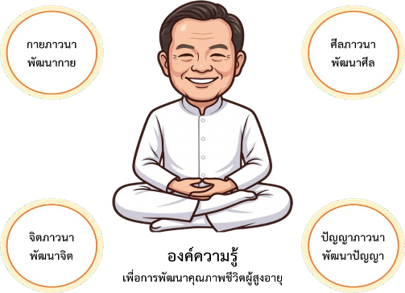
This academic article aims to present guidelines for improving the quality of life of older adults based on the principle of the Fourfold Development (Bhāvanā 4), which encompasses physical, behavioral, mental, and intellectual development. This holistic approach promotes balance, well-being, and personal growth, enabling older adults to maintain meaningful roles within their families, communities, and society. Although older adults naturally experience changes in their physical condition, mental state, emotions, and social roles as part of the aging process, they can continue to develop their potential and live happily and meaningfully when provided with appropriate support and opportunities that correspond to their social context. The study found that applying the principle of Bhāvanā 4 can effectively enhance the quality of life of older adults and support meaningful living. First, Physical Development (Kāya-bhāvanā) focuses on maintaining physical health and adopting lifestyles appropriate to old age through proper self-care, regular exercise, healthy nutrition, and self-reliance according to one’s capabilities. Second, Moral Development (Sīla-bhāvanā) emphasizes cultivating disciplined bodily and verbal conduct based on ethical principles, fostering responsibility toward oneself and society, and promoting peaceful and harmonious coexistence with others. Third, Mental Development (Citta-bhāvanā) involves training the mind to become stable, resilient, mindful, and emotionally aware, thereby reducing stress and anxiety and enabling individuals to experience inner happiness. Fourth, Wisdom Development (Paññā-bhāvanā) aims to cultivate knowledge, understanding, and insight into the realities of life through the principles of cause and effect, enabling older adults to recognize the impermanent nature of existence, solve problems wisely, adapt to changing circumstances, and conduct their lives appropriately. Therefore, the application of the Fourfold Development (Bhāvanā 4) serves as an important approach to enhancing the quality of life of older adults by promoting their holistic development in physical, mental, social, and intellectual dimensions. This contributes to emotional stability, happiness, self-reliance according to individual potential, and the ability to remain valuable and productive members of their families, communities, and society.
References
กรมสุขภาพจิต กระทรวงสาธารณสุข. (2552). แผนยุทธศาสตร์กรมสุขภาพจิต ตามแผนพัฒนาเศรษฐกิจและสังคมแห่งชาติ ฉบับที่ 10 (2550-2554). กรุงเทพฯ: บริษัท ละม่อม จำกัด.
เกรียงศักดิ์ เจริญวงศ์ศักดิ์. (2552). สังคมผู้สูงอายุ. นิตยสารการศึกษาอัพเกรด, 2(92), 46.
โฆสิต ปั้นเปี่ยมรัษฏ์. (2557). ประชากรกับการพัฒนาประเทศ. กรุงเทพฯ: สำนักงานคณะกรรมการการพัฒนาเศรษฐกิจและสังคมแห่งชาติ.
ฉัตรสุมน พฤฒิภิญโญ. (2558). การทบทวนกฎหมายและนโยบายด้านผู้สูงอายุสู่การจัดการสุขภาพ. วารสารกฎหมายสุขภาพและสาธารณสุข, 1(2), 149-163.
ชิสา กันยาวิริยะ และเมธา หริมเทพาธิป. (2565). การศึกษาเชิงวิเคราะห์หลักภาวนา 4 ตามหลักพุทธปรัชญาเถรวาท. วารสารพุทธมัคค์, 7(2), 229-235.
พระธรรมปิฎก (ป.อ. ปยุตฺโต). (2540). พุทธธรรมกับการพัฒนาชีวิต. กรุงเทพฯ: ธรรมสภา.
_____. (2556). การพัฒนาที่ยั่งยืน (พิมพ์ครั้งที่ 13). กรุงเทพฯ: มูลนิธิโกมลคีมทอง.
พระมหาเชาวฤทธิ์ นรินฺโท และคณะ. (2562). การศึกษาแนวทางการพัฒนาคุณภาพชีวิตผู้สูงอายุตามหลักภาวนา 4 กรณีศึกษา: ผู้สูงอายุบ้านห้วยหอย ตำบลธาตุทอง อำเภอภูเขียว จังหวัดชัยภูมิ. วารสารบัณฑิตศึกษามหาจุฬาขอนแก่น, 6(1), 58-72.
วริศรา อินทรแสน. (2562). การพัฒนารูปแบบสังคมผู้สูงอายุด้านความสุขในยุคไทยแลนด์ 4.0 (วิทยานิพนธ์ปริญญาปรัชญาดุษฎีบัณฑิต สาขาวิชาพัฒนศึกษา). กรุงเทพฯ: มหาวิทยาลัยศิลปากร.
วลัยกรณ์ จันทร์ทอง และคณะ. (2566). การพัฒนาคุณภาพชีวิตผู้สูงอายุตามหลักภาวนา 4 ขององค์การบริหารส่วนตำบลวังลึก อำเภอสามชุก จังหวัดสุพรรณบุรี. วารสารพุทธมัคค์, 8(2), 89–100.
สนธยา สวัสดิ์. (2561). การพัฒนาคุณภาพชีวิตผู้สูงอายุในชุมชนบ้านร้องเม็ง ตำบลหนองแหย่ง อำเภอสันทราย จังหวัดเชียงใหม่ (รายงานผลการวิจัย). เชียงใหม่: มหาวิทยาลัยราชภัฏเชียงใหม่.
สำนักงานกองทุนสนับสนุนการสร้างเสริมสุขภาพ. (2556). คุณภาพชีวิตการทำงานและความสุข. กรุงเทพฯ: โรงพิมพ์ธรรมดาเพลส จำกัด.
สำนักงานสถิติแห่งชาติ. (2561). รายงานการสำรวจผู้สูงอายุในประเทศไทย พ.ศ. 2560. กรุงเทพฯ: องค์การสงเคราะห์ทหารผ่านศึก.
Hall, R. E. (1978). Stochastic implications of the life cycle-permanent income hypothesis: Theory and evidence. Journal of Political Economy, 86(6), 971-987.
Roebuck, J. (1979). When does old age begin?. Journal of Social History, 12(4), 416-428.
Downloads
Published
How to Cite
Issue
Section
License
Copyright (c) 2026 Journal of Interdisciplinary Innovation Review

This work is licensed under a Creative Commons Attribution-NonCommercial-NoDerivatives 4.0 International License.
In order to conform the copyright law, all article authors must sign the consignment agreement to transfer the copyright to the Journal including the finally revised original articles. Besides, the article authors must declare that the articles will be printed in only the Journal of interdisciplinary Innovation Review. If there are pictures, tables or contents that were printed before, the article authors must receive permission from the authors in writing and show the evidence to the editor before the article is printed. If it does not conform to the set criteria, the editor will remove the article from the Journal without any exceptions.