THE DIRECTION AND TRENDS OF DYNAMIC POLITICAL CHANGE IN THAILAND IN THE FUTURE AND ITS SOCIAL IMPACTS
Keywords:
Dynamics of Change, Future of Thai Politics, Social ImpactsAbstract
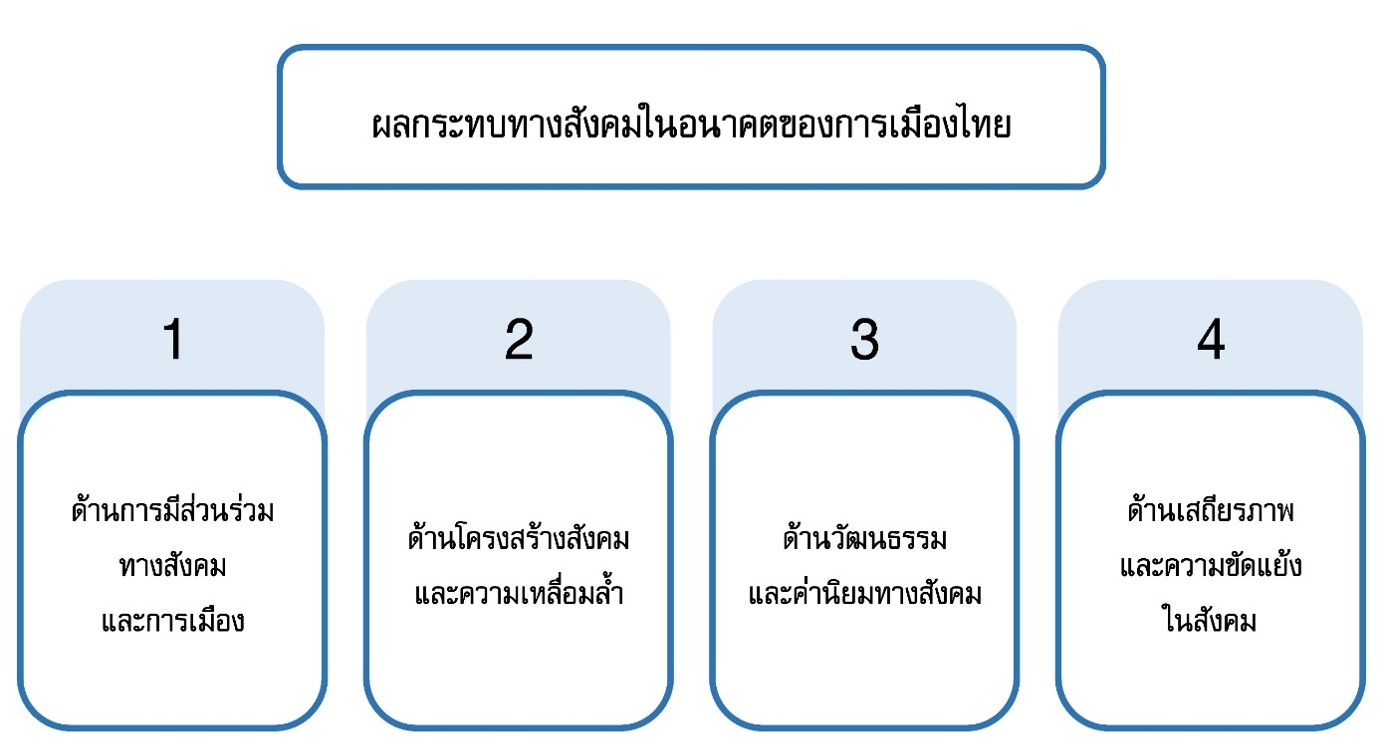
This article aims to analyze the direction and future trends of the dynamics of Thai politics, including the potential social impacts that may arise. Political change in Thailand is a continuous process closely connected to social, economic, and cultural contexts. The structure of political power consists of several sectors, including the nation’s principal institutions, bureaucratic groups, the middle class, and rural populations, all of which play significant roles in shaping the country’s political direction. Political transformation in Thailand is also influenced by both internal factors, such as people’s ideas, beliefs, and values, and external factors, including globalization, technology, and international conflicts. These influences have made the political system increasingly complex and uncertain, while also requiring adaptation to the modern global context that emphasizes transparency and public participation. The study found that future trends in Thai politics are likely to reflect a combination of modern structural changes and traditional political culture, creating both opportunities for development and risks of social conflict. At the same time, significant social impacts include increased political participation, changes in the structure of social inequality, shifts in social values, and effects on social stability.
References
กนกวรรณ อนันต์สาธร. (2562). การเปลี่ยนแปลงทางสังคมและผลกระทบต่อความสัมพันธ์ในครอบครัวในสังคมไทย. วารสารสังคมศาสตร์และมนุษยศาสตร์, 34(2), 45-59.
กองบรรณาธิการ บริษัท ดิ วันโอวัน เปอร์เซนต์ จำกัด. (2569). การเมืองหันขวา-สองนครากลับขั้ว? มองภาพอนาคตการเมืองไทยหลังการเลือกตั้ง 69. สืบค้นเมื่อ 4 เมษายน 2569 จาก https://shorturl.asia/iBdaI.
คณาจารย์ภาควิชาสังคมและมานุษยวิทยา คณะรัฐศาสตร์ จุฬาลงกรณ์มหาวิทยาลัย. (2547). สังคมและวัฒนธรรม. กรุงเทพฯ: สำนักพิมพ์แห่งจุฬาลงกรณ์มหาวิทยาลัย.
บวรศักดิ์ อุวรรณโณ. (2552). พลวัตของการเมืองไทย. จุลนิติ, 6(3), 35–36.
_____. (2554). พลวัตของการเมืองไทย. วารสารสถาบันวัฒนธรรมและศิลปะ มหาวิทยาลัยศรีนครินทรวิโรฒ, 12(2), 19-25.
พจน์ พจนพาณิชย์กุล. (2563). พลวัตการเมืองการปกครองของไทย. นครปฐม: โรงพิมพ์มูลนิธิมหามงกุฎราชวิทยาลัยในพระบรมราชินูปถัมภ์.
พระครูวิรุฬห์วัชรธรรม และคณะ. (2568). รัฐบาลกับการเมืองไทยในอนาคต. วารสารสิทธิ์ทรรศน์, 3(1), 9-17.
พระเอกนรินทร์ เขมกาโม และคณะ. (2568). การเมืองและผลกระทบต่อการเปลี่ยนแปลงสังคมปัจจุบัน. วารสารเสฏฐวิทย์ปริทัศน์, 5(1), 162-170.
วจนา วรรลยางกูร. (2564). การเมืองภาคประชาชน 2020: ปีแห่งการทำลายเพดาน. สืบค้นเมื่อ 4 เมษายน 2569 จาก https://www.the101.world/2020-thai-protests/.
วิเชษฐ์ เกษมทองศรี. (2560). นักการเมืองที่สังคมไทยต้องการจากการชุมนุมเรียกร้องของ กปปส. วารสารรัฏฐาภิรักษ์, 59(3), 87-98.
สุรชาติ บำรุงสุข. (2566). แนวโน้มการเมืองไทย. มติชนสุดสัปดาห์. สืบค้นเมื่อ 5 มิถุนายน 2569 จาก https://www.matichon.co.th/weekly/column/article_701848.
Downloads
Published
How to Cite
Issue
Section
License
Copyright (c) 2026 Journal of Interdisciplinary Innovation Review

This work is licensed under a Creative Commons Attribution-NonCommercial-NoDerivatives 4.0 International License.
In order to conform the copyright law, all article authors must sign the consignment agreement to transfer the copyright to the Journal including the finally revised original articles. Besides, the article authors must declare that the articles will be printed in only the Journal of interdisciplinary Innovation Review. If there are pictures, tables or contents that were printed before, the article authors must receive permission from the authors in writing and show the evidence to the editor before the article is printed. If it does not conform to the set criteria, the editor will remove the article from the Journal without any exceptions.