การออกแบบงานยุคปัญญาประดิษฐ์: แนวทางการกำกับการใช้ AI ด้วยหลักพละ 4
คำสำคัญ:
การออกแบบงาน, ปัญญาประดิษฐ์, การกำกับดูแล, พละ 4บทคัดย่อ
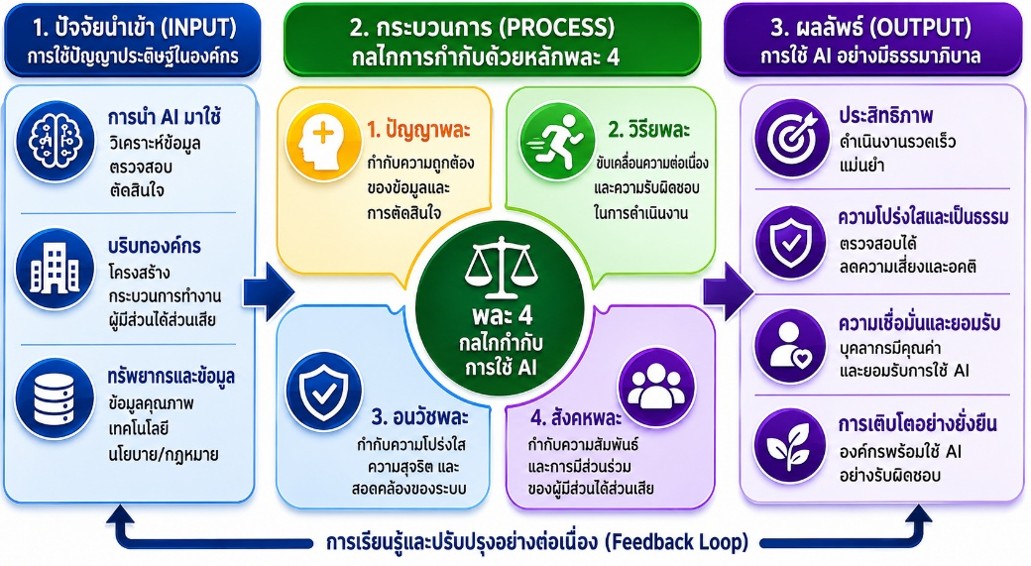
บทความวิชาการนี้มุ่งศึกษาการออกแบบงานในยุคปัญญาประดิษฐ์ (Artificial Intelligence: AI) และเสนอแนวทางการกำกับการใช้ปัญญาประดิษฐ์ด้วยหลักพละ 4 โดยใช้วิธีการศึกษาเอกสารและสังเคราะห์แนวคิดที่เกี่ยวข้อง ได้แก่ การออกแบบงานเพื่อรองรับปัญญาประดิษฐ์ การกำกับดูแล AI การทำงานร่วมกันระหว่างมนุษย์กับปัญญาประดิษฐ์ และหลักพละ 4 จากการสังเคราะห์พบว่า ปัญญาประดิษฐ์มีบทบาทสำคัญต่อการเปลี่ยนแปลงรูปแบบงานขององค์กร ทั้งการวิเคราะห์ข้อมูล การตรวจสอบ การสนับสนุนการตัดสินใจ และการปรับกระบวนการทำงานให้มีประสิทธิภาพมากขึ้น การนำ AI มาใช้จึงเกี่ยวข้องกับการกำหนดภาระงาน บทบาท ความรับผิดชอบ และสมรรถนะของบุคลากรให้สามารถทำงานร่วมกับเทคโนโลยีได้อย่างเหมาะสม ทั้งนี้ การใช้ปัญญาประดิษฐ์ยังมีข้อจำกัดและความเสี่ยงหลายด้าน เช่น คุณภาพของข้อมูล ความไม่โปร่งใสของระบบ อคติของข้อมูล การละเมิดข้อมูลส่วนบุคคล การพึ่งพาเทคโนโลยีมากเกินไป และผลกระทบต่อบทบาทของมนุษย์ในการทำงาน บทความนี้เสนอว่า หลักพละ 4 ได้แก่ ปัญญาพละ วิริยพละ อนวัชชพละ และสังคหพละ สามารถนำมาใช้เป็นกลไกกำกับการใช้ปัญญาประดิษฐ์ได้อย่างเป็นระบบ โดยปัญญาพละกำกับความถูกต้องของข้อมูล เหตุผลของผลลัพธ์ และความเหมาะสมของ AI Use Case วิริยพละกำกับการติดตาม ประเมินผล และปรับปรุงระบบอย่างต่อเนื่อง อนวัชชพละกำกับความโปร่งใส ความเป็นธรรม การลดอคติ และความรับผิดชอบของผู้ใช้ระบบ ส่วนสังคหพละกำกับการมีส่วนร่วม การสื่อสาร และการสร้างความเข้าใจระหว่างมนุษย์กับปัญญาประดิษฐ์ องค์ความรู้ที่นำเสนอ คือ โมเดลการกำกับปัญญาประดิษฐ์ด้วยหลักพละ 4 ผ่านความสัมพันธ์ของปัจจัยนำเข้า กระบวนการ และผลผลิต ซึ่งอธิบายการเชื่อมโยงระหว่างการใช้เทคโนโลยี การออกแบบงาน และการกำกับดูแลด้านจริยธรรม เพื่อการใช้ปัญญาประดิษฐ์อย่างมีประสิทธิภาพ โปร่งใส เป็นธรรม ตรวจสอบได้ และยั่งยืนในองค์กรยุคดิจิทัล
เอกสารอ้างอิง
ธนาคารกรุงเทพ จำกัด (มหาชน). (2568). ผลกระทบของ Generative AI: Creator ต้องปรับตัวอย่างไรในยุคปัญญาประดิษฐ์. สืบค้นเมื่อ 20 มีนาคม 2569 จาก https://shorturl.asia/TOKhx.
พงศกร สิทธิพงศ์. (2568). AI อับดุลเอ้ย(สำหรับองค์กร). กรุงเทพฯ: Littlebearkung.
พระธรรมโกศาจารย์ (ประยูร ธมฺมจิตฺโต). (2549). พุทธวิธีการบริหาร. กรุงเทพฯ: มหาจุฬาลงกรณราชวิทยาลัย.
พระพรหมคุณาภรณ์ (ป.อ. ปยุตฺโต). (2559). พจนานุกรมพุทธศาสตร์ ฉบับประมวลธรรม. กรุงเทพฯ: มูลนิธิการศึกษาเพื่อสันติภาพ.
พิธาน ธนเศรษฐทรัพย์. (2561). Prompt Engineer ทักษะเงินล้านในยุค AI ใครก็ทำได้ ถ้ามีคนสอนแบบนี้. กรุงเทพฯ: บริษัท ออลเดย์ ช็อปปิ้ง จำกัด.
แพรวา เอื้อวิชาเลิศ. (2566). กลยุทธ์การปรับตัวต่อการเปลี่ยนแปลงของ Artificial Intelligence ที่ส่งผลกระทบต่อวงการศิลปะ (วิทยานิพนธ์การจัดการมหาบัณฑิต สาขาวิชาการจัดการและกลยุทธ์). กรุงเทพฯ: มหาวิทยาลัยมหิดล.
ไพลิน ตรงเมธีรัตน์ และคณะ. (2568). การยกระดับการตรวจจับทุจริตทางการเงินด้วยปัญญาประดิษฐ์. วารสารสภาวิชาชีพบัญชี, 7(19), 50-63.
มหาจุฬาลงกรณราชวิทยาลัย. (2539). พระไตรปิฎกฉบับภาษาไทย ฉบับมหาจุฬาลงกรณราชวิทยาลัย. กรุงเทพฯ: โรงพิมพ์มหาจุฬาลงกรณราชวิทยาลัย.
วิมลมาศ อินทรกวี และคณะ. (2569). ปัญญาประดิษฐ์กับการบริหารสถานศึกษาในยุคดิจิทัล. วารสารสังคมศึกษาปริทรรศน์, 2(3), 1-10.
ศูนย์ธรรมาภิบาลปัญญาประดิษฐ์. (2569). AI Job Redesign Guideline การออกแบบงานเพื่อรองรับการทำงานร่วมกับเทคโนโลยี AI. สืบค้นเมื่อ 20 มีนาคม 2569 จาก https://shorturl.asia/dSFM7.
สำนักงานพัฒนาธุรกรรมทางอิเล็กทรอนิกส์ (สพธอ.). (ม.ป.ป.). ปัญญาประดิษฐ์ในการให้บริการของภาครัฐ (AI in Government Services). สืบค้นเมื่อ 18 พฤษภาคม 2569 จาก https://shorturl.asia/xi846.
สำนักงานพัฒนาวิทยาศาสตร์และเทคโนโลยีแห่งชาติ (สวทช.). (2567). ปัญญาประดิษฐ์ (AI) คืออะไร. สืบค้นเมื่อ 20 มีนาคม 2569 จาก https://shorturl.asia/MDabp.
สุรพัฒน์ มังคะลี และคณะ. (2568). กลยุทธ์การบริหารการเปลี่ยนแปลงของปัญญาประดิษฐ์ (AI) เพื่อเพิ่มวัฒนธรรมเชิงบวกให้องค์กร. วารสารบริหารธุรกิจและสังคมศาสตร์ มหาวิทยาลัยรามคำแหง, 9(ฉบับพิเศษการประชุมวิชาการระดับชาติ HTLC ครั้งที่ 14), 1-10.
Big Data Institute. (2568). AI Governance: เข็มทิศนำทางสู่ปัญญาประดิษฐ์ที่น่าเชื่อถือ. สืบค้นเมื่อ 20 มีนาคม 2569 จาก https://bdi.or.th/big-data-101/ai-governance/.
Theofanos, M. et al. (2024). AI Use Taxonomy: A Human-Centered Approach (NIST AI 200-1). Gaithersburg, MD: National Institute of Standards and Technology.
ดาวน์โหลด
เผยแพร่แล้ว
รูปแบบการอ้างอิง
ฉบับ
ประเภทบทความ
สัญญาอนุญาต
ลิขสิทธิ์ (c) 2026 วารสารสหวิทยาการนวัตกรรมปริทรรศน์

อนุญาตภายใต้เงื่อนไข Creative Commons Attribution-NonCommercial-NoDerivatives 4.0 International License.
เพื่อให้เป็นไปตามกฎหมายลิขสิทธิ์ ผู้นิพนธ์ทุกท่านต้องลงลายมือชื่อในแบบฟอร์มใบมอบลิขสิทธิ์บทความให้แก่วารสารฯ พร้อมกับบทความต้นฉบับที่ได้แก้ไขครั้งสุดท้าย นอกจากนี้ ผู้นิพนธ์ทุกท่านต้องยืนยันว่าบทความต้นฉบับที่ส่งมาตีพิมพ์นั้น ได้ส่งมาตีพิมพ์เฉพาะในวารสารสหวิทยาการนวัตกรรมปริทรรศน์ เพียงแห่งเดียวเท่านั้น หากมีการใช้ภาพหรือตารางหรือเนื้อหาอื่นๆ ของผู้นิพนธ์อื่นที่ปรากฏในสิ่งตีพิมพ์อื่นมาแล้ว ผู้นิพนธ์ต้องขออนุญาตเจ้าของลิขสิทธิ์ก่อน พร้อมทั้งแสดงหนังสือที่ได้รับการยินยอมต่อบรรณาธิการ ก่อนที่บทความจะได้รับการตีพิมพ์ หากไม่เป็นไปตามข้อกำหนดเบื้องต้น ทางวารสารจะถอดบทความของท่านออกโดยไม่มีข้อยกเว้นใดๆ ทั้งสิ้น