THE ROLE OF MUSIC ACTIVITIES IN STRENGTHENING FAMILY BONDS AND EARLY CHILDHOOD CARE IN VULNERABLE FAMILIES
Keywords:
Vulnerable Families, Music Activities, Early Childhood, Family Relationship, Child Engagement, Early Childhood DevelopmentAbstract
Background and Objectives: This study aims to investigate the interest and readiness of vulnerable families in using music activities as a tool to enhance early childhood care. It is based on the concept that music can promote emotional and social development while improving familial relationships, particularly in situations where families have economic and societal limitations. Music has been recognized for its ability to support cognitive and emotional development in children while also promoting familial bonding. This research aims to understand parents' perspectives on music activities and their practicality in daily life to support early childhood development and strengthen family relationships.
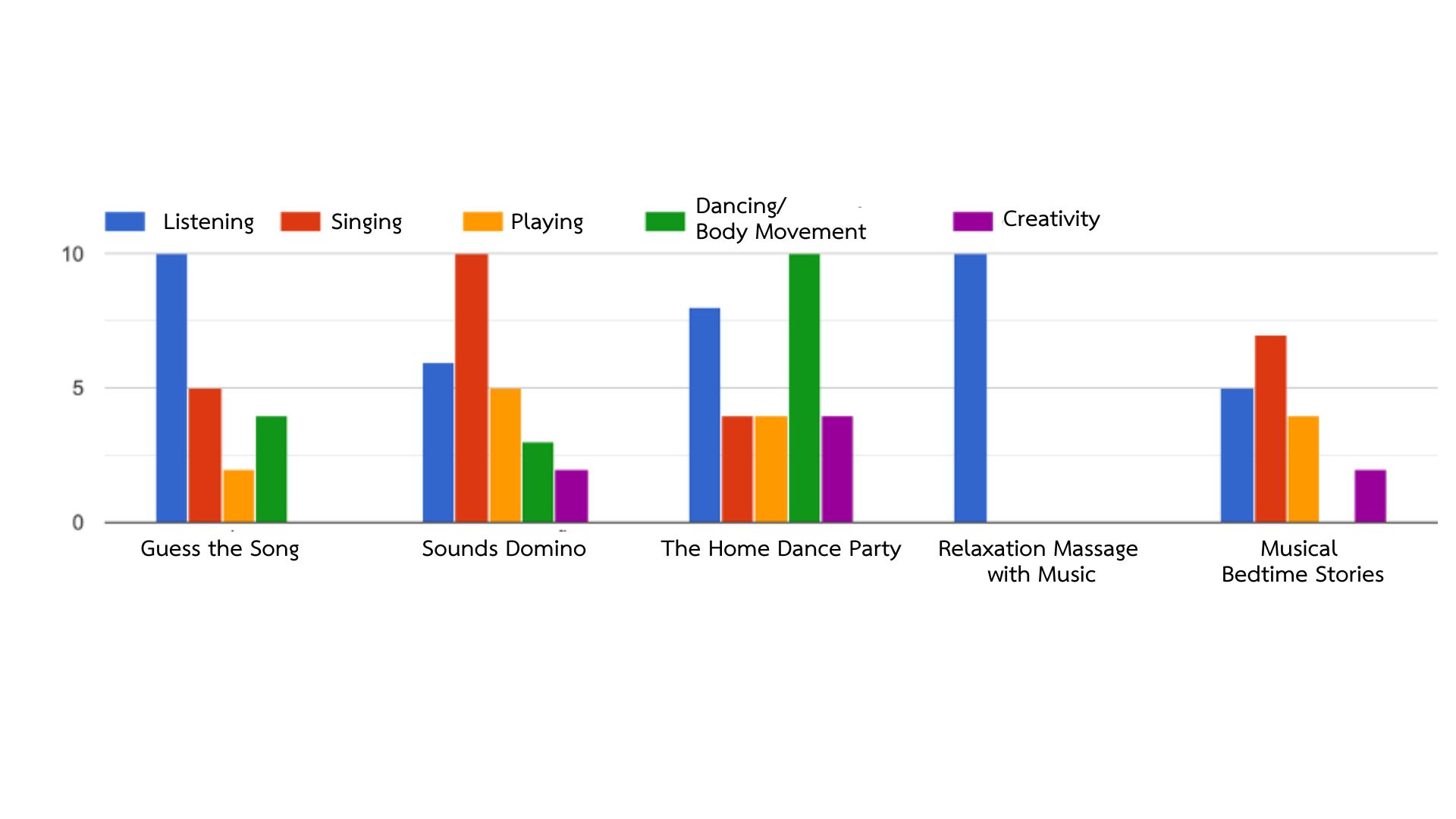
Methods: A qualitative case study approach was adopted to gain in-depth insights into the role of music activities in early childhood care. The study involved ten families in Bangkok, selected through purposive sampling from a program aimed at promoting children's well-being in underprivileged settings. The sample group was specifically selected from a project aimed at enhancing children's well-being in underprivileged contexts, considering their readiness and willingness to participate. The selected families are from vulnerable households identified by the community and meet the criteria for multidimensional poverty, including low income, multiple deprivations, family system challenges, and inadequate caregiving. Families participating in this study must fulfill all of these conditions, and must be willing and able to join family music activities at the National Institute for Child and Family Development, Mahidol University. Data were collected through in-depth interviews and participant observations of family interactions during the program. The study focused on five music activities: (1) Guess the song, (2) Sounds Domino, (3) The Home Dance Party, (4) Relaxation Massage with Music, and (5) Musical Bedtime Stories. Each activity was intentionally designed to be simple, requiring minimal resources and a short duration (10-15 minutes) to reduce the burden on families. Moreover, the activities were flexible, allowing families to modify them based on their individual schedules, child development needs, and available resources. The study also examined how families adapted these activities over time and how they influenced children's engagement levels and emotional responses.
Results: The study revealed that participating families demonstrated a strong interest and readiness to incorporate music activities into their daily routines. Activities that encouraged active participation and enjoyment, such as “Sounds Domino” or “Animal Sound Dominoes,” were particularly well received due to their simplicity and ability to create a relaxed, engaging environment. Physical movement activities, such as family dance sessions, also gained positive feedback as they energized children and fostered stronger family connections. In contrast, passive music-based activities, such as “Relaxation Massage with Music,” were less favored due to the lower level of engagement and interaction. From the caregivers' perspectives, flexibility emerged as a key determinant of the success of these activities. Many caregivers expressed appreciation for the ability to modify activities to suit their family's daily schedules and individual capabilities. The short duration and low complexity of the activities allowed for consistent engagement without creating additional stress or burden. Additionally, caregivers reported noticeable improvements in children's self-confidence, communication skills, and creative expression as a result of participating in music activities. These activities also served as a catalyst for strengthening family relationships by creating meaningful opportunities for interaction. For example, musical bedtime stories not only contributed to emotional warmth and security but also reinforced language development and imagination. Meanwhile, family dance sessions provided an outlet for self-expression and facilitated joyful interactions among family members. Furthermore, the study found that incorporating music activities helped reduce stress among caregivers, making daily childcare routines more enjoyable and less overwhelming.
Conclusions: The findings of this study highlight that music activities can serve as a valuable tool for promoting early childhood development and enhancing family relationships, particularly among vulnerable families with limited resources. When designed to be simple, adaptable, and easily integrated into daily routines, music-based interventions can significantly improve the quality of life for both children and caregivers. This study underscores the importance of incorporating music into early childhood care by demonstrating its role in bridging the gap between caregivers and children, fostering positive and meaningful interactions. The results suggest that music activities can not only support children's developmental needs but also create a supportive and nurturing family environment. Future research should explore the long-term effects of these activities to assess their sustained impact on child development. Investigating the integration of music-based approaches in other vulnerable groups, such as families in rural communities or households with children with special needs, could further broaden the applicability and effectiveness of music interventions. Additionally, exploring digital and technology-enhanced adaptations of these activities may increase accessibility for a wider range of families. Practical suggestions include integrating this activity into child development centers, kindergartens, or creating a package of activities that are appropriate for families with time and resource constraints. This study represents a significant step in applying music as a practical tool for early childhood care and serves as a foundation for developing innovative activities that enhance child and family well-being in diverse contexts.
References
Charoensook, Sugree. “Arsom Music Uses Music to Develop Underprivileged Children, Becoming a Partner in Their Lives.” Matichon Online, February 26, 2019. https://www.matichon.co.th/columnists/news_1378476. (in Thai)
Creswell, John W. “Case Study Research.” In Qualitative Inquiry and Research Design: Choosing Among Five Approaches. 3rd ed., 97-102. Thousand Oaks, CA: SAGE Publications, 2013.
Faculty of Psychology, Chulalongkorn University. “Exploring Yourself Through Attachment: Attachment Styles.” Accessed March 24, 2025. https://www.psy.chula.ac.th/th/feature-articles/attachment-style/. (in Thai)
Kanchanachitra, Manasigan, Songphan Choemprayong, Kanyapat Suttikasem, and Reena Tadee. “Adapting the Family’s Work Patterns After Having Children.” In Research Brief: Caring for Vulnerable Families amid Demographic and Social Changes in Thailand, 6-8. Nakhon Pathom: Institute for Population and Social Research, Mahidol University, 2022. https://ipsr.mahidol.ac.th/wp-content/uploads/2022/03/Report-File-555.pdf. (in Thai)
Kemp, Jane, and Clare Walters. Brain Games for Preschoolers. Translated by Preeyadhorn Pitakvorarat and Mettrai Srithong. Bangkok: SE-EDUCATION Public Company Limited, 2006. (In Thai)
Laovanich, Monsikarn. “Music and Child Development.” In Raising Children with Music, 26-47. Bangkok: Amarin Baby & Kids, 2018. (In Thai)
Macfarlan, Alice. “Non-Participant Observation.” BetterEvaluation. Accessed January 21, 2022. https://www.betterevaluation.org/methods-approaches/methods/non-participant-observation.
Orenstein, Gabriel A., and Lindsay Lewis. “Erikson's Stages of Psychosocial Development.” Last modified November 7, 2022. https://www.ncbi.nlm.nih.gov/books/NBK556096/.
Pasiali, Varvara. “Families and Children at Risk.” In Music Therapy with Families, edited by Stine Lindahl Jacobsen and Grace Thompson, 221-242. London: Jessica Kingsley Publishers, 2016.
Plitponkarnpim, Adisak. Integrated Child Health, Development, and Protection Team for Well-Being Promotion among Children in Low Income and Multiple Deprived Families. Nakhon Pathom: National Institute for Child and Family Development, Mahidol University, 2020. (In Thai)
Plitponkarnpim, Adisak, Jirawan Klommek, Chayabhorn Tiwaree, Sawitree Krikajornkitti, Suwaree Damnernvut, Ngamta Rodsonjai, Nujana Kankaew, Busaraporn Chongcharoenthawonkul, and Marisa Nimkul. “Integrated Child Health, Development, and Protection Team for Well-being Promotion among Children in Low Income and Multiple Deprived Families.” Accessed March 24, 2025. https://kb.hsri.or.th/dspace/handle/11228/5260.
Stake, Robert E. The Art of Case Study Research. Thousand Oaks, CA: SAGE Publications, 1995.
Teggelove, Kate. “Building Stronger Families Through Music: Sing & Grow Group Programs for Families at Risk.” In Music Therapy with Families: Therapeutic Approaches and Theoretical Perspectives, edited by Stine Lindahl Jacobsen and Grace Thompson, 152-172. London: Jessica Kingsley Publishers, 2017.
Thai PBS. “Equitable Education Fund (EEF) Has Released a Report on the Learning Crisis Facing Early Primary School Children in the Aftermath of COVID-19.” Accessed October 25, 2022. https://www.thaipbs.or.th/news/content/320772. (In Thai)
Wisasa, Cheewan. E-Leng Keng Khong: A Goose’s Song. 24th ed. Bangkok: Amarin Printing, 1994. (In Thai)
Yin, Robert K. Case Study Research and Applications: Design and Methods. 6th ed. Thousand Oaks, CA: SAGE Publications, 2014.
Zhussupova, Dilshat. “Five Impacts of COVID-19 on Children in Thailand.” UNICEF Thailand. Accessed August 2, 2024. https://www.unicef.org/thailand/stories/five-impacts-covid-19-children-thailand.
Downloads
Published
How to Cite
Issue
Section
License
Copyright (c) 2025 College of Music

This work is licensed under a Creative Commons Attribution-NonCommercial-NoDerivatives 4.0 International License.
The copyright of the article belongs to the author. Published articles represent the views of the authors. The editorial team neither necessarily agree with nor take any responsibility for the article.