
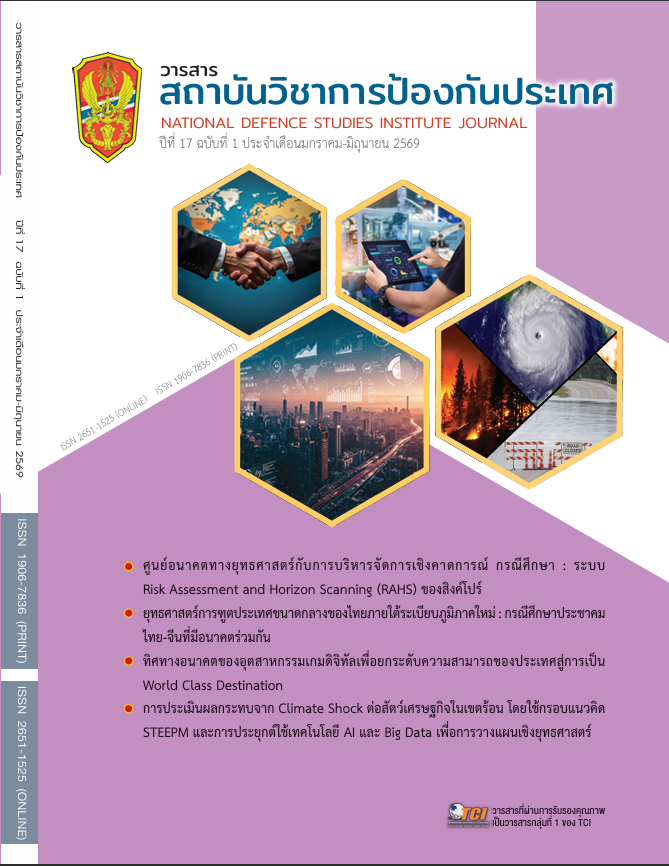
ทิศทางอนาคตของอุตสาหกรรมเกมดิจิทัลเพื่อยกระดับความสามารถของประเทศสู่การเป็น World Class Destination
Article Sidebar
Main Article Content
บทคัดย่อ
บทความวิจัยนี้มีวัตถุประสงค์เพื่อศึกษาฉากทัศน์และพัฒนากรอบอนาคต (Futures Re-Framing) ของอุตสาหกรรมเกมดิจิทัลไทยในการยกระดับขีดความสามารถสู่การเป็น World Class Destination โดยใช้ระเบียบวิธีวิจัยเชิงคุณภาพ ผสานกับเทคนิคการคาดการณ์อนาคต (Foresight) ผ่านการวิเคราะห์ความไม่แน่นอนที่สำคัญ 2 ด้าน ได้แก่ ระดับนโยบายสนับสนุนจากภาครัฐ และต้นทุนการผลิต ซึ่งนำไปสู่การสังเคราะห์ 4 ฉากทัศน์อนาคต คือ “Minecraft”, “Dark Soul”, “All or Nothings” และ “Stardew Valley”
ผลการศึกษาชี้ว่า ปัจจุบันอุตสาหกรรมเกมไทยอยู่ในสถานะที่มีความเสี่ยง หากขาดการสนับสนุนที่ชัดเจน อาจนำไปสู่สภาวะชะลอตัว หรือการผูกขาดโดยทุนใหญ่ อย่างไรก็ตามประเทศไทยมีศักยภาพในการมุ่งสู่ฉากทัศน์ที่พึงปรารถนาได้หากมีการปรับเปลี่ยนยุทธศาสตร์ การศึกษานี้จึงเสนอแนะแนวทางเชิงนโยบายที่มุ่งเน้นการเปลี่ยนบทบาทของภาครัฐจากการกำกับดูแล สู่การส่งเสริมอย่างเป็นระบบ ได้แก่ การบูรณาการเกมเข้ากับยุทธศาสตร์ชาติ การจัดตั้งกองทุนสนับสนุน การปฏิรูประบบการศึกษาเพื่อพัฒนาทักษะบุคลากรด้านเทคโนโลยีขั้นสูง การใช้เกมเป็นเครื่องมือส่งออกวัฒนธรรมไทย กรอบอนาคตที่นำเสนอนี้มุ่งหมายที่จะยกระดับอุตสาหกรรมเกมให้เป็นโครงสร้างพื้นฐานใหม่ทางเศรษฐกิจและสังคม เพื่อสร้างระบบนิเวศเศรษฐกิจสร้างสรรค์ที่ยั่งยืนให้ประเทศไทยสามารถแข่งขันได้ในเวทีโลก
Article Details

อนุญาตภายใต้เงื่อนไข Creative Commons Attribution-NonCommercial-NoDerivatives 4.0 International License.
บทความ ภาพ ตาราง กราฟ ข้อเขียน หรือความคิดเห็นในวารสารฉบับนี้เป็นของผู้เขียนไม่ผูกพันกับสถาบันวิชาการป้องกันประเทศ และทางวิชาการแต่อย่างใด
เอกสารอ้างอิง
ยุทธศาสตร์ชาติ (พ.ศ. 2561–2580). (2561, 13 ตุลาคม). ราชกิจจานุเบกษา, เล่ม 135 ตอนที่ 82 ก. https://www.ratchakitcha.soc.go.th/DATA/PDF/2561/A/082/T_0001.PDF
สำนักงานส่งเสริมเศรษฐกิจดิจิทัล. (2567, 6 กันยายน). ดีป้า เผยผลสำรวจอุตสาหกรรมดิจิทัลคอนเทนต์ปี 2566 เติบโตต่อเนื่อง คาดปี 2569 มูลค่าแตะ 5 หมื่นล้านบาท. RYT9. https://www.ryt9.com/en/prg/278165
สำนักงานส่งเสริมเศรษฐกิจสร้างสรรค์. (2564). รายงานการศึกษาการพัฒนาอุตสาหกรรมสร้างสรรค์ ปี 2564 สาขาซอฟต์แวร์ (เกมและแอนิเมชัน).
อภิวัฒน์ รัตนวราหะ. (2563). อนาคตศึกษา (พิมพ์ครั้งที่ 2). สำนักงานการวิจัยแห่งชาติ.
Appadurai, A. (1996). Modernity at large: Cultural dimensions of globalization. University of Minnesota Press.
Bogost, I. (2007). Persuasive games: The expressive power of videogames. MIT Press
Erad, D. (2018). Video games as a propaganda tool: Representation of the USA [Master's thesis, Middle East Technical University]. Middle East Technical University Institutional Repository.
Florida, R. (2002). The rise of the creative class. Basic Books.
Gee, J.P. (2003). What video games have to teach us about learning and literacy. Palgrave Macmillan.
Hines, A. & Bishop, P. (2007). Thinking about the future: Guidelines for strategic foresight. Social technologies.
Howkins, J. (2001). The creative economy: How people make money from ideas. Allen Lane.
Nye Jr, J. S. (2004). Soft power and American foreign policy. Political Science Quarterly, 119(2), 255-270.
Pine, B. J., & Gilmore, J. H. (1999). The experience economy: Work is theatre & every business a stage. Harvard Business Press.
United Nations Trade and Development. (2008). The creative economy report 2008: The challenge of assessing the creative economy towards informed policy-making. United Nations.
Winkler, J. R. (2005). The means to success in world politics. International Journal, 61(1), 268-270.
