
เทคโนโลยีสื่อลวงลึก : การขยายตัวของภัยคุกคามของสังคม
Article Sidebar
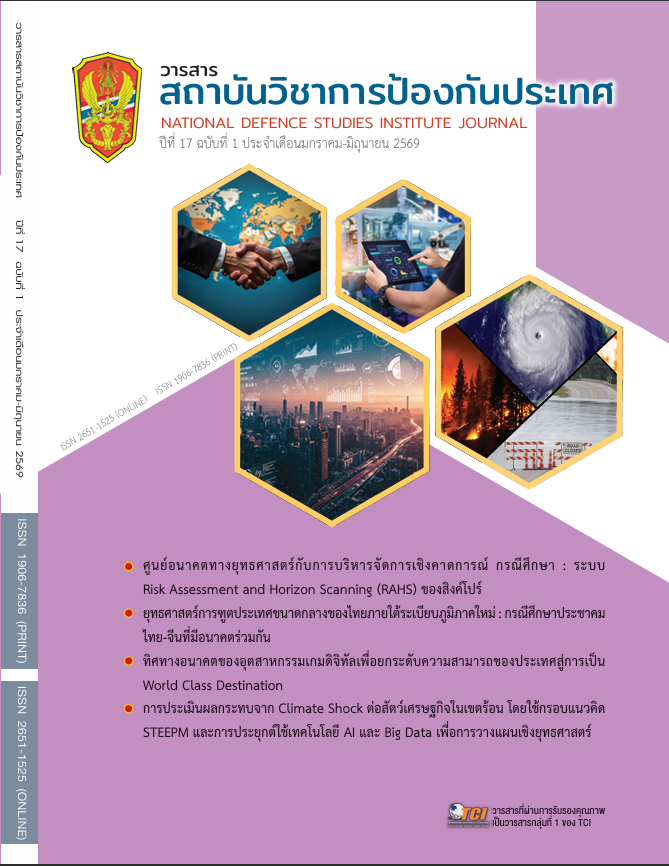
Main Article Content
บทคัดย่อ
นับตั้งแต่สิ้นสุดสงครามโลกครั้งที่ 2 การสร้างข่าวลวงได้กลายเป็นสิ่งหนึ่งของปฏิบัติการด้านการข่าวที่ถูกใช้เพื่อชี้นำการรับรู้ของสาธารณชนและสร้างความได้เปรียบในสงครามข้อมูลข่าวสาร เนื้อหาที่ถูกผลิตขึ้น มักผ่านการออกแบบอย่างเป็นระบบ โดยผู้เชี่ยวชาญด้านการข่าว การสื่อสารสาธารณะ และจิตวิทยา เพื่อให้เกิดอิทธิพลต่อความคิดและพฤติกรรมของผู้รับสาร เมื่อก้าวเข้าสู่ศตวรรษที่ 21 ความก้าวหน้าของเทคโนโลยีดิจิทัลและปัญญาประดิษฐ์ (Artificial Intelligence: AI) ได้ทำให้รูปแบบของข่าวลวงมีความซับซ้อนยิ่งขึ้น โดยเฉพาะการเกิดขึ้นของ “สื่อลวงลึก (Deepfake)” ซึ่งเป็นข้อมูลเทียมที่ถูกสร้างขึ้นด้วยอัลกอริทึมขั้นสูงจนมีความสมจริงสูงสามารถบิดเบือนข้อเท็จจริงและทำลายความน่าเชื่อถือของข้อมูลในสังคมได้อย่างรุนแรง Deepfake จึงไม่ใช่เพียงเทคโนโลยีใหม่แต่เป็นปรากฏการณ์ที่ส่งผลกระทบต่อโครงสร้างความไว้วางใจของสังคม และทำให้การตรวจสอบความจริงเป็นเรื่องที่ท้าทายมากขึ้น ประเทศไทยเองก็เผชิญความเสี่ยงจากภัยคุกคามรูปแบบนี้เช่นเดียวกับหลายประเทศทั่วโลก บทความนี้มีวัตถุประสงค์เพื่อ 1) อธิบายความหมายเชิงวิชาการของเทคโนโลยีสื่อลวงลึก 2) วิเคราะห์ผลกระทบที่เกิดขึ้นและแนวโน้มในอนาคต และ 3) เสนอแนวทางการรับมือเพื่อนำมาประยุกต์ใช้ให้เหมาะสมกับบริบทของประเทศไทย โดยเน้นความสำคัญของการพัฒนาเครื่องมือตรวจจับการเสริมสร้างการรู้เท่าทันสื่อ และการยกระดับจริยธรรมดิจิทัลให้เป็นภูมิคุ้มกันพื้นฐานของพลเมืองในยุคข้อมูลข่าวสารเข้มข้น
Article Details

อนุญาตภายใต้เงื่อนไข Creative Commons Attribution-NonCommercial-NoDerivatives 4.0 International License.
บทความ ภาพ ตาราง กราฟ ข้อเขียน หรือความคิดเห็นในวารสารฉบับนี้เป็นของผู้เขียนไม่ผูกพันกับสถาบันวิชาการป้องกันประเทศ และทางวิชาการแต่อย่างใด
เอกสารอ้างอิง
ธรรมนูญ ไม้สนธิ์. (2567). การสร้างความตระหนักรู้ของ กอ.รมน. กับคน Gen C ในความมั่นคงวิถีใหม่. ศูนย์การศึกษาและวิทยาการด้านความมั่นคง กองอำนวยการรักษาความมั่นคงภายในราชอาณาจักร. https://www.isoc.go.th/images/content/5675/40f26d7726ae6afe320bf70a7b6d1c72-1.pdf
ธนาคารทหารไทยธนชาต. (2565, 17 มิถุนายน). รู้ให้ไว ไม่ตกเป็นเหยื่อเทคโนโลยี Deepfake หลอกลวง. https://www.ttbbank.com/th/fin-tips/detail/deepfake
พิศาล อมรรัตนานุภาพ. (2568). พลังอำนาจของข้อมูลข่าวสารในยุคของการเจริญเติบโตของเทคโนโลยีดิจิทัล: ภัยคุกคามต่อสังคม. วารสารสังคมสังเคราะห์, 33(2).
สำนักข่าวไทยพีบีเอส. (2567, 8 ตุลาคม). “Deepfake” มุมมืด AI ล้อเล่น–หลอกลวง สู่อนาจาร. https://www.thaipbs.or.th/news/content/345076
สำนักงานพัฒนาธุรกรรมทางอิเล็กทรอนิกส์. (2566, 9 สิงหาคม). รู้ทัน AI Deepfake เมื่อ…ภาพที่เห็น เสียงที่ได้ยินอาจไม่ใช่เรื่องจริงเสมอไป!. https://www.etda.or.th/th/Useful-Resource/Knowledge-Sharing/Articles/aigc/AI-Deepfake.aspx
Chesney, R., & Citron, D. K. (2018). Deepfakes and the new disinformation war: The coming age of post-truth geopolitics. Foreign Affairs, 98(1), 147-155.
Festinger, L. (1957). A theory of cognitive dissonance. Stanford University Press.
Gong, Y. C., Wang, M., Liang, W., Hu, F., & Zhang, Z. K. (2023). UHIR: An effective information dissemination model of online social hypernetworks based on user and information attributes. Journal of Information Sciences. https://doi.org/10.1016/j.ins.2023.119284
Government of California. (2019, Aprill 10). Assembly Bill No. 730. https://leginfo.legislature.ca.gov/faces/billTextClient.xhtml?bill_id=201920200AB730
Greifeneder, R., Jaffe, M.E., Newman, E.J. & Schwarz, N. (2021). The psychology of fake news. Routledge.
Habermas, J. (1989). The structural transformation of the public sphere: An inquiry into a category of bourgeois society (T. Burger, Trans.). MIT Press. (Original work published 1962).
Kavanagh, J., & Rich, M. D. (2018, January 16). Truth decay: An initial exploration of the diminishing role of facts and analysis in American public life. RAND Corporation. https://doi.org/10.7249/RR2314
LegiScan. (2025). Texas House Bill 366. https://legiscan.com/TX/text/HB366/id/3197809
Oukropec, J. (2024). Strategic defense against misinformation: Empirical findings on paracrisis responses. International Journal of Strategic Communication. 19(1). 54-85. https://doi.org/10.1080/1553118X.2024.2382984
Psychologs. (2025, March 1). Psychological impact of deepfake technology on trust and perception. https://www.psychologs.com/psychological-impact-of-deepfake-technology-on-trust-and-perception/
Sierra, A.D. (2020, January 20). California deepfake laws first in country to take effect. Akin Gump. https://www.akingump.com/en/insights/blogs/ag-data-dive/california-deepfake-laws-first-in-country-to-take-effect
Sumsub. (2023). Identity fraud report 2023-2024: Deepfake growth and global trends. Sumsub Research Division.
Wardle, C., & Derakhshan, H. (2017, September 27). Information disorder: Toward an interdisciplinary framework for research and policy making (Council of Europe Report DGI(2017)09). Council of Europe. https://rm.coe.int/information-disorder-toward-an-interdisciplinary-framework-for-researc/168076277c
Weiner. M.D. (2024). Destined to deceive: The need to regulate deepfakes with a foreseeable harm standard. Michigan Law Review, 122(4). https://doi.org/10.36644/mlr.122.4.destined
