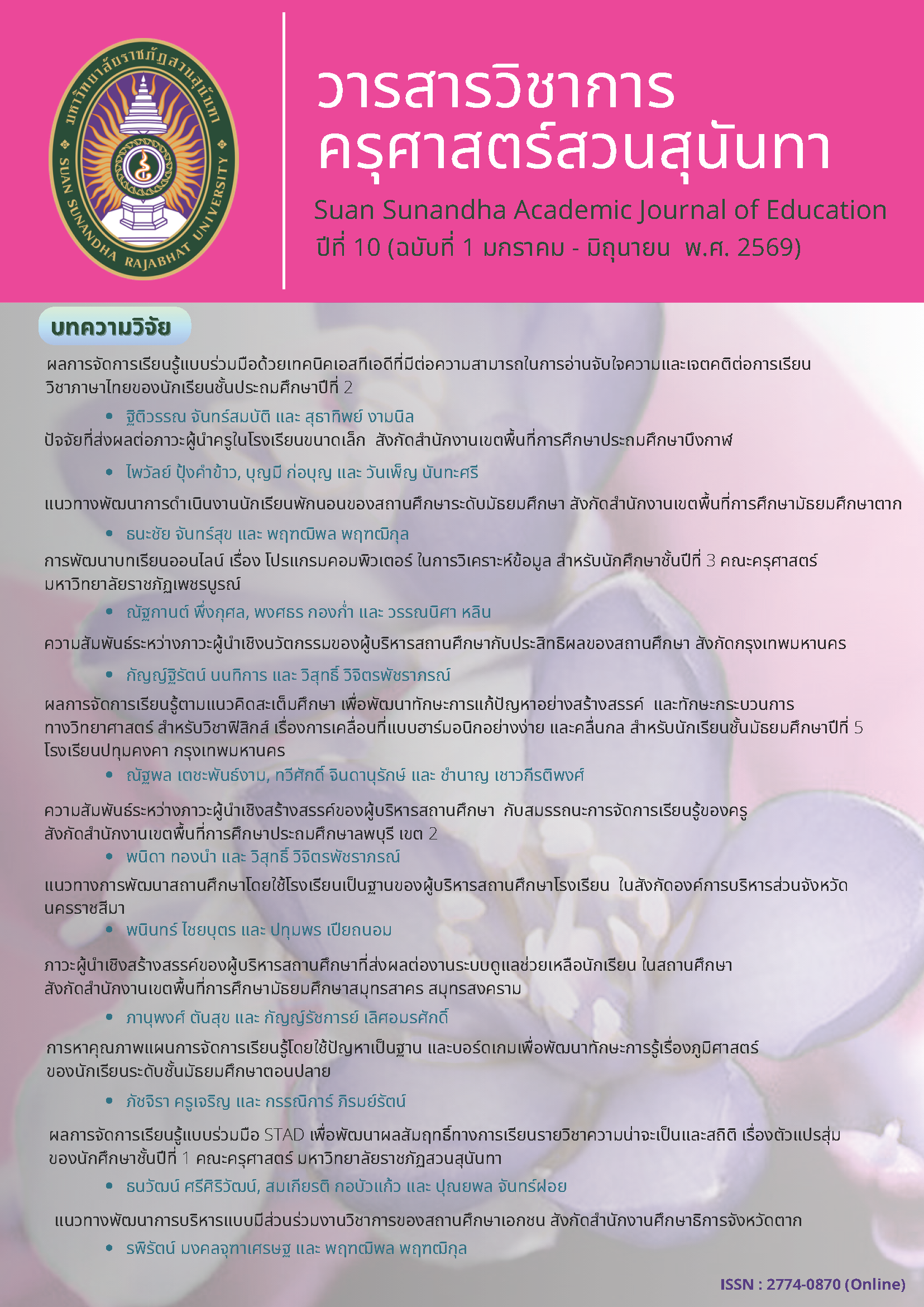
แนวทางพัฒนาการบริหารแบบมีส่วนร่วมงานวิชาการของสถานศึกษาเอกชน สังกัดสำนักงานศึกษาธิการจังหวัดตาก
คำสำคัญ:
Guidelines, Collaborative Academic Administration, Private Schoolsบทคัดย่อ
การวิจัยในครั้งนี้มีวัตถุประสงค์ เพื่อศึกษาสภาพ ปัญหา และหาแนวทางพัฒนาการบริหารแบบมีส่วนร่วมงานวิชาการของสถานศึกษาเอกชน สังกัดสำนักงานศึกษาธิการจังหวัดตาก กลุ่มตัวอย่าง ได้แก่ ผู้บริหาร จำนวน 48 คน และข้าราชการครู จำนวน 200 คน รวมทั้งสิ้น 248 คน ได้มาโดยการสุ่มตัวอย่างแบบหลายขั้นตอน ผู้ให้ข้อมูลสำคัญเพื่อการสัมภาษณ์ ได้แก่ ผู้เชี่ยวชาญ จำนวน 17 คน เครื่องมือที่ใช้ ได้แก่ แบบสอบถามและแบบสัมภาษณ์ วิเคราะห์ข้อมูลโดยใช้การแจกแจงความถี่ ร้อยละ ค่าเฉลี่ย ส่วนเบี่ยงเบนมาตรฐาน และการวิเคราะห์เนื้อหา
ผลการวิจัย พบว่า (1) สภาพการบริหารแบบมีส่วนร่วมงานวิชาการของสถานศึกษาเอกชน โดยภาพรวมมีสภาพการบริหารงานอยู่ในระดับมาก ด้านที่มีค่าเฉลี่ยสูงสุด ได้แก่ด้านการมีส่วนร่วมในการวางแผนพัฒนา และปัญหาการบริหารแบบมีส่วนร่วมงานวิชาการของสถานศึกษาเอกชน ที่พบมากที่สุดคือ คณะครูไม่มีส่วนร่วมในการตัดสินใจเกี่ยวกับการพัฒนาหลักสูตรของสถานศึกษา และการพัฒนาสาระหลักสูตรท้องถิ่น (2) แนวทางพัฒนาการบริหารแบบมีส่วนร่วมงานวิชาการของสถานศึกษาเอกชน สังกัดสำนักงานศึกษาธิการจังหวัดตาก พบว่า 2.1) โรงเรียนควรมีการจัดประชุม ชี้แจงภาพรวม สร้างการรับรู้ร่วมกัน เพื่อวางเป้าหมายและวัตถุประสงค์ วางแผนการดำเนินงานการพัฒนางานด้านวิชาการ 2.2) จัดตั้งคณะกรรมการการนิเทศการศึกษาเกี่ยวกับการบริหารงานวิชาการ ประกอบด้วยตัวแทนครูจากแต่ละระดับชั้น/กลุ่มสาระการเรียนรู้ โดยให้คณะกรรมการทำหน้าที่หารือและตัดสินใจร่วมกันในเรื่องที่เกี่ยวข้องกับการนิเทศ 2.3) เชิญองค์กรต่างๆ เข้ามามีส่วนร่วมกับกิจกรรมของสถานศึกษาให้ความสำคัญด้านความสัมพันธ์ระหว่างองค์กร แต่งตั้งเข้ามามีส่วนร่วมกับสถานศึกษาด้านวิชาการ ให้มีส่วนร่วมในการตัดสินใจ 2.4) จัดอบรมพัฒนาศักยภาพเกี่ยวกับแนวทางการมีส่วนร่วมในการวัดผล กาประเมินผล เกี่ยวกับการบริหารงานด้านวิชาการ เพื่อให้บุคลากรมีความรู้ และความเข้าใจในกระบวนการที่เป็นมาตรฐาน และแก้ข้อมูลนโยบายด้านการศึกษา ระเบียบใหม่ ๆ และแนวทางปฏิบัติที่สอดคล้องกับสถานการณ์ปัจจุบัน และ 2.5) สร้างนโยบายที่เปิดโอกาสให้ครูสามารถออกแบบวิธีการวัดผลได้เอง โดยไม่จำกัดแค่การสอบข้อเขียน เช่น การใช้แบบประเมิน การทำโครงงานการนำเสนอ หรือกิจกรรมในชั้นเรียนต่าง ๆ
เอกสารอ้างอิง
กระทรวงศึกษาธิการ. (2560). แผนพัฒนาการศึกษาของกระทรวงศึกษาธิการ ฉบับที่ 12 (พ.ศ. 2560–2564). สำนักงานปลัดกระทรวงศึกษาธิการ.
ชิโรบล วรรณธะนะ. (2562). การพัฒนาแนวทางการบริหารงานวิชาการของกลุ่มโรงเรียนวิทยาศาสตร์จุฬาภรณราชวิทยาลัยภาคตะวันออกเฉียงเหนือ [วิทยานิพนธ์ปริญญามหาบัณฑิตไม่ได้ตีพิมพ์]. มหาวิทยาลัยมหาสารคาม.
นุรไอนี เจ๊ะกา. (2557). การบริหารแบบมีส่วนร่วมกับประสิทธิผลของผู้บริหารสถานศึกษาในโรงเรียนมาตรฐานสากล จังหวัดนราธิวาส สำนักงานเขตพื้นที่การศึกษามัธยมศึกษา เขต 15 [วิทยานิพนธ์ปริญญามหาบัณฑิตไม่ได้ตีพิมพ์]. มหาวิทยาลัยราชภัฏยะลา.
ประภาศิริ คูนาคำ. (2558). รูปแบบการบริหารงานวิชาการแบบมีส่วนร่วมในสถานศึกษาสังกัดสำนักงานเขตพื้นที่การศึกษา มัธยมศึกษา เขต 24 [วิทยานิพนธ์ปริญญามหาบัณฑิตไม่ได้ตีพิมพ์]. มหาวิทยาลัยราชภัฏมหาสารคาม.
ปาริชาต สุนทร. (2560). การบริหารงานวิชาการแบบมีส่วนร่วมในสถานศึกษาขั้นพื้นฐาน สังกัดสำนักงานเขตพื้นที่การศึกษามัธยมศึกษา เขต 4 [วิทยานิพนธ์ปริญญามหาบัณฑิตไม่ได้ตีพิมพ์]. มหาวิทยาลัยธุรกิจบัณฑิตย์.
พิชิต ช่วงชัยชนะ. (2560). การมีส่วนร่วมในการบริหารงานวิชาการของครูผู้สอนในโรงเรียนฤทธิยะวรรณาลัย กรุงเทพมหานคร [วิทยานิพนธ์ปริญญามหาบัณฑิตไม่ได้ตีพิมพ์]. มหาวิทยาลัยรามคำแหง.
วาสนา ทองทวียิ่งยศ. (2560). ปัจจัยที่ส่งผลต่อการเป็นชุมชนแห่งการเรียนรู้ทางวิชาชีพครูในสถานศึกษาระดับมัธยมศึกษา [วิทยานิพนธ์ปริญญามหาบัณฑิตไม่ได้ตีพิมพ์]. มหาวิทยาลัยเทคโนโลยีราชมงคลธัญบุรี.
เสริมศักดิ์ วิศาลาภรณ์. (2551). สภาพการจัดการศึกษาในจังหวัดชายแดนภาคใต้. สำนักงานเลขาธิการสภาการศึกษา. สำนักงานการศึกษาเอกชนจังหวัดตาก. (2566). รายงานผลการทดสอบทางการศึกษาระดับชาติขั้นพื้นฐาน (O-NET) ชั้นประถมศึกษาปีที่ 6 ชั้นมัธยมศึกษาปีที่ 3 และชั้นมัธยมศึกษาปีที่ 6 ปีการศึกษา 2564–2566. สำนักงานศึกษาธิการจังหวัดตาก.
Krejcie, R. V., & Morgan, D. W. (1970). Determining sample size for research activities. Educational and Psychological Measurement, 30(3), 607–610.
ดาวน์โหลด
เผยแพร่แล้ว
รูปแบบการอ้างอิง
ฉบับ
ประเภทบทความ
สัญญาอนุญาต
ลิขสิทธิ์ (c) 2026 คณะครุศาสตร์ มหาวิทยาลัยราชภัฏสวนสุนันทา

อนุญาตภายใต้เงื่อนไข Creative Commons Attribution-NonCommercial-NoDerivatives 4.0 International License.