GOOD QUALITY OF LIFE AFTER RETIREMENT OF ELDERY
Article Sidebar
Main Article Content
Abstract
The objective of this research article is to study on good and stable quality of life for Thai elderly after retirement using qualitative method. The researcher focused on interviews from 30 key informants divided into two samples. Group A is a group of 25 elderly people who have retired from government service. Group B comprises of 5 academics working on the elderly projects.
The results of the research revealed that
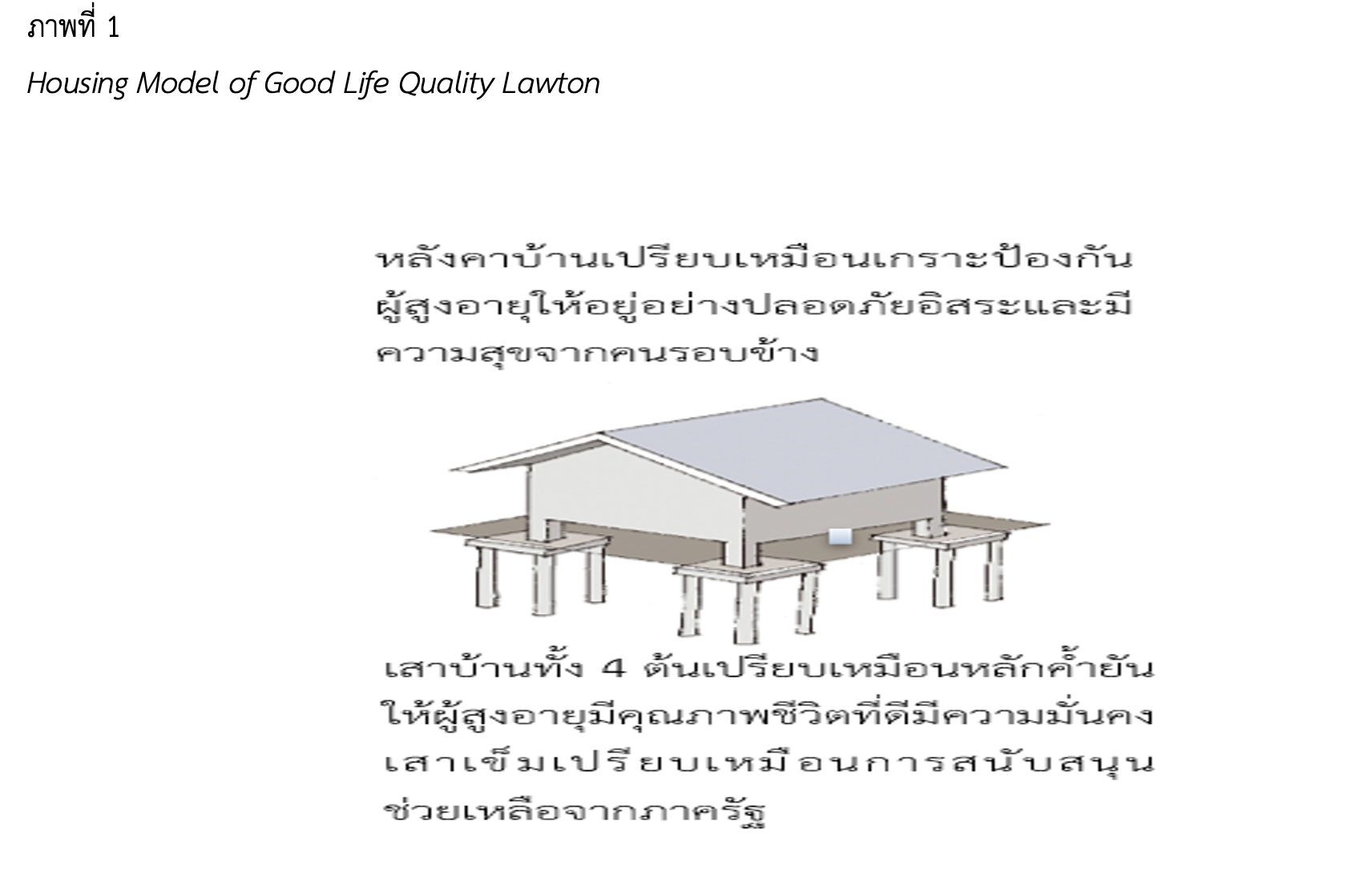
the good quality of life of the Thai elderly after retirement must consist of the following features: 1 a good physical having a healthy living and being able to carry on with daily life normally; 2 a good mentality with positive thinking; 3 financially independent; 4 social interactions with friends in the society; 5 environmentally aspect of having safe daily life in good environment, pollution-free, convenience communication, etc. The study also synthesizes a new knowledge. It was found that having good quality of life consisted of 4 pillars: 1) being happy mentally; 2) having a healthy body and healthy mindset; 3) healthy environment having good neighbors and family to support and being in the elderly society that supports each other; 4) ability to perform tasks by self as well as sufficient support by the government such as medical welfare, monthly allowance, etc.
Downloads
Article Details
References
กันยารัตน์ อุบลวรรณ. (2540). พฤติกรรมการดูแลตนเองและคุณภาพชีวิตของผู้สูงอายุในภาคกลางของประเทศไทย.[วิทยานิพนธ์ปริญญามหาบัณฑิต ไม่ได้ตีพิมพ์]. มหาวิทยาลัยมหิดล.
กรมสุขภาพจิต. (2564, 25 พฤศจิกายน). ก้าวย่างของประเทศไทย “สู่สังคมผู้สูงอายุ”อย่างสมบูรณ์แบบ. http://www.dmh.go.th/news-dmh/view.asp?id=30476
จีรนุช สมโชค. (2540). คุณภาพชีวิตของผู้สูงอายุโรคเบาหวาน. [วิทยานิพนธ์ปริญญามหาบัณฑิต ไม่ได้ตีพิมพ์]. มหาวิทยาลัยมหิดล.
ธมนวรรณ รอดเข็ม. (2011). การวิเคราะห์คุณภาพชีวิตผู้สูงอายุหลังรับเงินเบี้ยยังชีพ:กรณีศึกษาดูงานองค์กรปกครองส่วนท้องถิ่นในอำเภอเมือง จังหวัดตรัง. [วิทยานิพนธ์ปริญญามหาบัณฑิต ไม่ได้ตีพิมพ์]. มหาวิทยาลัยขอนแก่น.
บรรลุ ศิริพานิช. (2549). พฤติกรรมการดำเนินชีวิตของผู้สูงอายุที่อายุยืนยาวและแข็งแรง. สามดีการพิมพ์.
ผู้จัดการ ออนไลน์. (2565, 4 มกราคม). มส.ผส. ภาคีเครือข่าย สสส. - นักวิชาการ เผยปี 2565 ไทยเข้าสู่สังคมผู้สูงอายุโดยสมบูรณ์. https://mgronline.com/qol/detail/9650000011724
พระครูภัทรปัญญาคุณ (เวียงแซ่อุ้ย). (2560). การศึกษาความต้องการได้รับสวัสดิการสังคมผู้สูงอายุในเขตเทศบาลหัวไทรอำเภอหัวไทร จังหวัดนครศรีธรรมราช. [วิทยานิพนธ์มหาบัณฑิต ไม่ได้ตีพิมพ์]. มหาวิทยาลัยมหาจุฬาลงกรณราชวิทยาลัย.
วนัสนันท์ แฮคำ. (2553). การมีส่วนร่วมของครอบครัวในการส่งเสริมคุณภาพชีวิตผู้สูงอายุ ชุมชน เทศบาลตำบลหนองผึ้ง อำเภอสารภี จังหวัดเชียงใหม่. [วิทยานิพนธ์มหาบัณฑิต ไม่ได้ตีพิมพ์]. มหาวิทยาลัยเชียงใหม่.
อนรรฆ อิสเฮาะ. (2562). คุณภาพชีวิตในเขตองค์การบริหารส่วนตำบลสะกอม อำเภอเทพา จังหวัดสงขลา. [วิทยานิพนธ์มหาบัณฑิต ไม่ได้ตีพิมพ์]. มหาวิทยาลัยสงขลานครินทร์.
สำนักงานสภาพัฒนาการเศรษฐกิจและสังคมแห่งชาติ. (2562). แผนพัฒนาเศรษฐกิจและสังคมแห่งชาติ ฉบับที่12 (2560-2564). http//www.nesdc.go.th/ewt_dl_link.php?nid=6421 [2019, 10 oct.]
Lawton, M. P. (1985). The elderly in context: Perspectives from environmental psychology andgerontology. Environment and Behavior, 17(1), 501–519.
Pender. N. J., & Pender, A. R. (1987). Health promotion in nursing practices (2nd ed). Connection: Applet on Lange.
UNESCO. (1978). Quality of life : An orientation to population education. n.p,
Young, K. J., & Longman, A. J. (1983). Quality of life and person with melanoma : A pilot study. Cancer Nursing, 6(2), 219-226.
