THE LEARNING ECOSYSTEM OF STUDENTS AND THE STATE OF READINESS FOR THAI EDUCATION
Article Sidebar
Main Article Content
Abstract
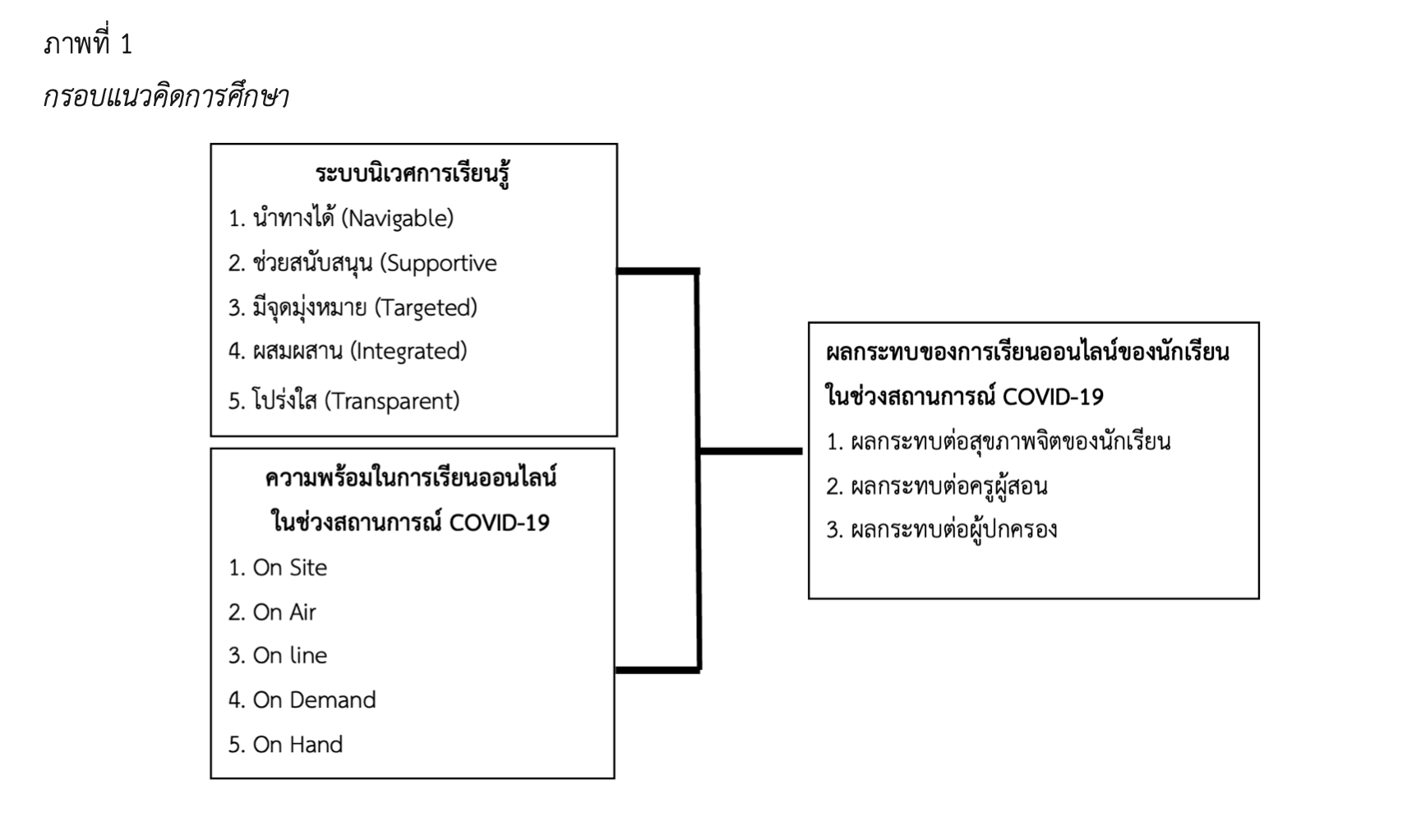
“Learning ecosystem” is a new era learning approach. that information and communication technology plays a huge role in the education system This makes the learning system more dynamic and related to various parts, like a natural ecosystem where each unit systematically supports and promotes one another. Thai education is alert and prepared to deal with online teaching, both in the learning system. teachers and students It must be acknowledged that the Thai education system is still not ready and there are still educational inequalities that cause the learning infrastructure in 5 areas: 1. People 2. Content 3. Technology 4 .Data and 5.Governance do not include access to tools, equipment, including teaching skills and learning skills. It is not available to every school or every learner. Providing education according to the new normal (New Normal) is a major change in concept that must be consistent and connected to student learning. By adjusting the curriculum to be consistent with the situation. The online learning system must be more flexible. To be ready to cope or adapt according to problem conditions or changes in educational technology. To create an educational ecosystem to support student behavior and changes that occur in a timely manner. and create a more efficient and quality Thai education system.
Article Details
References
จันทร์เพ็ญ รัชตาธิวัฒน์. (2548). การคุ้มครองสวัสดิภาพเด็กตามรัฐธรรมนูญแห่งราชอาณาจักรไทยศึกษาเฉพาะกรณี: มาตรการทางกฎหมายในการคุ้มครองดูแลเด็กก่อนวัยเรียนในช่วงเวลาที่ไม่มีผู้ดูแล. [วิทยานิพนธ์ปริญญามหาบัณฑิต]. มหาวิทยาลัยรามคำแหง.
ทีเคพาร์คออนไลน์. (2563, 10 พฤศจิกายน). สร้างระบบนิเวศการเรียนรู้ เพื่อรับมือโลกแห่งอนาคต.https://www.tkpark.or.th/tha/blog_detail/1606707624313
ธนพรรณ ทรัพย์ธนาดล. (2563). ปัจจัยที่มีผลกระทบต่อการจัดการเรียนการสอนบทเรียนออนไลน์ ของมหาวิทยาลัยราชภัฎนครราชสีมา. วารสารวิชาการ Viridian E-Journal SU. 4(1), 652-666.
พริษฐ์ วัชรสินธุ และ ธีรศักดิ์ จิระตราชู. (2564, 25 สิงหาคม). วิบากกรรมระบบการศึกษาไทย สู่ข้อเสนอ 6 มาตรการ (6 Re’s) เพื่อหาทางออกร่วมกันในช่วงโควิด. โควิดโพลิซีแล็ป. https://workpointtoday.com/covid-policy-lab-education/.
ภานุวัฒน์ สัจจะวิริยะกุล. (2564, 15 พฤศจิกายน). ปรับนิด สะกิดหน่อย เสริมสร้างการเรียนรู้ตลอดชีวิต (Lifelong Learning). Nudge Thailand.
ภูมิศรัณย์ ทองเลี่ยมนาค. (2564, 2 กรกฎาคม). โรคใหม่ สร้าง โลกแห่งการเรียนรู้ใหม่ : อนาคตการศึกษาไทยยุคหลัง COVID-19. https://www.the101.world/public-forum-thai-education-after-covid19/.
คอลัมน์การศึกษา. (20 สิงหาคม 2564). เช็กผลกระทบเรียน ‘ออนไลน์’?? เสียงสะท้อนจาก’พ่อแม่’ ถึง ‘รัฐบาล’. มติชนสุดสัปดาห์. 3.
วิทัศน์ ฝักเจริญผล และคณะ. (2563). ความพร้อมในการจัดการเรียนการสอนออนไลน์ภายใต้สถานการณ์ระบาดไวรัส COVID-19. วารสารศาสตร์การศึกษาและการพัฒนามนุษย์, 4(1), 25-33.
สถาบันส่งเสริมการสอนวิทยาศาสตร์และเทคโนโลยี. (2563). บทความสรุปข้อดีข้อเสียการเรียนออนไลน์ดีหรือไม่ อย่างไร. วารสารราชพฤกษ์, 16(3), 32-54.
สฤณี อาชวานันทกุล. (2564, 2 กรกฎาคม). โรคใหม่ สร้าง โลกแห่งการเรียนรู้ใหม่ : อนาคตการศึกษาไทยยุคหลัง COVID-19. https://www.the101.world/public-forum-thai-education-after-covid19/.
สมสิริ รุ่งอมรรัตน์. (2564, 2 กรกฎาคม). พ่อแม่ ผู้ปกครอง : ปัจจัยสู่ความสำเร็จการเรียนออนไลน์ในช่วง Covid-19. ผู้จัดการออนไลน์. https://mgronline.com/qol/detail/9640000086254
อรรถพล อนันตวรสกุล. (2564, 26 ตุลาคม). การศึกษาออนไลน์ เรียนรู้-สู้วิกฤต (โควิด-19) สู่อนาคต. https://phichit.org/web/%E0%B8%81%E0%B8%B2%E0%B8%A3%E0%B8%A8%E0%B8%B6%E0%.
