Task‐Based Language Teaching to Develop Japanese Language Speaking Skills among Thai Secondary Students
Keywords:
task‐based language teaching, Japanese language education, speaking skills, Thai secondary studentsAbstract
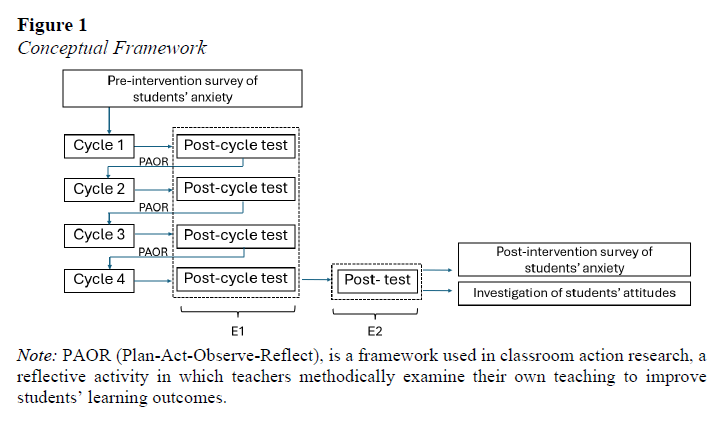
Japanese is a widely taught foreign language in Thailand, with secondary school students being the largest group of learners. However, many students struggle with speaking Japanese. This study aimed to address this issue by: (1) developing task-based language teaching (TBLT) lesson plans to improve the speaking skills of Thai learners, targeting an efficiency criterion of 75/75; (2) evaluating the influence of TBLT on students’ anxiety related to speaking Japanese; and (3) exploring students’ attitudes towards the TBLT lesson plans. The study used a single-group quasi-experimental design. Data were collected over four action research cycles, involving 42 purposively selected secondary school students enrolled in a Japanese elective course. The instruments used included post-cycle tests, post-tests, and questionnaires. The findings revealed that: (1) the TBLT lesson plans achieved an efficiency criterion of 83.13/85.94, exceeding the target of 75/75; (2) a paired samples t-test indicated a significant reduction in students’ anxiety levels, with scores before the intervention (M = 20.190, SD = 1.131) compared to after the intervention (M = 16.595, SD = 1.594); t(41) = 14.217, p < .01; and (3) the questionnaire results showed positive attitudes towards the TBLT lesson plans. Additionally, the study discussed the challenges encountered and provided pedagogical implications for future practice.
References
Albino, G. (2017). Improving speaking fluency in a task-based language teaching approach: The case of EFL learners at PUNIV-Cazenga. SAGE Open, 7(2), 1-11. https://doi.org/10.1177/2158244017691077
Bao,R, & Du, X. (2015) Implementation of task-based language teaching in Chinese as a foreign language: Benefits and challenges. Language, Culture and Curriculum, 28(3), 291-310. https://doi.org/10.1080/07908318.2015.1058392
Bhattarachaiyakorn, S., & Phettakua, S. (2023). English speaking anxiety among northeastern Thai university students. LEARN Journal: Language Education and Acquisition Research Network, 16(1), 384-407.
Brigette, B. P., & Inthapthim, D. (2019). The effects of using a task-based language teaching approach on the speaking skill of Thai EFL learners. Journal of Humanities & Social Sciences (JHUSOC), 17(1), 105-126.
Bunmak, N. (2015). Exploring Thai EFL teachers’ understanding and perceptions of task-based language teaching [Unpublished master’s thesis]. Thammasat University.
Bunmak, N. (2017). The influence of task-based learning on ELT in ASEAN context. LEARN Journal: Language Education and Acquisition Research Network, 10(1), 201-209.
Chou, M. H. (2016). A task-based language teaching approach to developing metacognitive strategies for listening comprehension. International Journal of Listening, 31(1), 51-70. https://doi.org/10.1080/10904018.2015.1098542
Crookes, G., & Gass, S. M. (Eds). (1993). Tasks and language learning: Integrating theory and practice. Multilingual Matters.
Deng, C., & Carless, D. R. (2010). Examination preparation or effective teaching: Conflicting priorities in the implementation of a pedagogic innovation. Language Assessment Quarterly, 7(4), 285-302. https://doi.org/10.1080/15434303.2010.510899
Ellis, R. (2003). Task-based language learning and teaching. Oxford University Press.
Fatima, U., Shoaib, T., & Answer, S. (2021). The impact of task-based language instruction on oral communication development in ESL students. Global Language Review, 6(2), 140-152. https://doi.org/10.31703/glr.2021(VI-II).16
Hadi, A. (2013). Perceptions of task-based language teaching: A study of Iranian EFL learners, English Language Teaching, 6(1), 103-111. https://doi.org/10.5539/elt.v6n1p103
Harris, D. (1969). Testing English as a second language. McGraw-Hill.
Hasan, A. A. (2014). The effect of using task-based learning in teaching English on the oral performance of the secondary school students. International Interdisciplinary Journal of Education, 3(2), 250-264.
Hein, L. T. N. (2021). Communicative language teaching in teaching ESL for university students. Journal of English Language Teaching and Applied Linguistics , 3(6), 49-57. https://doi.org/10.32996/jeltal.2021.3.6.7
International Monetary Fund. (2024, October). World economic outlook: Policy pivot, rising threats. International Monetary Fund.
Japan Foundation. (2013a). Marugoto: Japanese language and culture starter A1 (coursebook for communicative language). Sanshusha.
Japan Foundation. (2013b). Marugoto: Japanese language and culture Starter A1 (coursebook for communicative activities). Sanshusha.
Japan Foundation. (2020). Survey report on Japanese-language education abroad 2018. Japan Foundation.
Japan Foundation. (2023). Survey report on Japanese-language education abroad 2021. Japan Foundation.
Jaisamak, K., & Wechayaluck, N. (2022). A study of state in Japanese learning management in the school of north of Thailand. Journal of Roi Kaensarn Academi, 7(5), 170-183.
Jeon, I. J. (2005). An analysis of task-based materials and performance: Focused on Korean high school English textbooks. English Teaching, 60(2), 87-108.
Joemkhunthod, P. (2020). The develop Japanese speaking skills by using role play of secondary school students at Satreesiriket School. Japanese Studies Journal, 37(1), 58-67.
Kaewkitsadang, P., & Srisattarat, S. (2012). A study of the problems of Japanese language education in Thai high schools. Japanese Studies Journal (Special Issue: Regional Cooperation for a Sustainable Future in Asia), 29, 110-117.
Kemmis, S., & McTaggart., R. (1988). The action research planner (3rd ed.). Deakin University.
Kirkpatrick, A., & Liddicoat, A. J. (2017). Language education policy and practice in East and Southeast Asia. Language Teaching, 50(2), 155–188. https://doi.org/10.1017/S0261444817000027
Kobayashi, N. (2015). TBLT and Japanese language education: Gaps in research and practice in Thailand. International Journal of Japanese Language Education, 4(1), 22-38.
Lantolf, J. P. (2000). Sociocultural theory and second language learning. Oxford University Press.
Littlewood, W. (2007). Communicative and task-based language teaching in east Asian classrooms. Language Teaching, 40(3), 243-249.
Lochana, M., & Deb, G. (2006). Task-based teaching: learning English without tears. The Asian EFL Journal Quarterly, 8(3), 140-164.
McGibney, S. (2022, July 21). What Are the Most Studied Languages in the World? .Newsdle. https://www.newsdle.com/blog/most-studied-foreign-languages
Ngerndee, H., & Chattiwat, W. (2019). Development of reading instructional model using task-based language teaching approach integrating with discourse- oriented strategies to enhance reading abilities of undergraduate students. Mahamakut Graduate School Journal, 16(1), 101-118
Nishino, T. (2012). Modeling teacher beliefs and practices in context: A multimethods approach. The Modern Language Journal, 96(3), 380-399. https://doi.org/10.1111/j.1540-4781.2012.01364.x
Nunan, D. (2004). Task-based language teaching. Cambridge University Press.
Omar, Z., Jamaludin, N., & Arshad, M. (2021). Task-based language teaching to develop Malay language speaking skills among primary 5 Singaporean students. International Journal of Education, 14(1), 48-61. https://doi.org/10.17509/ije.v14i1.27140
Pham, V. P. H., & Do, T. H. (2021). The impacts of task-based instruction on students’ grammatical performances in speaking and writing skills: A quasi-experimental study. International Journal of Instruction, 14(2), 969-986. https://doi.org/10.29333/iji.2021.14255a
Pongsawang, G. (2012). Using task-based language learning activities to enhance speaking abilities of prathom suksa 5 students [Unpublished master’s thesis]. Srinakharinwirot Universiry.
Richards, J. C. (2006). Communicative language teaching today. Cambridge University Press.
Richards, J. C., & Rodgers, T. S. (2001). Approaches and methods in language teaching (2nd ed.) Cambridge University Press.
Robillos, R. J., & Bustos, I. G. (2023). Unfolding the potential of technology-enhanced task-based language teaching for improving EFL students’ descriptive writing skill. International Journal of Instruction, 16(3), 951-970. https://doi.org/10.29333/iji.2023.16351a
Sae-ong, U. (2010). The use of task-based learning and group work incorporating to develop English speaking ability of mathayom suksa 4 students [Unpublished master’s thesis]. Srinakharinwirot Universiry.
Samuda, V., & Bygate, M. (2008). Tasks in second language learning. Palgrave Macmillan.
Shibatani, M. (1990). The languages of Japan. Cambridge University Press.
Shintani, N. (2012). Input-based tasks and the acquisition of vocabulary and grammar: A process-product study. Language Teaching Research, 16(2), 253-279. https://doi.org/10.1177/1362168811431378
Shumin, K. (2002). Factors to consider: Developing adult EFL students’ speaking abilities. In J. C. Richards & W. A. Renandya (Eds.), Methodology in language teaching: An anthology of current practice (pp. 204–211). Cambridge University Press.
Siriwong, S. (2020). Enhancing Japanese writing skills through task-based learning in Thai high schools. International Journal of Japanese Language Education, 9(2), 92-108.
Skehan, P. (1998). A cognitive approach to language learning. Oxford University Press.
Tan, Z. X. (2016). Task-based language teaching in Chinese EFL context: Learners’ attitudes and perceptions. International Journal for Innovation Education and Research, 4(4), 21-33.
Tareq, M. M. (2009). The effect of task-based language teaching (TBLT) on developing speaking skills among the Palestinian secondary EFL students in Israel and their attitudes towards English [Unpublished dissertation]. Yarmouk University.
Tay, P. L. (2015). Implementing English language policies in ASEAN: The case of the Philippines and Thailand. Journal of Southeast Asian Education, 4(1), 67- 80.
The Thai Chamber of Commerce and Board of Trade of Thailand (2023, June 21). Summarize of the Thailand-Japan economic forum 2023. https://www.thaichamber.org/public/upload/file/news/0706231688610845file.pdf
Ur, P. (2006). A course in language teaching: practice and theory (13th ed.). Cambridge University Press.
Van den Branden, K. (2006). Task-based language education: From theory to practice. Cambridge University Press.
Waluyo, B. (2019). Task-based language teaching and theme-based role-play: Developing EFL learners’ communicative competence. Electronic Journal of Foreign Language Teaching, 16(1), 153-168.
Willis, J. (1996). A framework for task-based learning. Longman.
Willis, D., & Willis, J. (2001). Task-based language learning. In R. Carter & D. Nunan (Eds.), The Cambridge guide to teaching English to speakers of other languages. Cambridge University Press.
Downloads
Published
How to Cite
Issue
Section
License

This work is licensed under a Creative Commons Attribution-NonCommercial-NoDerivatives 4.0 International License.
By submitting a manuscript, the author transfers the copyright for the article to School of Language and Communication, National Institute of Development Administration (NIDA), if and when the manuscript is accepted for publication. Though the journal is an open-access, reproduction of any material published in NIDA Journal of Language and Communication for non-personal and/or commercial purpose requires a written permission from School of Language and Communication, National Institute of Development Administration (NIDA).



