
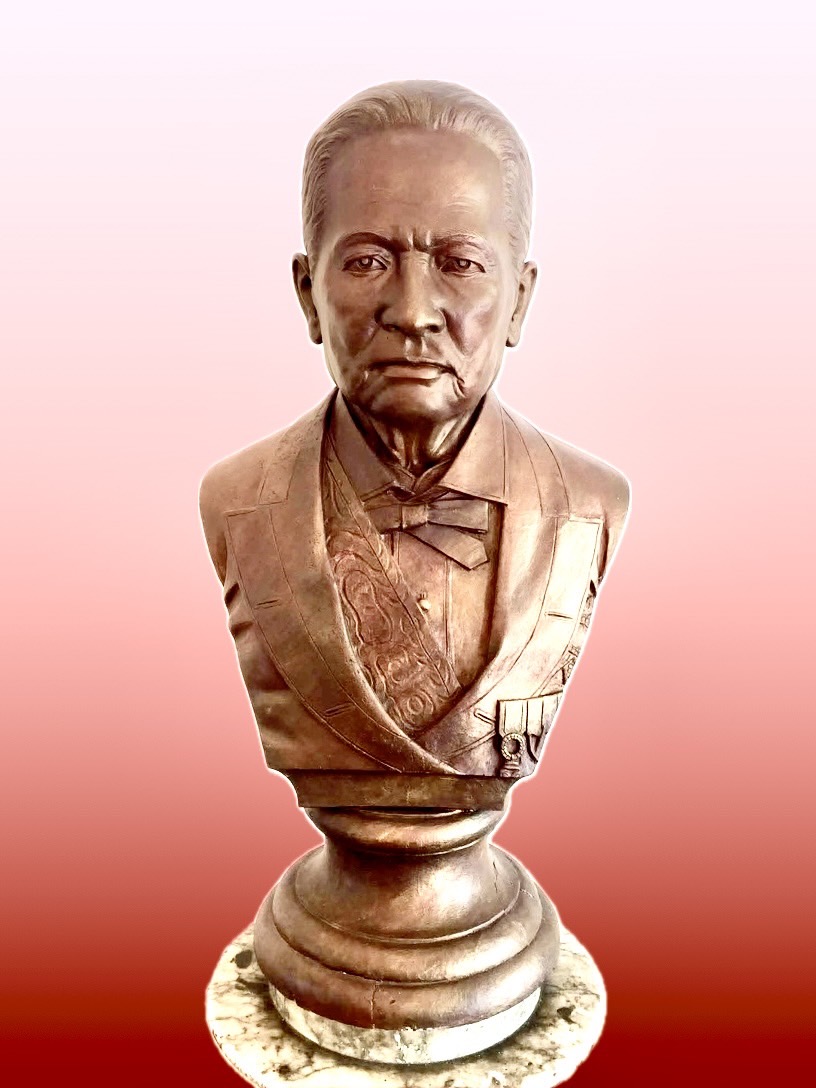
Concepts of rulers in “Thai Translation of Chinese Chronicle Narratives” of Somdet Chao Phraya Borom Maha Srisuriyawongse (Chuang Bunnag)
Article Sidebar
Main Article Content
Abstract
Background and objective (s): The “Thai Translation of Chinese Chronicle Narratives” is a significant work of Chinese literary translation into Thai, which holds importance both in the realm of literature and in its relationship with society since the early Rattanakosin period of King Rama I and II. This work is particularly notable for its reflection of political governance ideas. Later, during the reign of King Rama IV to the early years of King Rama V, A.D. 1851-1910, Somdet Chao Phraya Borom Maha Srisuriyawongse (Chuang Bunnag) created a new set of “Thai Translation of Chinese Chronicle Narratives”, continuing the work from the early Rattanakosin era. The research for this article, therefore, aimed to study the political philosophy of rulers in this collection, which consists of six texts: Sai Chin, Tang Chin, Nam Song, Chan Thang Ngor To, Meng Chiao, and Meng Mua Seng Cho. The study compared these works with the original Chinese texts and investigated the factors that contributed to the differences in the details of these political concepts.
Methodology: The researcher undertook a comparative analysis of the texts “Thai Translation of Chinese Chronicle Narratives” with the original works. This study aimed to assess how the translation influenced the presentation of the concepts of rulers, which are more prominently featured in the target texts.
Main result: “Thai Translation of Chinese Chronicle Narratives” of Somdet Chao Phraya Borom Maha Srisuriyawongse (Chuang Bunnag) is a translated and composed work based on popular fiction written during the Ming and Qing dynasties. These stories narrate the events of various reigns and the transitions between many dynasties. The concepts of rulers in the Thai version highlight concepts such as justness, wisdom and the power of accumulated merit of rulers, different from the original Chinese texts that focus on notions of the Mandate of Heaven and Confucian principles regarding leadership. The differing concepts resulted from the adaptation of ideas that aligned with Thai perspectives on leadership. Additionally, the intent of the translator, or translation patron, was to craft a work that embodies the characteristics of a "chronicle."
Relevance to Thai Studies: This study will help to enhance an understanding of Thai literature translated from foreign literature during the reigns of King Rama IV and V. Additionally, the study seeks to elucidate the relationship between translated literature and the societal context of that era.
Conclusion: The concept of rulers found in “Thai Translation of Chinese Chronicle Narratives” by Somdet Chao Phraya Borom Maha Srisuriyawongse was adjusted to be clearer and more cohesive as compared to the original Chinese texts. This adaptation resulted from the process of translation and revision, which aimed to create a new text within the framework of Thai literary conventions. Such adjustments were designed to align with the translator's objective of producing the “Thai Translation of Chinese Chronicle Narratives” to illustrate the qualities of a ruler and to teach principles of governance.
Downloads
Article Details

This work is licensed under a Creative Commons Attribution-NonCommercial-NoDerivatives 4.0 International License.
Journal of Thai studies is licensed under a Creative Commons Attribution-Noncommercial-NoDerivatives4.0 Intenational (CC BY-NC-ND 4.0) licence, unless otherwise stated. Plese read our Policies page for more information on Open Access, copyright and permissions.
References
Amornwanitsak. S. (2007). The Dissemination and Influences of Chinese Classical Novels in Thailand. [Doctoral dissertation, Zhejiang University]. https://www.cnki.net/KCMS/detail/detail.aspx?dbcode=CDFD&dbname=CDFD9908&filename=2007102392.nh&uniplatform=
OVERSEA&v=KPo_CGfrRt1lD9jAdy-ZYNhsICm5D-vpee9gA7Vbk28GfwqS-Lr5OQZ6AO850-0
Anunsiriwat, P. (2009). Comparison in literary translation of Chinese historical novels. [Doctoral dissertation, Naresuan University]. https://doi.nrct.go.th/ListDoi/listDetail?Resolve_DOI=10.14457/NU.the.2009.316
Anunsiriwat, P. (2014). The Influence of the Literary Translation of the “Hong Sin” Chinese Chronicle on the “Ko min” Tale. Journal of Humanities, 11(2), 37-55.
Anunsiriwat, P. (2018). The Influence of the Thai Tale “Kaeo Na Ma” on the Chinese Annals Imitation Novel “Cheng Hong Hao”. Journal of Research and Development BuriramRajabhat University, 13(2), 95-106.
Attawawutthichai, K. (1985). Itthiphon khong wannakam chin to wannakam lae sangkhom thai samai ton rattanakosin [Influence of Chinese literature on Thai literature and society in the early Rattanakosin period.] Bangkok: Chinese studies, Institute of East Asian Studies, Thammasat University. https://digital.library.tu.ac.th/tu_dc/frontend/Info/item/dc:327774
Atthapan, U. (1981). The revision of chronicles during the reign of King Rama I. [Master’s thesis, Silpakorn University]. https://sure.su.ac.th/xmlui/handle/123456789/8889?attempt=2&&browseOffset=8&src=%2Fxmlui%2Fhandle%2F123456789%2F1026%2Fbrowse%3
Frpp%3D20%26order%3DASC%26sort_by%3D1%26etal%3D-1%26type%3Dtitle%26starts_ with%3DB&offset=0
Can tang wu dai shi yan yi (In Chinese) [The Historical romance of the Late Tang and Five Dynasties]. (2017). Bei jing: Hua xia chu ban she.
Chantornvong, S. (1989). Samkok of Chaophrayaphrakhlang (Hon): Preliminary observations on political meaning. Thai Journal of East Asian Studies, 2(2), 13-42. https://so02.tci-thaijo.org/index.php/easttu/article/view/51413
Chanthsithiporn, S. (2018). Legitimacy and Overthrow of Tyrants: Confucian Viewpoint from Chinese History. Journal of Social Science, Faculty of Political Science, 48(2), 157-180. https://doi.org/10.61462/cujss.v48i2.752
Chen, J. and Anunsiriwat, P. (2015). Xiyou Ji-Sai Io: An investigation on translation strategies of cultural vocabulary. The Golden Teak: Humanity and Social Science Journal, 21(2), 199-206.https://so05.tci-thaijo.org/index.php/tgt/article/view/39387
Chitchamnong, D. (1991). The literary values and characteristics of early Rattanakosin literature. [Doctoral dissertation, Chulalongkorn University]. http://cuir.car.chula.ac.th/handle/123456789/31939
Chulalongkorn (Rama V), H.R.M. (2007). Lilit nitthra chakhrit [Lilit version of The Sleeper Awakened]. Bangkok: Bhannakij trading.
Damrong Rajanubhab, H.R.H. Prince. (1928). Tamnan nangsue sam kok [History of Samkok]. Bangkok: Sophon phi phat thana kon.
Damrong Rajanubhab, H.R.H. Prince. (2012). Phra rat phongsawadan ratchakan thi 5 [The history of King Rama V]. (4th ed.). Bangkok: Matichon.
Dilokwanich, M. (1983) Samkok: A Study of a Thai Adaptation of a Chinese Novel. [Doctoral dissertation, University of Washington]. https://digital.lib.washington.edu/researchworks/items/16d3ded3-0b3c-4def-9434-64d240142829
Dilokwanich, M. (2014). The Thai identity in the Three Kingdoms: Forms of Composition. Thammasat Journal, 13(2), 124-133.
Ditheeyont, V. (1989). Look into English version of the Romance of the Three kingdoms. Thai Journal of East Asian Studies, 2(2), 85-94. https://so02.tci-thaijo.org/index.php/easttu/article/view/51417
Dong xi jin yan yi (In Chinese) [The Historical romance of west and east Jin dynasty]. (2017). Bei jing: Hua xia chu ban she.
Imsamran, B. (2013). War Strategics in Laidkok. Journal of Humanities and Social Sciences, 5(1), 89-118. https://ejournal.sru.ac.th/index.php/jhsc/article/view/91
Imsamran, B. (2016). The Concept of Power in the Chinese Chronicle Literature “Liad Kok”. Nakhon Phanom University Journal, 6(3), 26-33. https://so03.tci-thaijo.org/index.php/npuj/article/view/77780
Laulertvorakul, A. (2004). Chinese idioms in Thai language and literature. Journal of Letters, 33(1), 16-47. https://digital.car.chula.ac.th/jletters/vol33/iss1/2/
Leelapornpinit. S. (2004). Cohesion in the Samkok of Chaophrayaphrakhlang (Hon). [Master’s thesis, Thammasat University]. https://digital.library.tu.ac.th/tu_dc/frontend/Info/item/dc:115244
Lefevere. A. (1992). Translation, Rewriting, and the Manipulation of Literary Fame. London: Routledge.
Manomaivibool, P. (1966). San Kuo: a comparative study. [Master’s thesis, Chulalongkorn University]. http://cuir.car.chula.ac.th/handle/123456789/23198
Meng chiao lem 1 [Ming dynasty volume 1]. (1972a). Bangkok: Khuruspa.
Meng chiao lem 3 [Ming dynasty volume 3]. (1972b). Bangkok: Khuruspa.
Meng muat cheng cho lem 2 [The end of Ming dynasty and the beginning of Qing Dynasty volume 2]. (1973). Bangkok: Khuruspa.
Nam song lem 1 [South Song dynasty volume 1]. (1964). Bangkok: khlangwitthaya.
Ngo to lem 1 [Five dynasties volume 1]. (1968). Bangkok: Khuruspa.
Numtong, K. (2010). Kansueksa kan plae wannakam chin rueang sai han nai samai ratchakan thi 1 [The Study of the Translation of Chinese Novel “Romance of the Western Han” in King Rama I Period]. Bangkok: charansanitwong printing.
Numtong, K. (2021). The translation adaptation of the Chinese historical novel romance of the eastern Han in the early Rattanakosin period. Journal of Studies in the Field of Humanities, 28(2), 358-411. https://so04.tcithaijo.org/index.php/abc/article/view/246614/172639fbclid
=IwAR1Hu27YfRO1Kp5wlZ_wxN0cqTSOSTrmT3OU9MzdmjYntM5cK2p-KrTTy8
Onsiriwan, B. (2008). Adaptation of the Three Kingdoms from literary versions to the comic strip by Bunlue Books. [Master’s thesis, Chulalongkorn University]. http://cuir.car.chula.ac.th/handle/123456789/52912
Pakdeekham, S. (2015). Phra rat phongsawadan chabap somdet phra phon rat wat phra che tu phon [The Royal Chronicle edited by Somdet Phra Phanarat from Wat Phra Che Tu Phon]. Bangkok: The King Rama I Scholarship Foundation under Royal Patronage.
Phanomprairat, A. (1999). A comparison of Shui Hu Zhuan and Song Kang. [Master’s thesis, Chulalongkorn University]. http://cuir.car.chula.ac.th/handle/123456789/10404
Phanthakoengamon, T. (1985). Chinese fiction: Development, Functions and Influences in Thai. Wichcha Journal Nakhon Si Thammarat Rajabhat University, 9(3), 21-69.http://dspace.nstru.ac.th:8080/dspace/handle/123456789/277
Phongern, S. (2010). From Fengshen Yanyi to Hongsin: an analytical study of the translation and the influences of Hongsin on literature and art in Thai society. [Master’s thesis, Chulalongkorn University]. http://cuir.car.chula.ac.th/handle/123456789/20858
Phothinantha, S. (1989). Methi tawan-ok [Eastern Savant]. (5th ed.). Bangkok: kor Kai Publishing Company.
Phra Buddha Yodfa Chulaloke Maha Raj (Rama I), H.R.M. (2006) Bot lakhon rueang rammakian phraratchaniphon nai phrabatsomdet phra phut yot fa chula lok maharat lem 1-4 [Ramakien by His Majesty King Buddha Yodfa Chulalok the Great]. (10th ed.). Bangkok: Silpabannakhan.
Pimon, P. (2017) Adaptation of Chinese Chronicles in Thai translations to the texts of Thai classical drama by Luang Phatthanaphongphakdi (Thim Sukkhayang). [Master’s thesis,Chulalongkorn University]. https://digital.car.chula.ac.th/chulaetd/1641/
Puangpum, S. (1985) Study of the message in the Thai versions of Sam-Kok. [Master’s thesis, Silpakorn University]. https://sure.su.ac.th/xmlui/handle/123456789/4400
Puapadung, S. (2011). From Wan Hua Lou and Wu Hu Ping Xi to Buan Huai Lao: an analytical
and comparative study of Chinese historical novels and the Thai Lakhon Phanthang. [Master’s thesis, Chulalongkorn University]. https://cuir.car.chula.ac.th/handle/123456789/26154
Rakphong, K. (1977). The evolution of Chinese literature Chinese-style literature and about Chinese in Thai language. Thammasat Journal, 7(2), 102-134. https://bclc-tu.in.th/book/various%20book/essay%20thai-china%20200/23.pdf
Royal Institute. (2013). Photchananukrom chabap ratchabandittayasathan phoso 2554 [Dictionary of the Royal Institute, 2011], (2nd ed.). Bangkok: Royal Institute.
Sai chin [West Jin dynasty]. (2008). Bangkok: Khosit.
Salmon, C. (2013). Literary Migrations: Traditional Chinese Fiction in Asia (17th-20th centuries).Singapore: ISEAS.
Sartraproong, K. (1993). The political worldview of the elite in the reign of King Rama I: A study of Rajadhiraj, Samkok and Saihan. [Master’s thesis, Chulalongkorn University]. https://cuir.car.chula.ac.th/handle/123456789/38284
Sikkhakoson, T. (2006). Romance of the Three Kingdom: From China's great work of literature to its counterpart in Thailand. Chinese Studies Journal, 1(1), 117-135. https://so01.tci-thaijo.org/index.php/CSJ/article/view/55555
Skinner, G. W. (1957). Chinese society in Thailand: an analytical history. New York: Cornell university press.
Sukkata, P. (1990). The study of paintings in Phra Ubosoth at Wat Nang Nong. [Master’s thesis, Silpakorn University]. https://sure.su.ac.th/xmlui/handle/123456789/1425
Sun Kai Di. (2012). Zhong guo tong sui xiao shuo shu mu (In Chinese) [Bibliography of Chinese Popular Fiction]. Bei jing: Zhong hua shu ju.
Tang chin lem 1 [West Jin dynasty volume 1]. (1964). Bangkok: Khuruspa.
Tansakul. Y.S. (2015). The production of "The Romance of Three Kingdoms" in Thai society, 1937-2007. [Master’s thesis, Thammasat University]. https://digital.library.tu.ac.th/tu_dc/frontend/Info/item/dc:91756
Thunwaniwat, J. (1984) A comparative study of comparisons of Sam Kok in Chinese and Thai versions. [Master’s thesis, Chulalongkorn University]. http://cuir.car.chula.ac.th/handle/123456789/25221
Traiphum phra ruang rue traiphum katha phraratchaniphon nai phra maha tham racha thi 1 (phaya li thai) [Phra Ruang’s Cosmology of Three Worlds written by Phra Maha Tham Racha Thi 1 (Phaya Lithai)]. (2000). (8th ed.). Bangkok: Bannakhan.
Uachoowong, C. (2005). “The Three Kingdoms” the mural paintings inside the Ubosot at Wat Praserthsuttawas. [Master’s report, Silpakorn University]. https://sure.su.ac.th/xmlui/handle/123456789/1531
Wongwoottisaroch, P. (2011). A comparative study of Chinese idiomatic expressions in Xiyou Ji and its Thai translation Sai-io. [Master’s thesis, Chulalongkorn University]. http://cuir.car.chula.ac.th/handle/123456789/27322
Ying Lie Zhuan (In Chinese) [The Heroes Biography]. (2017). Bei jing: Hua xia chu ban she.
