
The Belief in Indra in the Early Era of the Chua Chet Ton’s Dynasty: A Case Study of King Kawila's Reign
Article Sidebar
Main Article Content
Abstract
Background and objective (s): The belief in Indra is based on one of the rituals for establishing the ruling class, as seen from the word “Inthraphisek” when the king performs a coronation. Some studies have applied the belief in Indra to the context of governance during the reign of King Rama I of the Chakri Dynasty, who had political relations with local kings in Lanna during the period of the country’s restoration. Therefore, this research aimed to study the belief in Indra from historical documents, literature, beliefs and rituals, together with evidence of artwork from the early period of the Chua Chet Ton Dynasty in the areas of Lampang, Lamphun and Chiang Mai, in order to search for traces of cultural practices and test the hypothesis that local kings of the Chua Chet Ton Dynasty were likely influenced by the belief in Indra from the Chakri Dynasty, with a primary focus on the context during the reign of King Kawila.
Methodology: The study used four groups of evidence: The first group was historical documentary data to study the background of King Kawila. The second group was the study of Buddhist literature, including translations of palm leaf/folded palm leaf scriptures, and Lanna Dharma scripts (Makamanawa built a pavilion, Phuk Thon and Inthalong Chaichat). The third group was to study beliefs and rituals of Inthakhil pillar worship in the areas of Lamphun and Chiang Mai. The fourth group was the study of the forms of art created during the 24th CE., including paintings, the Traibhumi picture books, Lanna Dharma scripts, and the sculpture of Indra holding a chakra weapon. The information and connections in creating the meaning of Indra for King Kawila, King Thammalangka and King Khamfan were then analyzed to examine the research hypothesis.
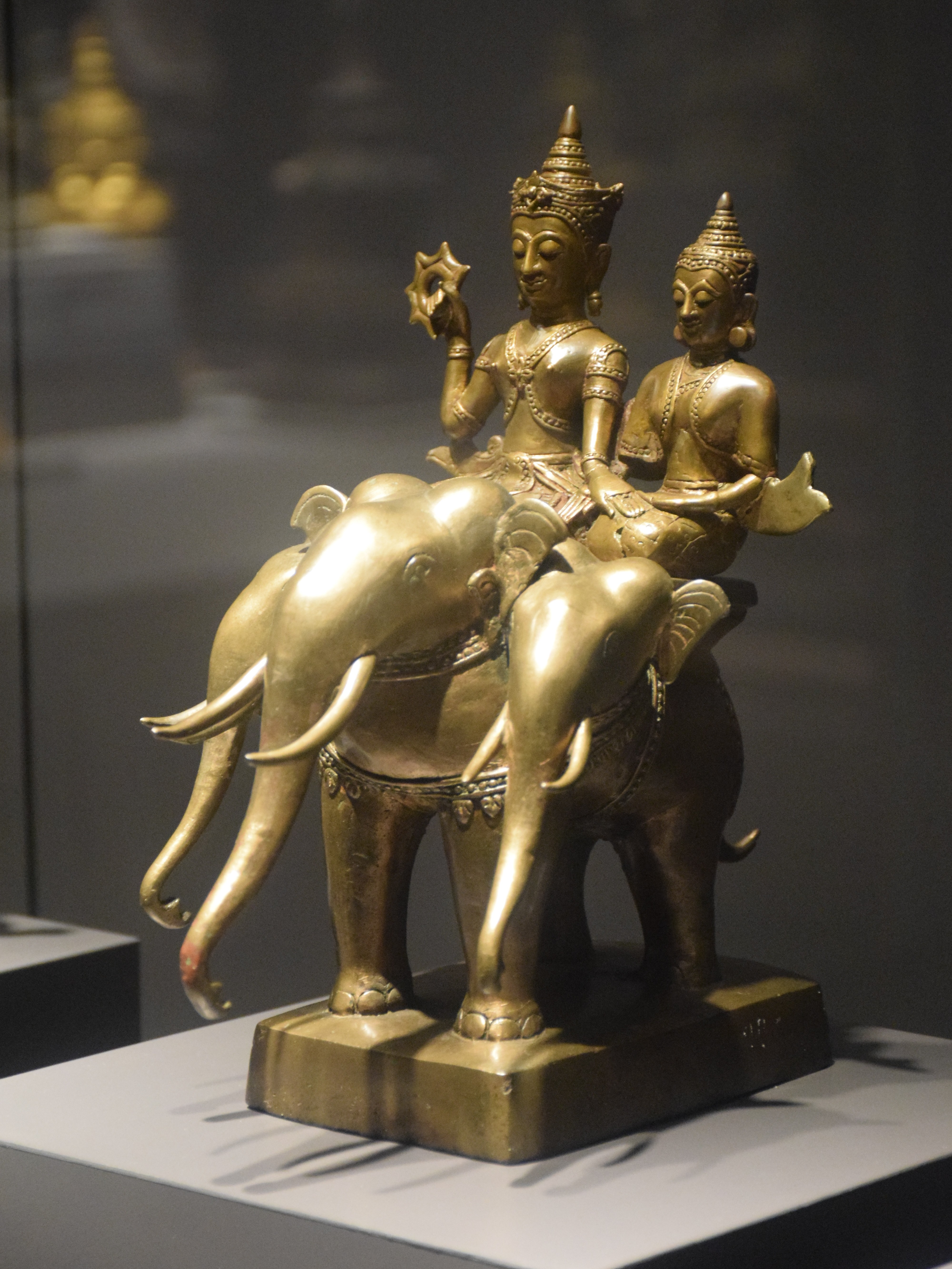
Main result: King Kawila played an important role in blending the belief in Indra from the Chakri Dynasty to create a cultural practice in Lamphun and Chiang Mai. This can be seen from the traces of 1) the name when he was crowned by K ing Rama I, which included the word “Ong In”; 2) the ritual and belief in worshiping the Inthakhil pillar, which combined the belief in ghosts with the belief in Indra, which may have adopted the idea of a city pillar as in Bangkok; and 3) the naming of Chiang Mai as “Rattanatingsa Apinwaburi”, which has the same meaning as the creation of “Rattanakosin” as the city of Indra during the reign of King Rama I. These traces were likely blended by King Kawila to create a cultural practice that emphasized the role of the new leader in uniting the common people. In addition, the study of literature and art has an example from the creation of the Lanna version of the Indra legend literature to emphasize Indra as the person who directs people’s behavior to be moral. As for the evidence in art, although this study still has unclear results, there are points that indicate that belief in Indra was adopted from the model of the Bangkok royal court, namely 1) Indra in the Traiphum picture book, Lanna Dharma script, the Fine Arts Department version, shows his body color as green, which is a symbol that probably originated in the Chao Phraya River basin; 2) The sculpture of Indra on the Erawan elephant, although the style is similar to ancient Lanna art in the Mangrai Dynasty, this Indra shows his hand holding a chakra weapon , which is a new concept that arose in the early Rattanakosin period.
Relevance to Thai Studies: This research article aims to study historical evidence, the literary legend of Indra, and the ritual worship of the Inthakhil pillar found in Chiang Mai, combined with the analysis of sculptures and paintings depicting Indra . This research shows the background of the belief in Indra that influenced the new ruling class, which will help to interpret the meaning of Indra in various dimensions.
Conclusion: King Kawila, as the new ruling class after the Lanna restoration, likely played a significant role in incorporating the belief in Indra into arts and culture. This is clearly seen from his name and the city of Chiang Mai, as well as the rituals related to the Inthakhil pillar. Another context that likely occurred during this period was the creation of literature about Indra that emphasized teaching the people to make merit within the framework of morality. In terms of artistic evidence, there are traces from the sculpture of Indra holding a chakra weapon. These traces show the creation of a kind of legitimacy of rule since King Kawila was a new power group that ruled Chiang Mai.
Downloads
Article Details

This work is licensed under a Creative Commons Attribution-NonCommercial-NoDerivatives 4.0 International License.
Journal of Thai studies is licensed under a Creative Commons Attribution-Noncommercial-NoDerivatives4.0 Intenational (CC BY-NC-ND 4.0) licence, unless otherwise stated. Plese read our Policies page for more information on Open Access, copyright and permissions.
References
Aksrondit, T. (2002). Chuthat or Revering the Relics of the Buddha : Context and Symbolism of Phrathat (Stupa) in Southeast Asia Subregion, a Case Study of Beliefs in Lanna Regarding Stupas as Pilgrimage Centers and the Twelve – Year Cycle. [Master’s thesis, Chiangmai University]. https://cmudc.library.cmu.ac.th/frontend/Info/item/dc:100081
Bhongale, G. (2022). A Note on the Iconography Significance of I ndra – Visnu Image in Syncretism in Sculpture Art of South and South East Asia, (p.71 -77). Preeta, N., Rajesh, S.V. and Abhayan G.S. (Eds). India : The University of Keraka.
Chiranakhon, Y. and Rattanaphon S .(1998). Prawattisat sangkhom lae watthanatham sip song pan na [The history of society and the culture of Xishuangbanna ] . Bangkok : The Thailand Research Fund.
Chuwichian, P. (2011). Ha maha chedi sayam [ Five Important Chedi of Siam ]. Nonthaburi : Museum Press.
Inthanon, W. (2020). Thammabot samnuan lanna [Dhammapada Lanna expressions]. Chiang Mai: Mahachulalongkornrajavidyalaya University.
Mae Chee Wimuttiya. (2011). Cakkavaladipani: [Distinctive characteristics, wisdom and value]. Bangkok: The Thailand Research Fund.
Mahamongkut Buddhist University. (n.d.) .Atthakatha khutthokanikai khatha thammabot Appamathawaka 2 [Commentary on the Khuddakanikaya, the second Dhammapada Apada Varga ] https://84000.org/tipitaka/attha/attha.php?b=25&i=12&p=7
Nithan thammabot rueang makha manawa sang sala [The Jataka tale of Magha Manava building a pavilion].(2025). (Arvorn C. Transcriber) Wat Chang Kian, Mueang District, Chiang Mai Province. (Original work published n.d.)
Ongskul, S. (2017). Kasatri lanna chiang mai [The Kings of Chiang Mai Lanna], 3rd edition. Chiang Mai: Lanna Studies Center Faculty of Humanities, Chiang Mai University.
Ongskul, S. (2018). Prawattisat lanna [History of Lanna], 12th edition. Bangkok : Amarin Printing and Publishing.
Pakdeekham, S. (2013). Phra in [Indra]. Bangkok: Amarin Printing and Publishing.
Payomyong, M. (1999). “Inthakhila” Saranukrom watthanatham thai phaknuea [Encyclopedia of Northern Thai Culture], Vol 15, Bangkok. : Thai Encyclopedia Foundation Siam Commercial Bank.
Piromanukul, R. (2009). An analysis study of the origin of the Traibhumi painting manuscript. [Doctoral dissertation, Silpakorn University]. http://www.thapra.lib.su.ac.th/thesis/showthesis_th.asp?id=0000004107
Phrakhru Chinwongsanuwat and Tuikhiao, P. (1985). Wat prasat and banthuek phraya luang sam lan [Prasat Temple and Phraya luang sam lan’s records document]. Chiang Mai : Phra Singha printing.
Phraya Intha thirach Chao Fa, [The Legend of Indra]. (1922). (Arvorn C. Transcriber,2025), Wat Pa Bong, Mae Chan District, Chiang Rai Province. Digital Library of Northern Thai Manuscripts. DLNTM 040513001_05. https://iiif.crossasia.org/s/lanna/manifests/561104
Poolthong, T. (2017). Virtues of the King in Jamadevivongsa : Their Relationship to the paramias Indra. Jornal of Thai Studies, 13(2), 98 – 122. https://so04.tci-thaijo.org/index.php/TSDJ/article/view/263951/178643
Prakitnonthakan, C. (2013). Art and Architecture in the Reign of King Rama I: Concept, Symbolism, and Social Meaning of Early Rattanakosin Period. Journal of Fine Art, Chiang mai University,4(1), p.243–324.https://so02.tci-thaijo.org/index.php/fineartsJournal/article/view/77656/62279
Prangwattanakun, S. (2006). Lanna Aun Adum [The prosperity of Lanna]. Chiang Mai: Ming Muang
Premchit, S.(1997). Thamnan Chaing mai Pang Daum [The Chiang Mai chronicle and rituals of I Inthakhil]. Chiang Mai: Social Research Institute,Chiang Mai University.
Sirarojjananan, M. (2018). Indra in Theravada Buddhist Texts. Mahachula Academic Journal, 5(1), 44 – 63.https://so04.tci-thaijo.org/index.php/JMA/article/view/140992
Sukkata, P. (2023, December,3). “sao inthakhin sang yuk thong khong lanna rue samai phrachao ka wi la” kholam pritsana borankhadi, mati chon sutsapda, ['Sao Inthakhil' was built during the golden age of Lanna or during the reign of King Kawila? (Vol.2) https://www.matichonweekly.com/column/article_729804
Tamnan phanya in cao fa.[The Legend of Indra] .(1872). (Arvorn C. Transcriber,2025), Wat Chiang Man, Mueang District, Chiang Mai Province. Digital Library of Northern Thai Manuscripts. PNTMP 010113017_02 https://iiif.crossasia.org/s/lanna/manifests/555594
Tamnan phuenmueang chiang mai chabap chiang mai 700 pi [The Chiang Mai Chronical, An anniversary 700 years of Chiang Mai edition]. (1995). Chiang Mai: Chiang Mai Provincial Cultural Center and arts and culture center Chiang Mai Rajabhat Institute.
The Fine Arts Department. (1980). Cakkavaladipani [Description of Buddhist universe and the history of Buddhism in Northern Thailand]. Bangkok: National Library.
The Fine Arts Department. (2004). Samut phap traiphum chabap akson tham lanna lae akson khom [Traiphum picture book in Lanna and Khmer manuscript versions] .Bangkok: National Library.
Tumthong, T.(2016). Darasat lanna [Astronomy in Lanna].Lampang : Lampang Rajabhat University.
Wichiankheaw, A. and Wai-at, D. (2004). Tamnan phuenmueang chiang mai [The Chiang Mai Chronical]. Bangkok: Silkworm Books.
Wichiankheaw, A. (2009). Phra chedi luang : nai thana sunklang khong mueang chiang mai [Phra Chedi Luang: At the center of Chiang Mai] in Collection of academic articles: Lanna Case. Chiang Mai: Chiang Mai Rajabhat University.
