THE MANAGEMENT OF LAND LEASES OF TEMPLES WITHOUT LEGAL EVIDENCE OF LEASE AGREEMENTS
Keywords:
Land Lease, Temple, Leasehold EvidenceAbstract
This research aimed to: 1. study the conditions, problems, and obstacles in managing temple land leases lacking legal evidence; 2. compare relevant laws between Thailand and other countries; and 3. propose legal development guidelines. The methodology integrated documentary research, in-depth interviews with 17 informants, and a focus group with 10 experts. Data were analyzed using descriptive content analysis.
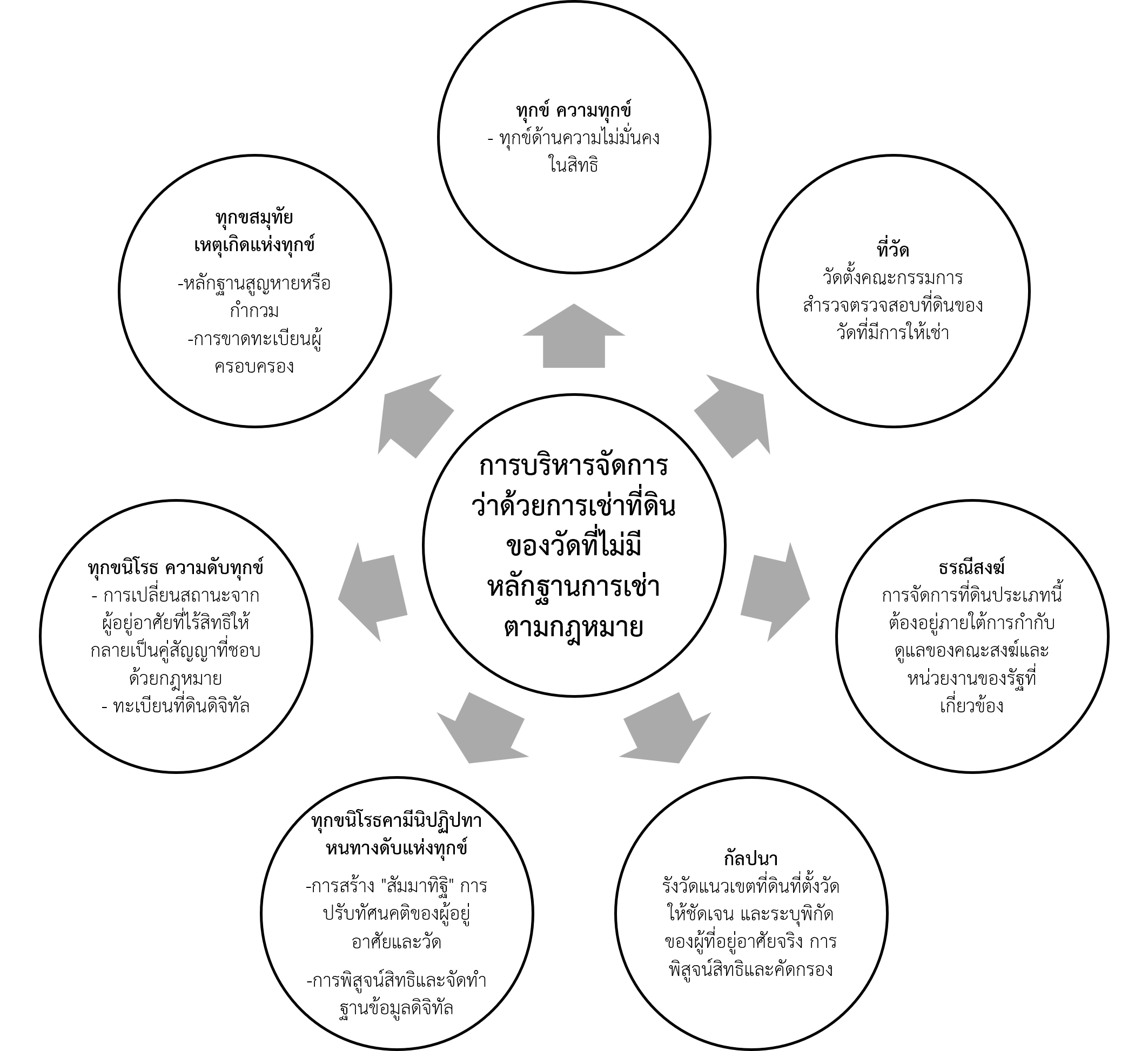
The research findings were as follows: 1. Conditions and Problems Temple lands were classified into three types: temple compound, temple estate (Thorani Song), and maintenance land (Kanlapana). The primary issue was the lack of written lease agreements signed by tenants, as required by the Thai Civil and Commercial Code. This absence led to unfair claims and subsequent disputes over possession rights and rental fees. 2. Legal Comparison Australia (Note: Corrected from Austria): The Native Title Act recognized pre-existing indigenous rights. Muslim Countries: The Waqf Law closely resembled Thailand's temple estate system by dedicating land for charity. Japan The Japanese Civil Code legally recognized unwritten lease agreements. Myanmar Under the Land Acquisition Act, temple land was managed as religious property by the Sangha and the state, and 3. Legal Development Guidelines: The study proposed applying the Four Noble Truths to foster Right View and adjust attitudes between temples and residents. Practical recommendations included rights verification and establishing a digital database. Legally, temples could receive benefits (e.g., rent) from temple estates (Thorani Song) without allowing ownership transfer. For maintenance land (Kanlapana), ownership remained with the original donor, unlike temple estates.
References
โกญจนาท เจริญสุข. (2564). การใช้ประโยชน์ในที่ธรณีสงฆ์เพื่อการอยู่อาศัย: รูปแบบและปัญหา. วารสารวิชาการ สถาบันวิทยาการจัดการแห่งแปซิฟิค, 7(2), 690-699.
โกศล พลโยธา. (2567). แนวทางการพัฒนากระบวนการออกเอกสารสิทธิในที่ดิน เพื่อเร่งรัดการออกเอกสารสิทธิในที่ดินให้แก่ราษฎรในพื้นที่จังหวัดกาฬสินธุ์ (รายงานผลการวิจัย). กรุงเทพฯ: สถาบันดำรงราชานุภาพ กระทรวงมหาดไทย.
พระใบฎีกาคทาวุธ คเวสกธมฺโม (เพ็งที) และบรรเจิด สิงคะเนติ. (2565). ปัญหาการบังคับใช้พระราชบัญญัติคณะสงฆ์ พ.ศ. 2505. วารสารนิติศาสตร์และสังคมท้องถิ่น, 6(1), 129-161.
พระราชบัญญัติคณะสงฆ์ พ.ศ. 2505. (2505, 31 ธันวาคม). ราชกิจจานุเบกษา. เล่ม 79 ตอนที่ 114 ฉบับพิเศษ. หน้า 1.
สำนักงานกองทุนสนับสนุนการสร้างเสริมสุขภาพ. (2566). เปิดต้นแบบ ‘วัดที่คนไทยอยากเห็น’. สืบค้นเมื่อ 25 พฤษภาคม 2569 จาก https://www.thaihealth.or.th/content-detail/5ef970ee-65a3-4bf7-b09b-a896814e6e3e.
สำนักงานพระพุทธศาสนาแห่งชาติ. (2567). คู่มือการดูแลรักษาและจัดการศาสนสมบัติ. นครปฐม: สำนักงานพระพุทธศาสนาแห่งชาติ.
สำนักงานสถิติแห่งชาติ. (2566). สถิติบุคลากรและศาสนสถานทางศาสนาในประเทศไทย. สืบค้นเมื่อ 25 พฤษภาคม 2569 จาก https://www.nso.go.th/nsoweb/nso/interactive_view/fq#gsc.tab=0.
สุชาติ มวลชัยภูมิ และพระมหามิตร ฐิติปญฺโญ (มิตร วันยาว). (2567) การแก้ไขปัญหาที่ดินของวัด: ศึกษากรณีการใช้ประโยชน์ในที่ดินของรัฐ. วารสารวิชาการธรรมทรรศน์, 21(3), 393-402.
Downloads
Published
How to Cite
Issue
Section
License
Copyright (c) 2026 Journal of Interdisciplinary Innovation Review

This work is licensed under a Creative Commons Attribution-NonCommercial-NoDerivatives 4.0 International License.
In order to conform the copyright law, all article authors must sign the consignment agreement to transfer the copyright to the Journal including the finally revised original articles. Besides, the article authors must declare that the articles will be printed in only the Journal of interdisciplinary Innovation Review. If there are pictures, tables or contents that were printed before, the article authors must receive permission from the authors in writing and show the evidence to the editor before the article is printed. If it does not conform to the set criteria, the editor will remove the article from the Journal without any exceptions.