DYNAMIC ROLE-BASED HUMAN RESOURCE ADMINISTRATION: DR-HRA
Keywords:
Role of The State, Public Sector Human Resource Management, Network State, Public Organization Dynamics, DR-HRAAbstract
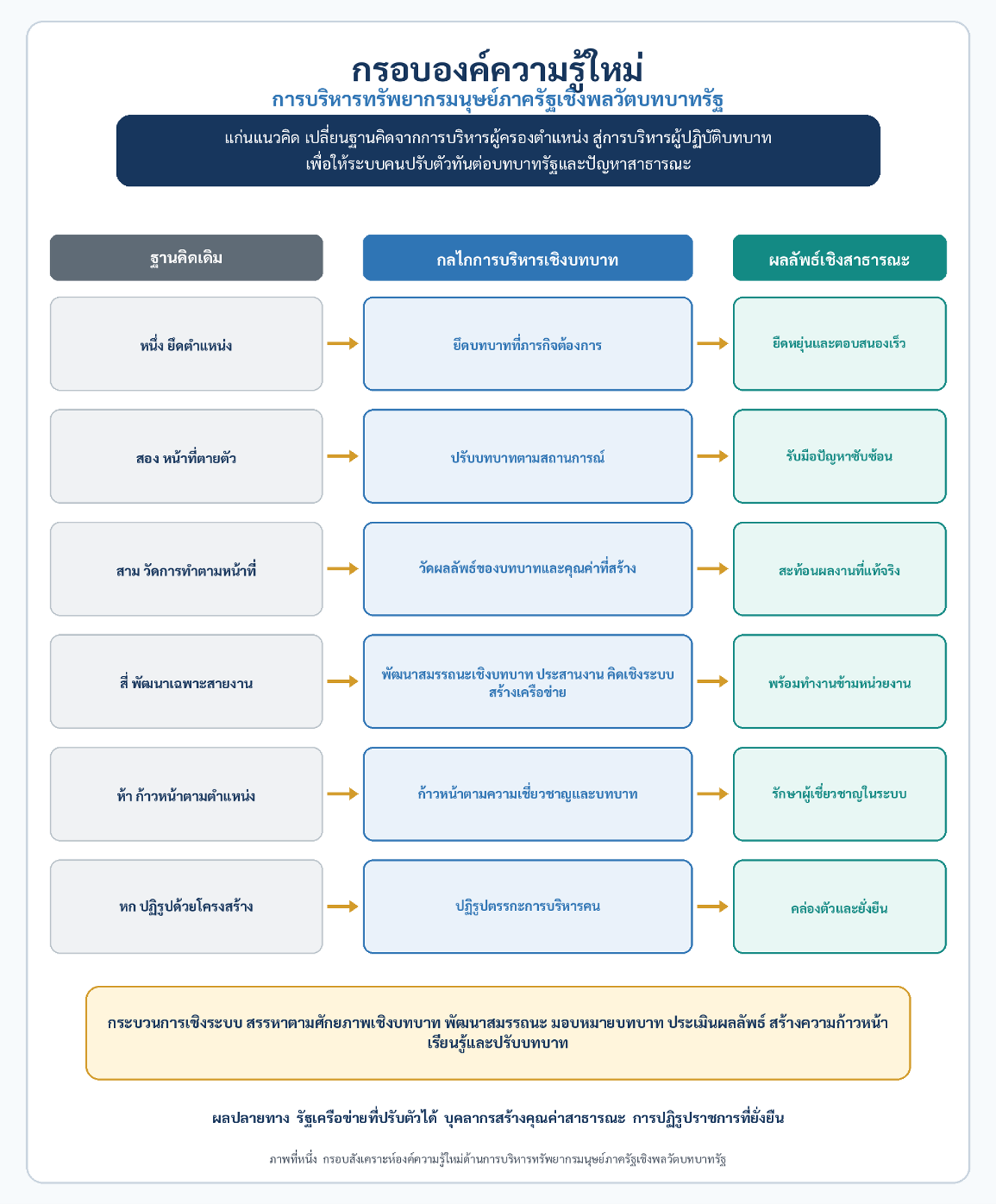
This article proposes a novel conceptual framework for public human resource administration in response to the evolving nature of the contemporary state, characterized by networked governance and multiple functional roles. It introduces the concept of Dynamic Role-Based Human Resource Administration (DR-HRA) as a theoretical framework that addresses the limitations of traditional position-based human resource administration and advocates a paradigm shift toward a role-centered approach to managing public personnel. Drawing upon conceptual analysis and an integrative synthesis of theories from political science, public administration, and human resource management, the article argues that the shortcomings of many public-sector organizations stem not from a lack of resources, but from the growing misalignment between the changing roles of the state and the static nature of existing human resource management systems. It further contends that DR-HRA provides a robust conceptual foundation for civil service reform, strategic public workforce development, and the redesign of public human resource policies to meet the demands of governance in the twenty-first century.
References
โกวิทย์ พวงงาม. (2555). การปกครองท้องถิ่นไทย : หลักการและมิติใหม่ในอนาคต (พิมพ์ครั้งที่ 8). กรุงเทพฯ: วิญญูชน.
ชาญชัย แสวงศักดิ์. (2562). กฎหมายเกี่ยวกับวินัยการเงินการคลังของรัฐ : วิธีการงบประมาณและการตรวจเงินแผ่นดิน. กรุงเทพฯ: วิญญูชน.
บุญเกียรติ การะเวกพันธุ์ และคณะ. (2557). การบริหารงานภาครัฐแนวใหม่. สืบค้นเมื่อ 2 กรกฎาคม 2569 จาก https://shorturl.asia/gbVn2.
วรเดช จันทรศร. (2552). ทฤษฎีการนำนโยบายสาธารณะไปปฏิบัติ (พิมพ์ครั้งที่ 4). กรุงเทพฯ: สมาคมนักวิจัยมหาวิทยาลัยไทย (TURA).
Agranoff, R. & McGuire, M. (2003). Collaborative Public Management: New Strategies for Local Governments. Washington, DC: Georgetown University Press.
Armstrong, M. & Taylor, S. (2023). Armstrong's Handbook of Human Resource Management Practice (16th ed.). London: Kogan Page.
Boxall, P. et al. (2007). The Oxford Handbook of Human Resource Management. Oxford: Oxford University Press.
Kickert, W. J. M. et al. (1997). Managing Complex Networks: Strategies for the Public Sector. London: Sage.
Kolb, D. A. (2015). Experiential Learning: Experience as the Source of Learning and Development (2nd ed.). Upper Saddle River, NJ: Pearson Education.
Moore, M. H. (1995). Creating Public Value: Strategic Management in Government. Cambridge, MA: Harvard University Press.
Osborne, D. & Gaebler, T. (1992). Reinventing Government: How the Entrepreneurial Spirit Is Transforming the Public Sector. Reading, MA: Addison-Wesley.
Perry, J. L. & Hondeghem, A. (Eds.). (2008). Motivation in Public Management: The Call of Public Service. Oxford: Oxford University Press.
Rhodes, R. A. W. (1997). Understanding Governance: Policy Networks, Governance, Reflexivity and Accountability. Buckingham: Open University Press.
Rittel, H. W. J. & Webber, M. M. (1973). Dilemmas in a general theory of planning. Policy Sciences, 4(2), 155–169.
Senge, P. M. (2006). The Fifth Discipline: The Art and Practice of the Learning Organization (Rev. ed.). New York, NY: Doubleday.
Ulrich, D. et al. (2008). HR Competencies: Mastery at the Intersection of People and Business. Alexandria, VA: Society for Human Resource Management.
Downloads
Published
How to Cite
Issue
Section
License
Copyright (c) 2026 Journal of Interdisciplinary Innovation Review

This work is licensed under a Creative Commons Attribution-NonCommercial-NoDerivatives 4.0 International License.
In order to conform the copyright law, all article authors must sign the consignment agreement to transfer the copyright to the Journal including the finally revised original articles. Besides, the article authors must declare that the articles will be printed in only the Journal of interdisciplinary Innovation Review. If there are pictures, tables or contents that were printed before, the article authors must receive permission from the authors in writing and show the evidence to the editor before the article is printed. If it does not conform to the set criteria, the editor will remove the article from the Journal without any exceptions.