
การจัดการเรียนรู้โดยใช้แพลตฟอร์มเกมยึดธงทางไซเบอร์ (CTF)
Article Sidebar
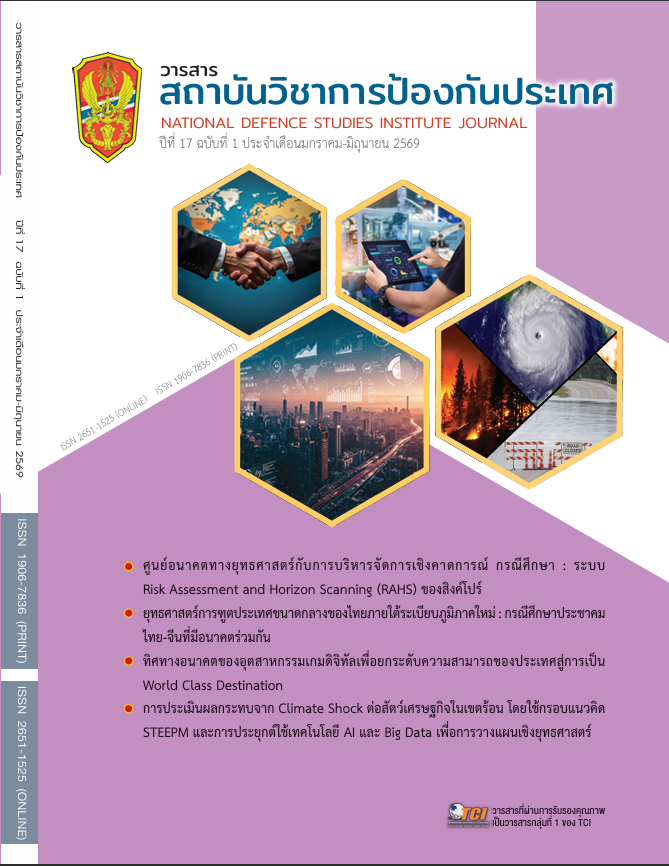
Main Article Content
บทคัดย่อ
บทความนี้มีวัตถุประสงค์เพื่อนำเสนอการศึกษา การนำแพลตฟอร์มเกมยึดธงทางไซเบอร์ (CTF) ซึ่งเป็นเกมการแข่งขันทักษะด้านความมั่นคงปลอดภัยไซเบอร์ ที่มีการนำมาใช้เป็นสื่อการเรียนการสอนด้านความมั่นคงปลอดภัยไซเบอร์ โดยที่ผู้เรียนจะพัฒนาทักษะการใช้เครื่องมือด้านการรักษาความมั่นคงทางไซเบอร์จากการแข่งขันเกมยึดธง (CTF) ซึ่งมีหมวดหมู่ทักษะการรักษาความปลอดภัยทางไซเบอร์ 2 ด้าน ประกอบด้วย ด้านการรักษาความมั่นคงปลอดภัยไซเบอร์เชิงรุก และด้านการรักษาความมั่นคงปลอดภัยไซเบอร์เชิงรับ ซึ่งมีหมวดหมู่ที่นิยมใช้บนแพลตฟอร์ม เกมยึดธงทางไซเบอร์สำหรับฝึกฝนและในการแข่งขัน 10 หมวดหมู่ ได้แก่ การเขียนโปรแกรม (Programming) การเข้าถึงทรัพยากรของเครือข่าย (Network Exploitations) การเข้าถึงทรัพยากรของเว็บ (Web Exploitations) การยึดครองควบคุมเครื่อง (Pwnable/Binary Exploitations) การทำวิศวกรรมย้อนกลับ (Reverse Engineering) การตรวจสอบพิสูจน์ทางดิจิทัล (Digital Forensics) วิทยาการเข้ารหัสลับ (Cryptography) การใช้เครื่องมือข่าวกรองจากแหล่งข้อมูลเปิด (Open-Source Intelligence: OSINT) ความรู้เบ็ดเตล็ด (Miscellaneous) การรักษาความปลอดภัยบนอุปกรณ์เคลื่อนที่ (Mobile Security) ทั้งนี้ รูปแบบการเรียนรู้ผ่านแพลตฟอร์มเกมยึดธงทางไซเบอร์ (CTF) เป็นการจำลองยุทธศาสตร์ทางไซเบอร์ ที่มีประโยชน์ต่อการให้ผู้เรียนได้ทำงานผ่านความท้าทายหลายอย่าง โดยใช้เทคโนโลยีทางไซเบอร์และเลือกใช้ AI ได้อย่างสร้างสรรค์และมีจริยธรรม
Article Details

อนุญาตภายใต้เงื่อนไข Creative Commons Attribution-NonCommercial-NoDerivatives 4.0 International License.
บทความ ภาพ ตาราง กราฟ ข้อเขียน หรือความคิดเห็นในวารสารฉบับนี้เป็นของผู้เขียนไม่ผูกพันกับสถาบันวิชาการป้องกันประเทศ และทางวิชาการแต่อย่างใด
เอกสารอ้างอิง
พายัพ ศิรินาม และเฉลิมขวัญ ศิริพันธุ์. (2566). การพัฒนาโจทย์สถานการณ์สำหรับแบบจำลองยุทธศาสตร์ทางไซเบอร์ของกองทัพอากาศ. วารสารวิชาการการประยุกต์ใช้เทคโนโลยีสารสนเทศ, 9(1), 23–41. https://ph02.tci-thaijo.org/index.php/project-journal/article/view/248726
พิชญะ โมริโมโต. (2563, 4 ธันวาคม). ยกระดับศักยภาพของทีม IT Security องค์กรด้วยการเล่น CTF. NT cyfence. https://www.cyfence.com/article/empower-your-itsecurity-team-with-capture-the-flag/
วิเชียร เกิดศรี. (2564). แนวทางปฏิบัติที่ดีสำหรับหลักสูตรการเรียนการสอนด้านความมั่นคงปลอดภัยไซเบอร์: กรณีศึกษาโรงเรียนนายร้อยตำรวจ. วารสารอาชญาวิทยาและนิติวิทยาศาสตร์, 7(2), 136–150. https://so02.tci-thaijo.org/index.php/forensic/article/view/250248
สำนักงานคณะกรรมการการรักษาความมั่นคงปลอดภัยไซเบอร์แห่งชาติ. (2565, 9 ธันวาคม). นโยบายและแผนปฏิบัติการว่าด้วยการรักษาความมั่นคงปลอดภัยไซเบอร์ (พ.ศ. 2565–2570). https://drive.ncsa.or.th/s/5RFcH5MmgmJgGtR
สำนักงานคณะกรรมการดิจิทัลเพื่อเศรษฐกิจและสังคมแห่งชาติ. (2562). สรุปผลการสำรวจข้อมูลสถานภาพการรู้เท่าทันสื่อและสารสนเทศของประเทศไทย ปี พ.ศ. 2562. กระทรวงดิจิทัลเพื่อเศรษฐกิจและสังคม.
สำนักงานพัฒนาธุรกรรมทางอิเล็กทรอนิกส์. (2562). รายงานผลการสำรวจพฤติกรรมผู้ใช้อินเทอร์เน็ตในประเทศไทย ปี 2561. https://www.etda.or.th/th/Useful-Resource/publications/Thailand-Internet-User-Behavior-2018.aspx
Capture the Flag Thailand. (2566a, 9 กรกฎาคม). การแข่งขันทักษะทางไซเบอร์กองทัพไทย ประจำปี 2566 ระดับกองทัพไทย และระดับโรงเรียนทหาร–ตำรวจ และอุดมศึกษา. https://ctf.in.th/news/2224/
Capture the Flag Thailand. (2566b, 19 กรกฎาคม). การแข่งขัน Thailand Cyber Top Talent 2023. https://ctf.in.th/challenge/2254/
Google Inc. (2023, June 25). Google Ctf. https://capturetheflag.withgoogle.com/
International Telecommunication Union. (2018). Measuring the information society report 2018. https://www.itu.int/en/ITU-D/Statistics/pages/publications/misr2018.aspx
Karagiannis, S., Maragkos-Belmpas, E., & Magkos, E. (2020). An analysis and evaluation of open source capture the flag platforms as cybersecurity e-learning tools. In L. Drevin, S. Von Solms, & M. Theocharidou (Eds.), Information Security Education. Information Security in Action (pp. 61-77). Springer, Cham. https://doi.org/10.1007/978-3-030-59291-2_5
Kucek, S., & Leitner, M. (2020). An Empirical Survey of Functions and Configurations of Open-Source Capture the Flag (CTF) Environments. Journal of Network and Computer Applications, 151, 102470. https://doi.org/10.1016/j.jnca.2019.102470
Oliveira Júnior, A., Funchal, G., Queiroz, J., Loureiro, J., Pedrosa, T., Domínguez, J., & Leitão, P. (2022). Learning Cybersecurity in IoT-based Applications through a Capture the Flag Competition. https://doi.org/10.1109/INDIN51773.2022.9976079
Ortiz-Garcés, I., Gutierrez, R., Guerra, D., Sanchez-Viteri, S., & Villegas, W. (2023). Development of a Platform for Learning Cybersecurity Using Capturing the Flag Competitions. Electronics, 12, 1753. https://doi.org/10.3390/electronics12071753
Švábenský, V., Celeda, P., Vykopal, J., & Brisakova, S. (2020). Cybersecurity Knowledge and Skills Taught in Capture the Flag Challenges. Computers & Security, 102, 102154. https://doi.org/10.1016/j.cose.2020.102154
Swann, M., Rose, J., Bendiab, G., Shiaeles, S., & Li, F. (2021). Open source and commercial capture the flag cyber security learning platforms - A case study. In 2021 IEEE International Conference on Cyber Security and Resilience (CSR). https://doi.org/10.1109/CSR51186.2021.9527941
Tirstan, J., Gilbert, J. A., & Nelmiawati, N. (2022). Analysis of cyber security knowledge and skills for capture the flag competition. Jurnal Integrasi, 14(1), 14-22. https://doi.org/10.30871/ji.v14i1.3986
Tann, W., Liu, Y., Sim, J., Seah, C., & Chang, E.-C. (2023). Using large language models for cybersecurity capture-the-flag challenges and certification questions. arXiv. https://arxiv.org/abs/2308.10443
