The Development of a Tourism Application for Mueang District Phitsanulok Province
Article Sidebar
Main Article Content
Abstract
This research aimed to (1) develop a tourism application for Mueang District, Phitsanulok Province, and (2) study user satisfaction with the tourism application for Mueang District, Phitsanulok Province. The research adopted the System Development Life Cycle (SDLC) methodology, which comprised six stages: (1) feasibility study, (2) system analysis, (3) system design, (4) development and testing, (5) system installation and trial, and
(6) maintenance and evaluation. The sample group consisted of 50 users who accessed the tourism application, selected through convenience sampling. The research instruments included the developed tourism application and a user satisfaction evaluation form. The statistical methods used for data analysis were percentage, mean, and standard deviation. The developed tourism application presented comprehensive information including
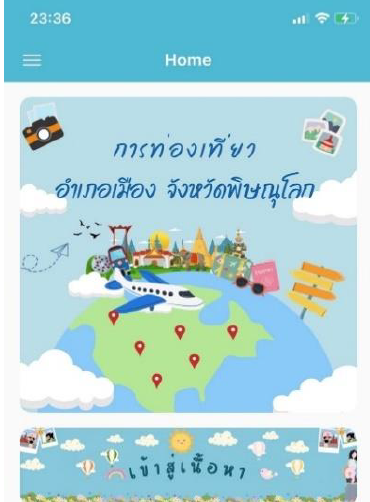
a homepage, details of the top 10 tourist attractions, visualized "One Day Trips," restaurant information, transportation to Phitsanulok Province, and contact details of relevant agencies. The overall user satisfaction with the tourism application was at the highest level (𝑥̄ = 4.52). Specifically, the users reported the highest level of satisfaction regarding the benefits of the application (𝑥̄ = 4.65).
Article Details

This work is licensed under a Creative Commons Attribution-NonCommercial-NoDerivatives 4.0 International License.
References
การท่องเที่ยวแห่งประเทศไทย. รายงานประจำปี. กรุงเทพฯ: การท่องเที่ยวแห่งประเทศไทย, ๒๕๖๓.
เกษศินี กุยวารี และคณะ. “การพัฒนาเว็บแอปพลิเคชันเพื่อจัดเก็บข้อมูลพรรณไม้ด้วยเทคโนโลยีความเป็นจริงเสริม กรณีศึกษา โรงเรียนน้ำดิบวิทยาคม จังหวัดลำพูน.” วารสารวิชาการเพื่อการพัฒนานวัตกรรมเชิงพื้นที่ (JSID). ๖, ๑ (๒๕๖๘): ๕๕-๖๓.
ดลธรัตน์ จูฑะมณีโรจน์ และเนาวนิตย์ สงคราม. “การพัฒนาเว็บแอปพลิเคชันร่วมกับการเรียนการสอนโดยใช้การตัดสินใจเป็นฐานเพื่อส่งเสริมการประเมินเหตุผลสำหรับนักศึกษาแพทย์ชั้นพรีคลินิก.” วารสารเทคโนโลยีและสื่อสารการศึกษา คณะศึกษาศาสตร์ มหาวิทยาลัยมหาสารคาม. ๕, ๑๔ (๒๕๖๕): ๓๖-๔๖.
นรเศรษฐ์ คาสี. อิทธิพลของการรับรู้เรื่องความปลอดภัยของแหล่งท่องเที่ยวผ่านสื่อสังคมออนไลน์ที่มีต่อการตัดสินใจเดินทางมาท่องเที่ยวจังหวัดเชียงใหม่ในประเทศไทย. ปทุมธานี: มหาวิทยาลัยกรุงเทพ, ๒๕๖๐.
นฤมล อินทิรักษ์. การพัฒนาแอปพลิเคชันเพื่อส่งเสริมแหล่งท่องเที่ยวจังหวัดมหาสารคามโดยใช้เทคโนโลยีเสมือนจริง. มหาสารคาม: มหาวิทยาลัยราชภัฏมหาสารคาม, ๒๕๖๑.
ภิเษก ชัยนิรันดร์. Social Media สำหรับธุรกิจท่องเที่ยว. [ออนไลน์]. สืบค้นเมื่อ ๑๒ มิถุนายน ๒๕๖๗, จาก: https://www.marketingoops.com/campaigns/social-media-marketing-digital/travel/
วราพงษ์ คล่องแคล่ว และคณะ. “การพัฒนาระบบบริหารจัดการกองทุนเพื่อนิสิตคณะเทคโนโลยีสารสนเทศและการสื่อสาร มหาวิทยาลัยพะเยา.” วารสารวิชาการเพื่อการพัฒนานวัตกรรมเชิงพื้นที่ (JSID). ๖, ๒ (๒๕๖๘): ๑๙๖-๒๐๙.
องค์การบริหารการพัฒนาพื้นที่พิเศษเพื่อการท่องเที่ยวอย่างยั่งยืน. การท่องเที่ยวหรืออุตสาหกรรมท่องเที่ยวเป็นเรื่องใกล้ตัวกว่าที่คิด. [ออนไลน์]. สืบค้นเมื่อ ๒๖ เมษายน ๒๕๖๘, จาก: https://tatreviewmagazine.com/article/community-based-tourism/
อรุณรักษ์ ตันพานิช และคณะ. “การพัฒนาแอปพลิเคชันบนมือถือสำหรับการเผยแพร่อาหารและขนมพื้นบ้านชุมชนบ้านจีน.” Recent Science and Technology. ๑๗, ๑ (๒๕๖๘): ๑๙๑-๒๐๐.
Kissel et al. Security Considerations in the System Development Life Cycle. [Online]. Retrieve 26 April 2025, จาก: https://www.ijsrp.org/research-paper-0823.php?rp=P14012999
Pargaonkar, S. “A Comprehensive Research Analysis of Software Development Life Cycle (SDLC).” International Journal of Scientific and Research Publications 13, 8 (2023): 120-124.
