THE TITLE OF THE ARTICLE: THE CREATION OF ANIMAL-SHAPED PAPER SCULPTURES BASED ON THE STUDY OF MYTHICAL BEASTS IN RATTANAKOSIN-ERA PAINTINGS
Keywords:
Buddhist Beliefs, Mythical Animals, Ancient Paintings, Rattanakosin, Paper SculpturesAbstract
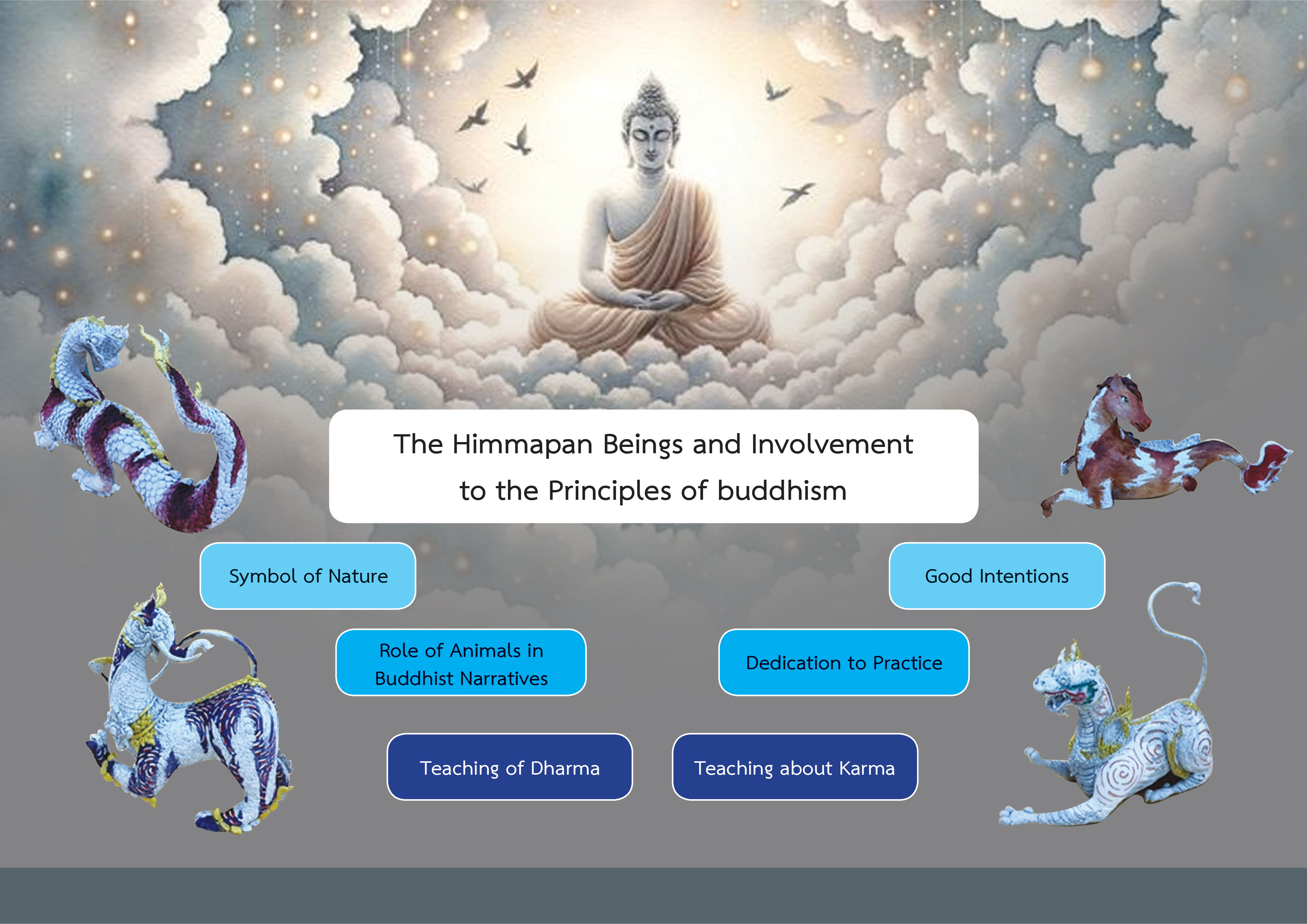
Background and Objectives: The Himmapan animals are mythical creatures found in Thai literature and legends. They appear frequently in religious writings, artworks, and stories involving deities and animals in the Himmapan forest, serving as religious symbols. According to information from the Dharma Realm Buddhist Association, the use of animal symbols is an important aspect of Buddhism, reflecting the idea that all living beings possess inherent virtue, power, and wisdom. These symbols carry hidden meanings that are connected to the specific traits of each animal and demonstrate the relationship between Buddhism, nature, compassion, and humanistic values-emphasizing the link between Buddhist theory and practice. The main objectives of this research were to examine the forms of mural paintings of mythical animals in the Rattanakosin period, to explore the significance of these mythical animals in relation to Buddhism and Thai society, and to create a set of contemporary sculptures inspired by the Rattanakosin-era using paper sculptures based on the process of making Khon masks.
Methodology: The study employed a systematic data collection process through on-site empirical observation. The frequency of mythical animal depictions in mural paintings was analyzed statistically. In the creative component, the researcher developed new sculptures using mulberry and recycled paper, drawing on traditional Thai sculpting techniques to blend ancient craftsmanship with modern materials and promote sustainability.
Main Results: The research findings revealed that mythical animals appeared in only 6% of mural paintings from the Rattanakosin-era temples across the studied regions of Bangkok, Ratchaburi, and Samut Songkhram. This rarity might have been the result of the fact that mythical animals typically appeared in the top sections of murals, representing the "Three Worlds," and were not widely recognized by the general public. The researcher selected prominent mythical animals from each province and created sculptures using traditional Thai sculpting techniques, reflecting the artistry of Khon mask making. This process merged traditional knowledge with contemporary artistic approaches.
Involvement to Buddhadhamma: This study aligns with the concept of "Applied Buddhism," which integrates Buddhist principles with modern contexts to cultivate wisdom and virtue based on the Buddhist doctrine of samsara. Information from the Thailand Foundation indicates that Himmapan creatures frequently appear in Thai religious and royal architecture as symbols of belief and sovereignty. These mythical animals served as visual metaphors for the Buddhist concept of Samsara, referring to the cycle of birth, aging, sickness, death, rebirth, and karmic consequences. Their presence in art encourages self-discipline, self-reflection, compassion, and mindfulness as a means of liberation from suffering.
Conclusions: This research emphasized the social and religious values reflected through the imagery of mythical creatures, with reference to animals in Thai Buddhist art, particularly during the Rattanakosin-era. Although their appearances in murals are limited, their symbolic depth retains cultural and spiritual meaning. By applying traditional and contemporary sculpting practices, the study preserved the essence, beauty, and unique identity of these creatures while making them accessible to modern audiences. Ultimately, the research demonstrates how art can act as a universal language that communicates deep spiritual concepts and supports the practice in Buddhism through visual storytelling.
References
Adulyapichet, A. (2013). Wall paintings of Wat Kongkaram. Nonthaburi, Thailand: Muang Boran Publishing House.
Bankrithong, S. (2018). The music composition: The Himmapan creatures. [Doctoral dissertation, Chulalongkorn University]. Chulalongkorn University Intellectual Repository. http://cuir.car.chula.ac.th/handle/123456789/63175.
Fine Arts Department. (2018). The meaning of the mythical animals. Bangkok, Thailand: Amarin Corporations Public Company Limited.
Laosunthon, N. & Samran, P. (2016). A Painting of Mythical Animals, Royal Vihara, Wat Suthat Thepwararam. Bangkok, Thailand: Amarin Corporations Public Company Limited.
Lek Sukhum, S. (2005). Rattanakosin Art. Nonthaburi, Thailand: Muang Boran Publishing House.
Martin, G. (2024). The compendium of mythical creatures: An illustrated encyclopedia of fantastical beasts from around the world. New Delhi, India: Wonder House Books.
Ministry of Culture. (2011). Traibhumikatha Buddhist cosmology the illustrated King Rama IX edition. Bangkok, Thailand: Ministry of Culturev.
Plai Noi, S. (2019). Himmapan animals. Journal of Culture, 57(1) 35-41.
Ratchawet, O. (2003). Himmapan animals and strange animals. Bangkok, Thailand: Ohm Animation Co., Ltd.
Suwan, S. & Taothong, S. (2019). Himmapan creatures from imagination: Influences from beliefs and drawings of Surasak Charoenwong. Veridian E-Journal, Silpakorn University (Humanities, Social Sciences and Arts), 12(6), 1-15.
Downloads
Published
How to Cite
Issue
Section
License
Copyright (c) 2025 Journal of Buddhist Anthropology

This work is licensed under a Creative Commons Attribution-NonCommercial-NoDerivatives 4.0 International License.