การศึกษาพฤติกรรมและความพึงพอใจของนักศึกษาต่อการจัดกิจกรรมการเรียนการสอนแบบเชิงรุก (Active Learning)
Article Sidebar
Main Article Content
บทคัดย่อ
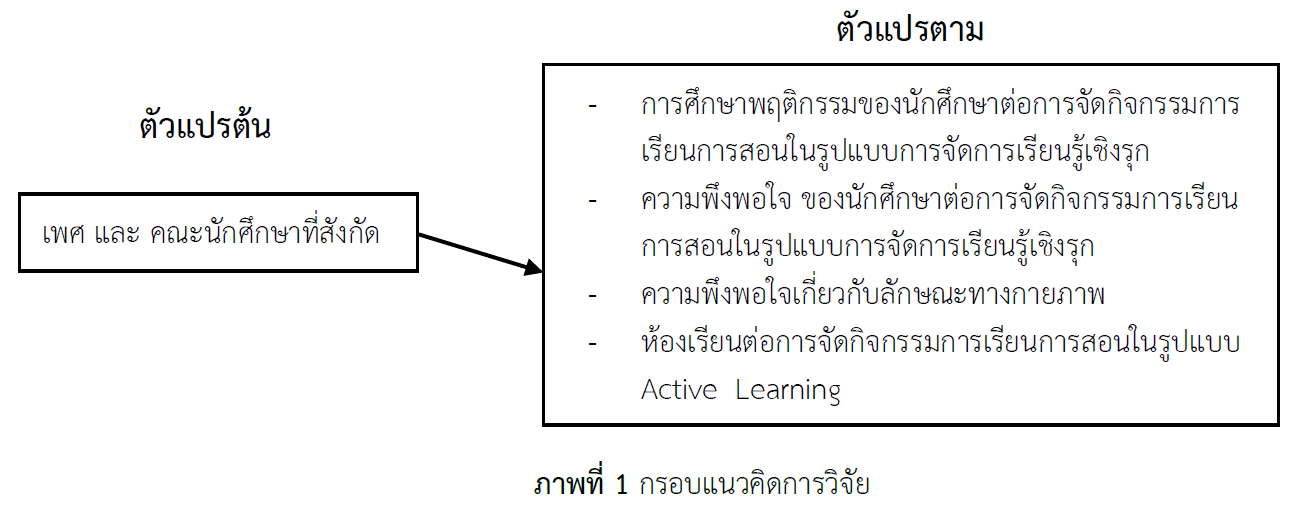
การวิจัยครั้งนี้มีวัตถุประสงค์เพื่อ 1) เพื่อศึกษาพฤติกรรมและสำรวจความพึงพอใจของนักศึกษาต่อการจัดกิจกรรมการเรียนกาสอนในรูปแบบการจัดการเรียนรู้เชิงรุก กรณีศึกษา รายวิชา เทคโนโลยีสารสนเทศเพื่อชีวิตยุคดิจิทัล คณะวิทยาศาสตร์ มหาวิทยาลัยอุบลราชธานี 2) เพื่อศึกษาผลสัมฤทธิ์ทางการเรียนของนักศึกษาที่ลงทะเบียนเรียนในรายวิชาเทคโนโลยีสารสนเทศเพื่อชีวิตยุคดิจิทัล การวิจัยนี้เป็นการวิจัยเชิงปริมาณ โดยใช้เครื่องมือในการเก็บรวบรวม คือแบบสอบถาม โดยมีค่าความเชื่อมั่นด้วยวิธี วิเคราะห์ค่าสัมประสิทธิ์แอลฟาของครอนบาค เท่ากับ 0.96 กลุ่มตัวอย่างที่ใช้ในการศึกษาครั้งนี้ คือ นักศึกษาที่ลงทะเบียนเรียนวิชาเทคโนโลยีสารสนเทศเพื่อชีวิตยุคดิจิทัล ภาคเรียนที่ 2/2566 จำนวน 255 คน สถิติที่ใช้ในการวิเคราะห์ข้อมูล คือ ร้อยละ ค่าเฉลี่ย ส่วนเบี่ยงเบนมาตรฐาน t-Test และ F-Test ผลการวิจัยพบว่า 1) ผู้ตอบแบบสอบถามส่วนใหญ่เป็นเพศหญิง คณะที่สังกัด คือ คณะบริหารศาสตร์ คณะศิลปศาสตร์ คณะนิติศาสตร์ และ 2) ผลสัมฤทธิ์ทางการเรียนของผู้เรียน พบว่าผู้เรียนมีคะแนนเฉลี่ยหลังเรียนสูงกว่า คะแนนเฉลี่ยก่อนเรียน อย่างมีนัยสำคัญทางสถิติที่ระดับ .05 และ ผลประเมินของนักศึกษา ในด้านที่ 1 การศึกษาพฤติกรรม อยู่ในระดับมากที่สุด มีค่าเฉลี่ยเท่ากับ 4.30 ส่วนเบี่ยงเบนมาตรฐานเท่ากับ 0.48 อยู่ในระดับมากที่สุด ด้านที่ 2 ความพึงพอใจของนักศึกษา มีค่าเฉลี่ยเท่ากับ 4.31 ส่วนเบี่ยงเบนมาตรฐานเท่ากับ 0.47 อยู่ในระดับมากที่สุด ด้านที่ 3 ความพึงพอใจเกี่ยวกับลักษณะทางกายภาพห้องเรียน มีค่าเฉลี่ยเท่ากับ 4.17 ส่วนเบี่ยงเบนมาตรฐานเท่ากับ 0.53 อยู่ในระดับมาก 3) ความแตกต่างของเพศและคณะที่นักศึกษาสังกัด พบว่า เพศ ที่แตกต่างกัน มีผลต่อความความคิดเห็นเกี่ยวกับพฤติกรรมและความพึงพอใจของนักศึกษาต่อการจัดกิจกรรมการจัดการเรียนรู้เชิงรุก เพศที่แตกต่างกัน ไม่มีผลต่อความคิดเห็นเกี่ยวกับความพึงพอใจเกี่ยวกับลักษณะทางกายภาพห้องเรียนต่อการจัดกิจกรรมการจัดการเรียนรู้เชิงรุก อย่างมีนัยสำคัญที่ระดับ .05 และ คณะที่นักศึกษาสังกัดที่แตกต่างกัน มีผลต่อความคิดเห็นเกี่ยวกับพฤติกรรมและความพึงพอใจต่อการจัดกิจกรรมการจัดการเรียนรู้เชิงรุก อย่างมีนัยสำคัญที่ .05 ดังนั้นจากผลการวิจัยนี้ ทำให้มหาวิทยาลัยได้พัฒนากระบวนการเรียนรู้ที่เน้นให้ผู้เรียนมีส่วนร่วมในกิจกรรมการจัดการเรียนการสอนและเป็นการตอบสนองต่อนโยบายด้านการพัฒนากระบวนการเรียนการสอนในศตวรรษที่ 21 ซึ่งจะทำให้ผู้เรียนเกิดการเรียนรู้และสามารถพัฒนาตนเอง และส่งผลให้การเรียนการสอนมีประสิทธิภาพมากยิ่งขึ้น
Article Details

อนุญาตภายใต้เงื่อนไข Creative Commons Attribution-NonCommercial-NoDerivatives 4.0 International License.
วารสารวิทยาศาสตร์และวิทยาศาสตร์ศึกษา (JSSE) เป็นผู้ถือลิสิทธิ์บทความทุกบทความที่เผยแพร่ใน JSSE นี้ ทั้งนี้ ผู้เขียนจะต้องส่งแบบโอนลิขสิทธิ์บทความฉบับที่มีรายมือชื่อของผู้เขียนหลักหรือผู้ที่ได้รับมอบอำนาจแทนผู้เขียนทุกนให้กับ JSSE ก่อนที่บทความจะมีการเผยแพร่ผ่านเว็บไซต์ของวารสาร
แบบโอนลิขสิทธิ์บทความ (Copyright Transfer Form)
ทางวารสาร JSSE ได้กำหนดให้มีการกรอกแบบโอนลิขสิทธิ์บทความให้ครบถ้วนและส่งมายังกองบรรณาธิการในข้อมูลเสริม (supplementary data) พร้อมกับนิพนธ์ต้นฉบับ (manuscript) ที่ส่งมาขอรับการตีพิมพ์ ทั้งนี้ ผู้เขียนหลัก (corresponding authors) หรือผู้รับมอบอำนาจ (ในฐานะตัวแทนของผู้เขียนทุกคน) สามารถดำเนินการโอนลิขสิทธิ์บทความแทนผู้เขียนทั้งหมดได้ ซึ่งสามารถอัพโหลดไฟล์บทความต้นฉบับ (Manuscript) และไฟล์แบบโอนลิขสิทธิ์บทความ (Copyright Transfer Form) ในเมนู “Upload Submission” ดังนี้
1. อัพโหลดไฟล์บทความต้นฉบับ (Manuscript) ในเมนูย่อย Article Component > Article Text
2. อัพโหลดไฟล์แบบโอนลิขสิทธิ์บทความ (Copyright Transfer Form) ในเมนูย่อย Article Component > Other
ดาวน์โหลด ไฟล์แบบโอนลิขสิทธิ์บทความ (Copyright Transfer Form)
เอกสารอ้างอิง
Bailey, R., Ries, F., Heck, S. and Scheuer, C. (2023). Active learning: A review of European studies of active lessons. Sustainability, 15(4), 3413.
Binoy, S. (2024). Transforming education: Enhancing student performance and satisfaction through the flipped classroom method. American Journal of Education and Technology, 3(1), 35–45.
Bojoras, R., Jiruphan, T. and Chotchanthuek, K. (2017). Learning management system via active learning in calculus I (in Thai). Proceeding of The 11th UBU Research Conference. Ubon Ratchathani: Ubon Ratchathani univesity.
Boonruangroj, C. (2017). The process of developing teachers in integrated active learning by Office of Suphanburi Primary Educational Service Area 1 (in Thai). Research Report. Bangkok: Office of the Basic Education Commission, Ministry of Education.
Chamchoi, P., Methasook, A., Khongsap, K. and Jomnam, S. (2023). Active learning: Learning with heart, brain, and hands (in Thai). Pathum Thani: Faculty of Learning Sciences and Education, Thammasat University.
Inbua, C. (2017). Active learning instructional methods in the course of Politics and Public Policy (in Thai). Pattani: Mahachulalongkornrajavidyalaya University, Pattani Campus.
Jiwtan, P. (2021). A comparative study of satisfaction, impacts, and learning behaviors from using an active learning classroom (in Thai). Research Reports. Nakhon Ratchasima: Suranaree University of Technology.
Kawirat, K. (2021). The Development Of Active Learning For Enhancing The Creative Problem Solving In Curriculum And Curriculum Development Subject Of Graduate Diploma program in Teaching Profession Students (in Thai). Journal of Education Silpakorn University, 19(1), 89-101.
Ministry of Education, Office of the Education Council. (2014). Guidelines for developing Thai education and preparing for the 21st century (in Thai). Bangkok: Prikwarn Graphic Co., Ltd.
Odabasi, B. and Kolburan, G. (2013). Employment of active learning in classroom management and its effect on students’ academic success. The International Journal of Research in Teacher Education, 4(1), 23-29.
Ribeiro, M. I. C. and Passos, O. M. (2020). A study on the active methodologies applied to teaching and learning process in the computing area. IEEE Access, 8, 219083–219097.
Sa-ardnak, A. (2013). Skills from learning management in the 21st century (in Thai). Proceeding of The 1st National Conference on Educational Research. Bangkok: Silpakorn University.
Sriurai, W. and Banterng, A. (2019). The model of interaction support system development in classroom for the 21st century active learning (in Thai). Journal of Science and Technology Ubon Ratchathani University, 21(1), 136-145.
Tantasawat, P. A., Srisawat, S., Damsugree, N., Thepwichit, A. and Tittabutr, P. (2019). Attitudes toward using e-courseware in a flipped classroom teaching and learning approach of Suranaree University of Technology students in the application of biotechnology in crop production course. In Proceeding of The 3rd International Conference on Education and Multimedia Technology (pp.206-241). New York: Association for Computing Machinery.
Ubon Ratchathani University. (2020). Ubon Ratchathani University strategic plan (2020-2024) (in Thai). Retrieved June 8, 2023. from Ubon Ratchathani University: https://www.ubu.ac.th/.
