
The Influence of Vote Brokers on Electoral Transparency in Thailand’s 2026 for Election of House of Representatives
Article Sidebar
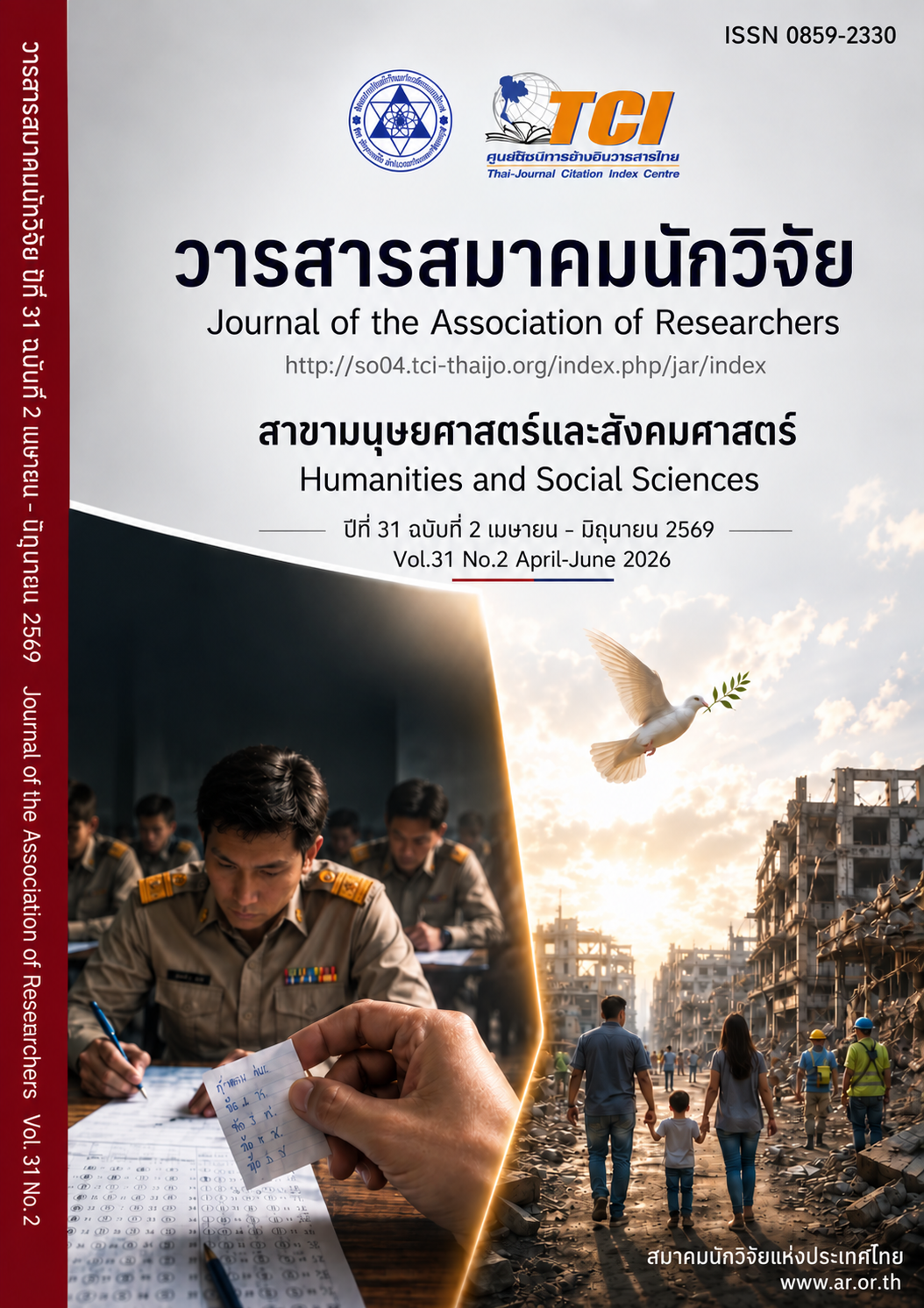
Main Article Content
Abstract
This research article aims to study the role and influence of vote brokers in the 2026 Thai parliamentary elections. It analyzes the role of vote brokers in the Thai political system and their impact on the electoral process and democracy. The analysis utilizes a descriptive approach, synthesizing research from Thailand and abroad, as well as related literature. The findings reveal that vote brokers continue to wield significant influence in swaying and mobilizing votes through social and economic networks. Despite attempts at control by relevant agencies, this role poses challenges to the transparency and fairness of the electoral process. The article suggests reforms to the electoral system and the promotion of democratic awareness to strengthen Thai democracy in the future. Recommendations include: 1) Reforming the electoral system to promote free competition and reduce reliance on vote brokers; 2) Strengthening the Election Commission (EC) to consider adjusting the electoral system towards free competition and reducing dependence on vote brokers; 3) Promoting public awareness and rights through activities and campaigns to educate citizens about their voting rights, the impact of vote buying, and the role of vote brokers, enabling voters to make informed and independent decisions; and 4) Enhancing the role of civil society and the media, enabling them to play a crucial role in scrutinizing and clarifying election results. It also discloses information about the political behavior of campaign managers to enhance transparency and reduce unwanted influence.
Article Details

This work is licensed under a Creative Commons Attribution-NonCommercial-NoDerivatives 4.0 International License.
บทความที่ปรากฏในวารสารนี้ เป็นความรับผิดชอบของผู้เขียน ซึ่งสมาคมนักวิจัยไม่จำเป็นต้องเห็นด้วยเสมอไป การนำเสนอผลงานวิจัยและบทความในวารสารนี้ไปเผยแพร่สามารถกระทำได้ โดยระบุแหล่งอ้างอิงจาก "วารสารสมาคมนักวิจัย"
References
สถาบันการเมืองแห่งประเทศไทย. (2563). รายงานสถานการณ์การเลือกตั้งและการเมืองไทย. กรุงเทพฯ: สถาบันการเมืองแห่งประเทศไทย.
สถาบันวิจัยสังคม. (2560). รายงานการศึกษาบทบาทหัวคะแนนในพื้นที่ภูมิภาคต่าง ๆ ของประเทศไทย. กรุงเทพฯ: มหาวิทยาลัย.
เอกรินทร์ ต่วนศิริ และ ชัยพงษ์ สำเนียง. (2568). อินฟลูเอนเซอร์ท้องถิ่นกับการเมืองไทยร่วมสมัย: เศรษฐกิจใหม่ อัตลักษณ์ และทุนเลือกตั้งใหม่ที่เปลี่ยนไป. สืบค้นเมื่อ 20 มุนายน 2569 จาก https://wewatchthailand.org/articles/2025-09-08-01
Anderson, B. (1990). Language and power: Exploring political culture in Indonesia. Cornell University Press.
Bjork, C. (2012). Thailand: State and society. University of Hawaii Press.
Chaloemtiarana, T. (2007). Thailand: The politics of despotic paternalism. Cornell University Press.
Farrelly, N. (1999). The politics of patronage: Power, dispossession and democracy in the Philippines. University of Hawaii Press.
Jones, L., & Camp, R. (2019). Social media and political mobilization in Southeast Asia. Asian Journal of Communication, 29(3), 215–234.
Kuhn, R. (2006). Political competition and electoral integrity in Southeast Asia. Journal of Democracy, 17(2), 35–49.
Peou, S. (2007). Patronage and political violence in Thailand. Asian Survey, 47(6), 818-843.
Phongpaichit, P., & Baker, C. (2004). Thaksin: The business of politics in Thailand. Silkworm Books.
Smith, J. (2020). Influence of local power holders in Southeast Asian elections. Journal of Political Studies, 22(4), 55–73.
Weber, M. (1947). The Theory of Social and Economic Organizations. New York: Free Press.
Wyatt, S.M.E. et al. (2003) Non-Users Also Matter: The Construction of Users and Nonusers of the Internet. In: Oudshoorn, N. and Pinch, T., Eds., How Users Matter: The Co-Construction of Users and Technology, The MIT Press, Cambridge, 67-79. https://doi.org/10.7551/mitpress/3592.003.0006
Translated Thai References
Social Research Institute. (2017). A Study Report on the Role of Political Boosters in Various Regions of Thailand. Bangkok: University. (in Thai)
The Political Institute of Thailand. (2020). Report on the Election Situation and Politics in Thailand. Bangkok: The Political Institute of Thailand. (in Thai)
Tuansiri, E., & Samniang, C. (2025). Local Influencers and Contemporary Thai Politics: The New Economy, Identity, and Changing Electoral Capital, Retrieved June 20, 2026, from https://wewatchthailand.org/articles/2025-09-08-01(in Thai)
