
ภาวะโลกร้อน: ภัยคุกคามร้ายแรงที่ถูกขับเคลื่อนบนโลกยุคอุตสาหกรรม
Article Sidebar
Main Article Content
บทคัดย่อ
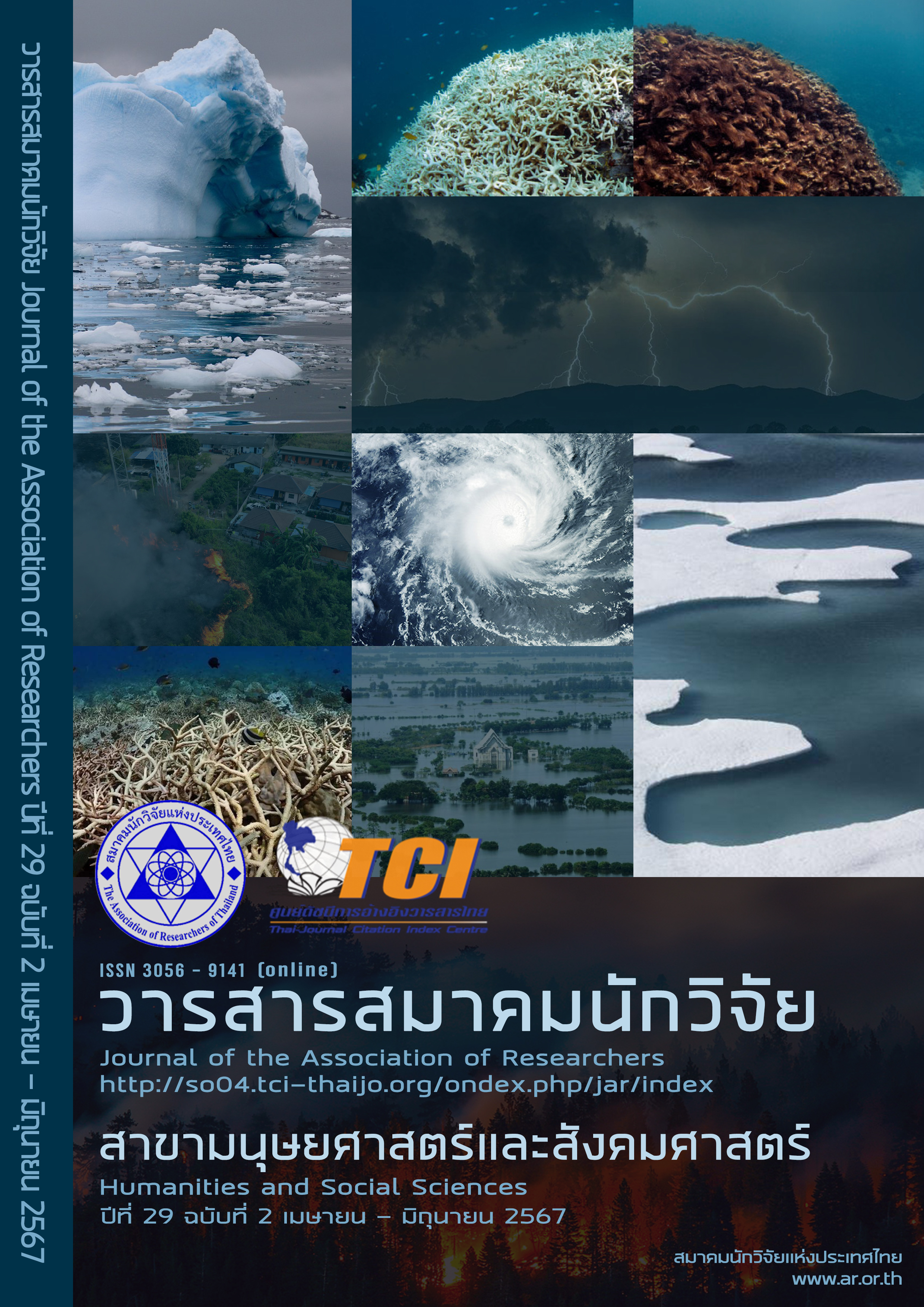
ปัจจุบันภาวะโลกร้อนทวีความรุนแรงจนสภาพภูมิอากาศของโลกเปลี่ยนแปลงไปอย่างมาก กระทั่งนำไปสู่เหตุการณ์สภาพอากาศสุดขั้ว ที่ก่อให้เกิดภัยพิบัติร้ายแรงรูปแบบต่างๆ ทั้งคลื่นความร้อน ภัยแล้งยาวนาน ไฟป่าลุกลาม ฝนตกหนักฉับพลัน และพายุกำลังแรง ซึ่งล้วนสร้างความเสียหายทำลายธรรมชาติสิ่งแวดล้อมและคุกคามความอยู่รอดของมนุษยชาติ จากสภาวการณ์ที่เกิดขึ้นดังกล่าว บทความนี้จึงมีวัตถุประสงค์เพื่อนำเสนอองค์ความรู้เกี่ยวกับภาวะโลกร้อนใน 3 ประเด็นหลัก ได้แก่ 1) สาเหตุของปัญหาภาวะโลกร้อน 2) ผลกระทบจากปัญหาภาวะโลกร้อน และ 3) แนวทางการแก้ปัญหาภาวะโลกร้อน ซึ่งผลการศึกษาข้อมูลจากบทความต่างๆ ที่เกี่ยวข้อง สรุปได้ว่าสาเหตุสำคัญของปัญหาภาวะโลกร้อนมาจากกิจกรรมของมนุษย์ในยุคอุตสาหกรรมที่ผลิตและปล่อยก๊าซเรือนกระจกนานาชนิดโดยเฉพาะคาร์บอนไดออกไซด์ซึ่งเป็นตัวการหลักของปัญหาภาวะโลกร้อนออกสู่ชั้นบรรยากาศ จนมีปริมาณมากเกินระดับความสมดุลทางธรรมชาติทำให้ปรากฏการณ์เรือนกระจกซึ่งเป็นหนึ่งในกลไกควบคุมสมดุลพลังงานโลกดำเนินไปอย่างรุนแรง อุณหภูมิบนพื้นผิวโลกจึงเพิ่มสูงขึ้นตามมาอย่างผิดปกติแล้วเกิดเป็นภาวะโลกร้อน โดยผลกระทบจากปัญหาภาวะโลกร้อนพบว่า มีทั้งในด้านการเปลี่ยนแปลงสภาพภูมิอากาศและการละลายตัวอย่างรวดเร็วของน้ำแข็งขั้วโลก ที่ส่งผลเชื่อมโยงมาสู่ปัญหาต่างๆ ซึ่งเป็นภัยคุกคามต่อการดำรงอยู่ของทุกชีวิต สำหรับแนวทางการแก้ปัญหาภาวะโลกร้อน สามารถดำเนินการได้ด้วยวิธีการลดการปล่อยก๊าซคาร์บอนไดออกไซด์ออกสู่ชั้นบรรยากาศ ควบคู่กับการกำจัดก๊าซคาร์บอนไดออกไซด์ออกจากชั้นบรรยากาศและแหล่งผลิต ซึ่งจะมีผลทำให้ภาวะโลกร้อนลดขนาดความรุนแรง และสร้างสังคมที่ยั่งยืนได้สืบไป
Article Details

อนุญาตภายใต้เงื่อนไข Creative Commons Attribution-NonCommercial-NoDerivatives 4.0 International License.
บทความที่ปรากฏในวารสารนี้ เป็นความรับผิดชอบของผู้เขียน ซึ่งสมาคมนักวิจัยไม่จำเป็นต้องเห็นด้วยเสมอไป การนำเสนอผลงานวิจัยและบทความในวารสารนี้ไปเผยแพร่สามารถกระทำได้ โดยระบุแหล่งอ้างอิงจาก "วารสารสมาคมนักวิจัย"
เอกสารอ้างอิง
Betts, R.A., Jones, C.D., Knight, J.R., Pope, J.O. and Sandford,C. (2024). Mauna Loa carbon dioxide forecast for 2024. Retrieved from https://www.metoffice.gov.uk/research/climate/ seasonal-to-decadal/long-range/forecasts/co2-forecast.
Buis, A. (2019). The Atmosphere: Getting a Handle on Carbon Dioxide. Retrieved from
Center for Sustainable Systems, University of Michigan. (2023). Climate Change: Science and Impacts. Retrieved from https://css.umich.edu/sites/default/files/2023-10/Climate% 20Science_CSS05-19_0.pdf
Climate Trade. (2023). Top 10 countries leading the world’s decarbonization. Retrieved from https://climatetrade.com/top-10-countries-leading-the-worlds-decarbonization/.
Climate Central. (2024). 2023: Earth’s Hottest Year on Record. Retrieved from https://www.climatecentral.org/climate-matters/2023-earths-hottest-year-on-record.
Copernicus. (2024). Copernicus: 2023 is the hottest year on record, with global temperatures close to the 1.5°C limit. Retrieved from https://climate.copernicus.eu/copernicus-2023-hottest-year-record.
Cowing, K. (2023). Arctic Sea Ice 6th Lowest on Record; Antarctic Sees Record Low Growth. Retrieved from https://spaceref.com/earth/arctic-sea-ice-6th-lowest-on-record-antarctic-sees-record-low-growth/
Hafeez, S and Win, T.L. (2023). For Pakistan flood victims, crises collide to fuel growing hunger.
Retrieved from https://www.preventionweb.net/news/pakistan-flood-victims-crises-collide-fuel-growing-hunger.
Hinkle Charitable Foundation. (n.d.). Report 3: How do Greenhouse Gases Cause Global Warming?. Retrieved from https://www.thehcf.org/report-3-how-do-greenhouse-gases cause-global-warming.
Lindsey, R. and Dahlman, L. (2024). Climate Change: Global Temperature. Retrieved from https://www.climate.gov/news-features/understanding-climate/climate-change-global-temperature.
Loria, K. (2018). CO2 levels in atmosphere are at their highest in 800,000 years. Retrieved from https://www.weforum.org/agenda/2018/05/earth-just-hit-a-terrifying-milestone-for-the-first-time-in-more-than-800-000-years/.
Ma, Q. (1998). Greenhouse Gases: Refining the Role of Carbon Dioxide. Retrieved from
https://www.giss.nasa.gov/research/briefs/archive/1998_ma_01/.
Macnamara, K. (2022). Spain, Portugal dryness 'unprecedented' in 1,200 years. Retrieved from https://phys.org/news/2022-07-spain-portugal-dryness-unprecedented-years.html.
Mersmann, K. (2023). Arctic Sea Ice 6th Lowest on Record; Antarctic Sees Record Low Growth. Retrieved from https://www.nasa.gov/centers-and-facilities/goddard/arctic-sea-ice-6th-lowest-on-record-antarctic-sees-record-low-growth/
Min, R. (2023). Sweden is building the world's first permanent electrified road for EVs to charge while driving. Retrieved from https://www.euronews.com/next/2023/05/09/ sweden-is-building-the-worlds-first-permanent-electrified-road-for-evs-to-charge-while-dri
Ming, A., Rowell, I., Lewin, S., Rouse, R., Aubry, T.J. & Boland, E.J.D. (2021) Key messages from the IPCC AR6 climate science report. Retrieved from https://www.cambridge.org/ engage/api-gateway/coe/assets/orp/ resource/item/ 617a83eb45f1eea41b40a461 /original/key-messages-from-the-ipcc-ar6-climate-science-report.pdf
National Snow and Ice Data Center. (2023). The long Arctic winter sets in. Retrieved from https://nsidc.org/arcticseaicenews/2023/11/the-long-arctic-winter-sets-in/
Nixon, D. (2024). 2023: a record-breaking year for global climate change. Retrieved from https://wildfish.org/blog/2023-a-record-breaking-year-for-global-climate-change/
Pultarova, T. (2021). Siberian wildfires double greenhouse gas emission record: This is how they look from space. Retrieved from https://www.space.com/siberia-wildfires-greenhouse-gas-emissions-satellite-images
Rasmussen, C. E. (2024). Atmospheric Carbon Dioxide Growth Rate. Retrieved from https://mlg.eng.cam.ac.uk/carl/words/carbon.html.
Reuters. (2021). World’s larght plant capturing carbon from air starts in Iceland. Retrieved from https://www.reuters.com/business/environment/worlds-largest-plant-capturing-carbon-air-starts-iceland-2021-09-08/
Richardson, A. J. (2008). In hot water: zooplankton and climate change. Retrieved from file:///C:/Users/com/Downloads/In_hot_water_Zooplankton_and_climate_change-1.pdf
Roger Williams University. (n.d.). 8.1 Earth’s Heat Budget – Introduction to Oceanography. Retrieved from http://rwu.pressbooks.pub/webboceanography/chapter/8-1-earths-heat-budget/
Roston, E. (2021). CO2 reaches its highest level in more than 4 million years. Retrieved from https://phys.org/news/2021-06-co2-highest-million-years.html
Salas, E. B. (2023). Global disaster risk index 2023, by select country. Retrieved from https://www.statista.com/statistics/1270469/disaster-risk-index-most-affected-countries/.
Salas, E. B. (2024). Global land and ocean temperature anomalies 1880-2023. Retrieved from https://www.statista.com/statistics/224893/land-and-ocean-temperature-anomalies-based-on-temperature-departure/.
Salas, E. B. (2024). Global mean sea level change 1993-2023. Retrieved from
https://www.statista.com/statistics/603821/global-cumulative-sea-level-rise/
Sengupta, R and Pandey, K. (2019). World breached safe atmospheric CO2 levels 33 years ago. Retrieved from https://www.downtoearth.org.in/news/environment/world-breached-safe-atmospheric-co2-levels-33-years-ago-64546.
Smith-Schoenwalder, C. (2023). Extreme Heat Wave Hits U.S., Europe and Asia, Dashing Records. Retrieved from https://www.usnews.com/news/national-news/articles/ 2023-07-18/extreme-heat-wave-hits-u-s-europe-and-asia-dashing-records
The Guardian. (2024). Devastating drought in Amazon result of climate crisis, study shows. . Retrieved from https://www.theguardian.com/environment/ 2024/jan/24/devastating-drought-in-amazon-result-of-climate-crisis-study-shows
Tiseo, I. (2023). Global greenhouse gas emissions 1970-2022. Retrieved from https://www.statista.com/statistics/1285502/annual-global-greenhouse-gas-emissions/#:~:text=Global%20greenhouse%20gas%20(GHG)%20emissions,by%20more%20than%2060%20percent
Tiseo, I. (2024). Global cumulative CO₂ emissions from fossil fuels and land use 1850-2022, by country. Retrieved from https://www.statista.com/statistics/1267683/cumulative-co2-emissions-fossil-fuel-land-use-forestry-worldwide-by-country/.
World Economic Forum. (2022). Here’s how heat waves can impact economies, as well as people and wildlife. Retrieved from https://www.weforum.org/ agenda/2022/07/heat-waves-economy-climate-crisis/
World Meteorological Organization. (2023). 2023 shatters climate records, with major impacts. Retrieved from https://wmo.int/news/media-centre/2023-shatters-climate-records-major-impacts.
World Meteorological Organization. (2023). Greenhouse Gas concentrations hit record high. Again. Retrieved from https://wmo.int/news/media-centre/greenhouse-gas-concentrations-hit-record-high-again.
World Meteorological Organization. (2024). Climate change indicators reached record levels in 2023: WMO. Retrieved from https://wmo.int/news/media-centre/climate-change-indicators-reached-record-levels-2023-wmo#:~:text=The%20WMO%20report% 20confirmed%20that,ten%2Dyear%20period%20on%20record.
Young, A. (2022). Earth's CO2 Level Rose Every Year Since Climate Change Became a National Issue. Retrieved from https://247wallst.com/special-report/2022/08/07/earths-co2-level-rose-every-year-since-climate-change-became-a-national-issue/.
