
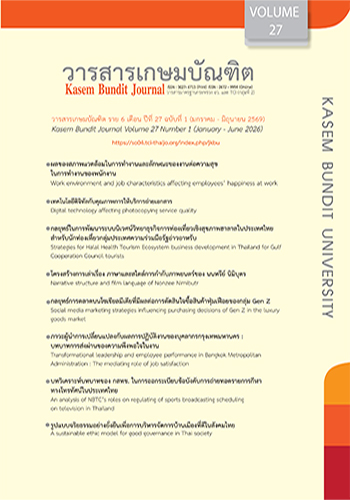
ผลของสภาพแวดล้อมในการทำงานและลักษณะของงานต่อความสุข ในการทำงานของพนักงาน
คำสำคัญ:
สภาพแวดล้อมในการทำงาน, คุณลักษณะของงาน, ความสุขในการทำงานบทคัดย่อ
วัตถุประสงค์ เพื่อศึกษาระดับความสุขในการทำงาน สภาพแวดล้อมในการทำงานและผลของสภาพแวดล้อมและลักษณะของงานที่มีผลต่อความสุขในการทำงานของพนักงานในอาคารทิปโก้ ทาวเวอร์ ย่านธุรกิจอารีย์ วิธีการวิจัย สำรวจจากกลุ่มตัวอย่าง คือ พนักงานในอาคารทิปโก้ ทาวเวอร์ ย่านธุรกิจอารีย์ จำนวน 400 คน การเก็บรวบรวมข้อมูลด้วยการแจกแบบสอบถาม ซึ่งนำมาวิเคราะห์สถิติเชิงพรรณนา และวิเคราะห์สถิติเชิงอนุมานด้วยการวิเคราะห์การถดถอยเชิงพหุ ผลการวิจัย พนักงานส่วนใหญ่มีความสุขในการทำงานในระดับสูง โดยมีปัจจัยที่ส่งผลต่อความสุขในการทำงานเรียงลำดับดังนี้ ด้านสภาพแวดล้อมในการทำงาน : ค่าตอบแทนและสวัสดิการ องค์กรและการจัดการ และสภาพแวดล้อมทางสังคนในที่ทำงานมีผลเชิงบวกต่อความสุขในการทำงาน ส่วนความมั่นคงและโอกาสความก้าวหน้าไม่มีผล ด้านลักษณะของงาน : ผลสะท้อนจากงาน ความสำคัญของงาน ความมีเอกลักษณ์ของงาน และความหลากหลายของทักษะมีผลเชิงบวกต่อความสุขในการทำงาน ส่วนความอิสระในการตัดสินใจไม่มีผล นัยทางทฤษฎี/นโยบาย ความสุขของพนักงานส่งผลต่อประสิทธิภาพการทำงานของพนักงาน โดยสภาพแวดล้อมและลักษณะของงานมีอิทธิพลต่อความสุขในการทำงานของพนักงาน ดังนั้นหากองค์กรต้องการเพิ่มความสุขแก่พนักงาน ควรส่งเสริมสภาพแวดล้อมที่ดีในการทำงาน รวมถึงลักษณะของงานที่เหมาะสมด้วย
เอกสารอ้างอิง
Chutatemiy, S. (1986). Stress or enjoyment at work. Nursing Journal, 13, 53–55.
Deethong, S. (2020). Variables affecting job satisfaction among Generation Y. Journal of Academic Affairs, Institute of Phra Wityakorn Development, 3(2), 71–80.
Gavin J. H., & Mason, R. O. (2004). The Virtuous Organization: The Value of Happiness in the Workplace. Organization Dynamics. 33(4), 379-392.
Jaiboon, P. (2021). The influence of job characteristics and environment on work stress among academic staff at Rajamangala University of Technology Thanyaburi [Unpublished research Report]. Rajamangala University of Technology Thanyaburi.
Lertwiboonmongkol, J. (2003). The relationship between personal factors, empowerment in work, achievement motivation, and job satisfaction among nurses in public university hospitals [Unpublished master’s thesis in Nursing Administration]. Chulalongkorn University.
Saengkaew, K. (2014). The relationship between the perception of the work environment and work stress of employees in Tha Kham Municipality [Unpublished independent study for Master’s degree]. Walailak University.
Sripalat, A., & Sunalai, S. (2022). Work environment and job characteristics affecting job satisfaction of Generation Y employees in Bangkok. Suthiparithat Journal, 36(2), 134–149.
Steers, R. M., Mowday, R. T., & Shapiro, D. L. (2004). The future of work motivation theory. Academy of Management review, 29(3), 379-387.
Taveesut, S. (2019). Work environment factors related to job satisfaction of personnel at Hat Yai Municipality [Unpublished Master’s thesis]. Prince of Songkla University.
Warr, P. (1990). The measurement of well-being and other aspects of mental health. Journal of Occupation Psychology. 62, 193-210.
Wongvichit, S., & Thongintrach, W. (2017). The relationship between the work environment and job satisfaction of employees in private school businesses: A case study of Thida Mae Phra School, Surat Thani [Unpublished research Report]. Suratthani Rajabhat University.
ดาวน์โหลด
เผยแพร่แล้ว
รูปแบบการอ้างอิง
ฉบับ
ประเภทบทความ
สัญญาอนุญาต
ลิขสิทธิ์ (c) 2026 วารสารเกษมบัณฑิต

อนุญาตภายใต้เงื่อนไข Creative Commons Attribution-NonCommercial-NoDerivatives 4.0 International License.
Any views or opinions expressed in this issue of the Kasem Bundit University Journal are those of the authors alone and do not necessarily reflect the views or opinions of Kasem Bundit University or the editors.




