
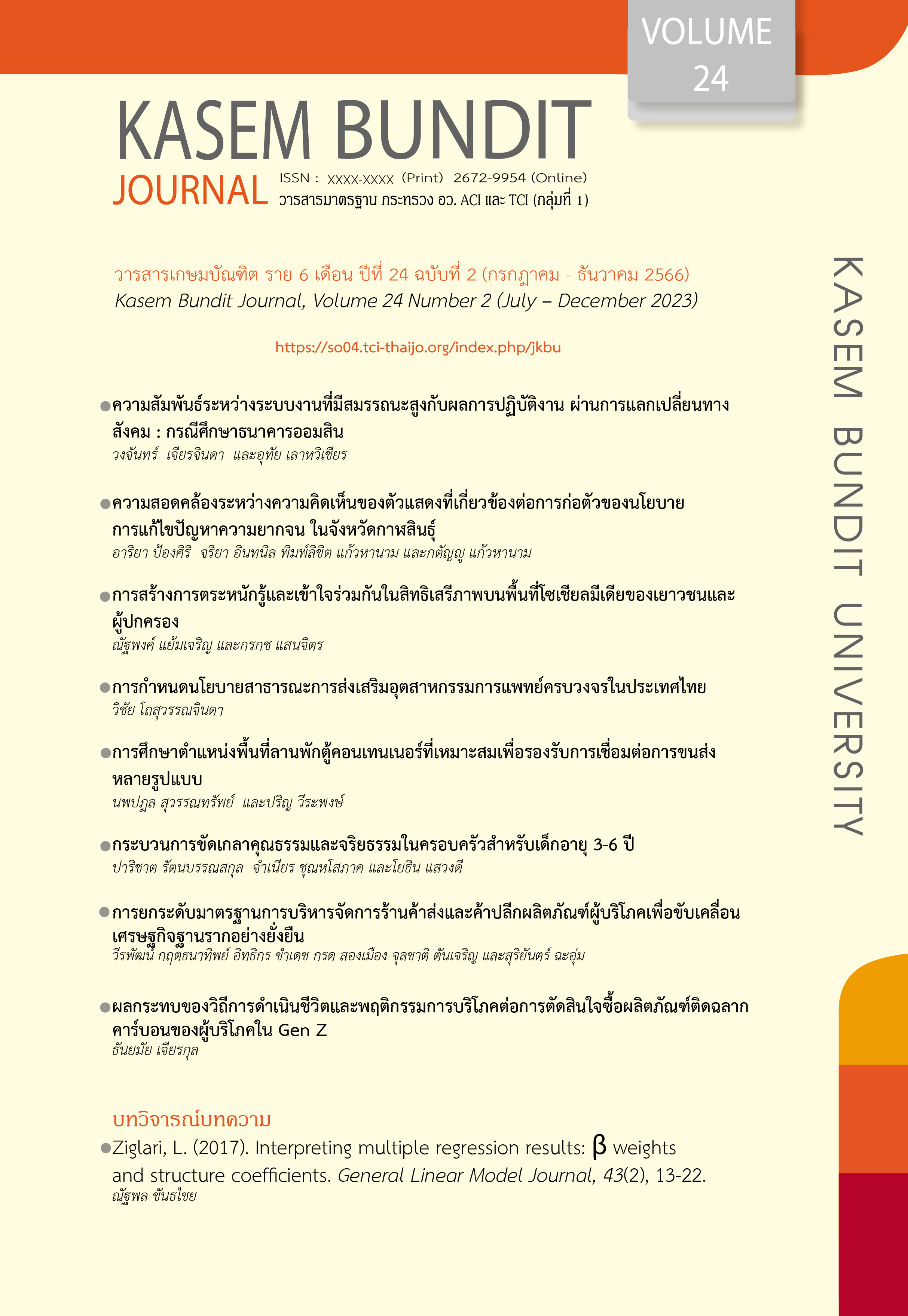
Socialization of morality and ethics in families for 3-6 Years old children
คำสำคัญ:
Socialization, morality, ethicsบทคัดย่อ
PURPOSES: To study the components and the effectiveness of socialization of morality and ethics among children using story books for three to six years old children. METHODS: It was a sample survey of 176 students aged 3-6 years in Bangkok and Chonburi by questionnaire, and in-depth interview of 20 mothers of the research sample children who told stories from story books to their children. RESULTS: The socialization affected morality and ethics appropriately for three to six years old children with respect to gratitude, sincerity and discipline. Story books were the important media in the socialization in the three aspects for the children under study. THEORETICAL/POLICY IMPLICATIONS: The socialization for morality and ethics processes could be used for the benefits of the Thai family institution. It could also be used as guidelines for a manual for the family institution for socialization of children for morality and ethics by concerned agencies.
เอกสารอ้างอิง
Bangkok University. (2558). Cultivate morality and build mental immunity with mediation storybooks that mothers use. http://www. Happymom.in.th.
Carlson. N. R. (1990). Psychology: The science of behavior. Printed in the United States of America.
Chunhasopak, J. (2553). Model of community capacity building by participating in the sustainable tourism development of the lower central provinces. [Unpublished research report]. Ramkhamhaeng University.
Grusec J. (2011). Socialization processes in the family: Social and emotional development. http://www.ncbinlm.nih.gov/pubmed/20731599.
Krejcie, R. V., & Morgan, D. W. (1970). Determining sample size for research activities. Educational and Psychological Measurement, 30(3), 607–610.
Komchadluek Online. (2561). Youth arrested for snatching 6 victims' bags!!. https://www.komchadluek.ne
Na Ayudhya, S. (2545). Family institutions and the strength of communities and society. Fah Aphai Company Limited.
Sanook reporter. (2562). Social media is shocked: A child addicted to the game "loses and becomes crazy" gets angry and grabs a knife and threatens to kill his mother and grandmother. https://www.sanook.com.
Wang, Q., & Chang, L. (1999). The impact of family socialization practices on children's socialization in China. The Journal of Genetic Psychology, 174(3), 335–343.
Wanrachoo, N. (2544). Family: Parents are leaders. Press Printing House.
Wasuwanit, C. (2554). Child behavior development, units 1-7. Sukhothai Thammathirat Open University.
ดาวน์โหลด
เผยแพร่แล้ว
รูปแบบการอ้างอิง
ฉบับ
ประเภทบทความ
สัญญาอนุญาต
ลิขสิทธิ์ (c) 2023 วารสารเกษมบัณฑิต

อนุญาตภายใต้เงื่อนไข Creative Commons Attribution-NonCommercial-NoDerivatives 4.0 International License.
Any views or opinions expressed in this issue of the Kasem Bundit University Journal are those of the authors alone and do not necessarily reflect the views or opinions of Kasem Bundit University or the editors.




