
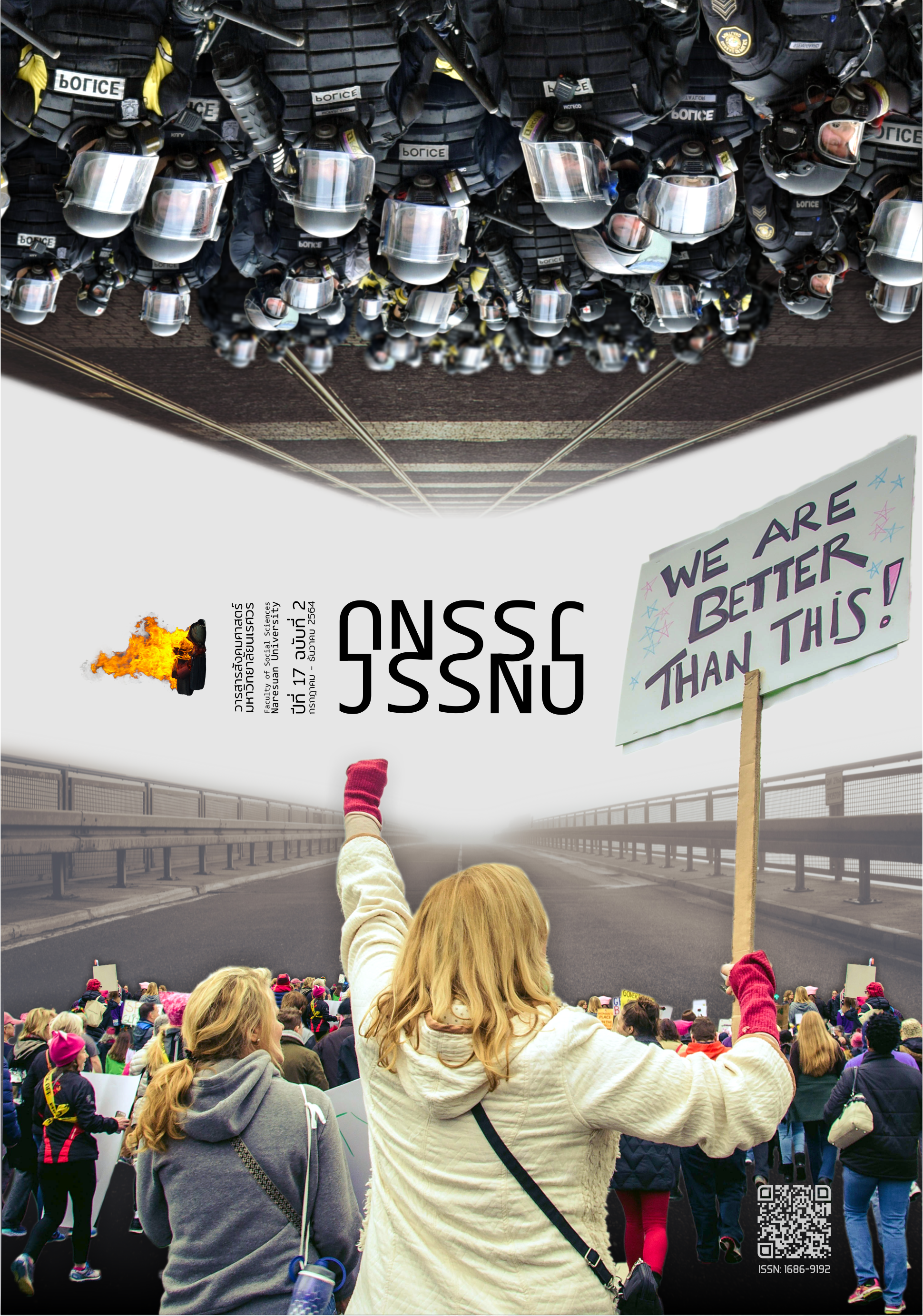
เรือนร่างแห่งการต่อต้าน: ร่างกายในฐานะพื้นที่การแสดงออกทางการเมือง กรณีศึกษาการเคลื่อนไหวประชาธิปไตยในไทยตั้งแต่ พ.ศ.2563-พ.ศ.2564
Article Sidebar
Main Article Content
บทคัดย่อ
บทความชิ้นนี้ศึกษาการใช้เรือนร่างในฐานะพื้นที่เพื่อการต่อสู้ทางการเมืองในการเคลื่อนไหวประชาธิปไตยไทยตั้งแต่ พ.ศ.2563-พ.ศ2564 โดยมุ่งเน้นไปที่เรือนร่างของ 1. ผู้ชุมนุมในพื้นที่ชุมนุมประท้วง โดยเฉพาะกลุ่ม คณะราษฎร 2563 กลุ่มหมู่บ้านทะลุฟ้า และกลุ่ม FreeArts รวมถึงเรือนร่างของปัจเจกในระดับชีวิตประจำวัน ผ่านทฤษฎีการเมืองร่างกาย (body politics) โดยมีแนวคิดเรื่อง นาฏกรรมการต่อต้าน (choreography of protest )โดย ซูซาน เลห์ ฟอสเตอร์ (2003) เป็นกรอบทฤษฎีหลัก เพื่อชี้ให้เห็นความสำคัญของร่างกายในฐานะเครื่องมือต่อต้านอำนาจรัฐ บทความชิ้นนี้เสนอว่าการแสดงออกผ่านทางเรือนร่างของการเคลื่อนไหวประชาธิปไตยไทยร่วมสมัยทำให้การประท้วงเป็นการต่อต้านรัฐเผด็จการและสถาบันกษัตริย์ผ่านการแสดง (performance) ที่สามารถแบ่งได้เป็น 2 รูปแบบ ได้แก่ 1. การแสดงเรือนร่างบนพื้นที่ของการประท้วงเพื่อลดระยะห่าง (distance) ตามทฤษฎีเรื่องระยะห่างโดยทาลี ฮาทูกา (2018) และ 2. การแสดงเรือนร่างแห่งการประท้วงในชีวิตประจำวันในฐานะการป่วนเชิงวัฒนธรรม (culture jamming) นาฏกรรมการต่อต้านนี้ทำให้การต่อสู้ทางการเมืองเป็นการต่อสู้ทางอุดมการณ์ที่ปรากฎผ่านเรือนร่าง ส่งผลให้เกิดการลดระยะห่างระหว่างรัฐและประชาชนผ่านการท้าทายเส้นแบ่งทางสังคมที่รัฐกำหนดจากการจัดระเบียบร่างกายของคนในรัฐ และการจัดลำดับความศักดิ์สิทธิ์ของเรือนร่างตามลำดับชั้นอำนาจในสังคมผ่านการแต่งกายล้อเลียน (cosplay) เพื่อสร้างอารมณ์ขันที่เชื่อมโยงกับอำนาจรัฐและสถาบันกษัตริย์ตลอดจนการลดระยะห่างระหว่างผู้นำชุมนุม ผู้เข้าร่วมชุมนุม และผู้ชมผ่านการใช้ร่างกายในการสร้างความรู้สึกร่วมและความเป็นพวกพ้อง (solidarity) ผ่านการแสดงออกเชิงสัญลักษณ์ที่โยงกับความเจ็บปวดและการถูกกดขี่ตามกรอบแนวคิดมรณะขัดขืน (necroresistance) โดย บานู บาร์กู (2016) เช่นการโกนหัวประท้วงโดยกลุ่มผู้ชุมนุมหมู่บ้านทะลุฟ้า นอกจากนี้ นาฎกรรมการต่อต้านยังทำให้การเคลื่อนไหวทางการเมืองกลายเป็นส่วนหนึ่งของวิถีชีวิตผ่านการแสดงออกทางร่างกายในฐานะการป่วนเชิงวัฒนธรรม (culture jamming) และในฐานะภาพสะท้อนของรสนิยมที่สอดคล้องกับค่านิยมสมัยใหม่ผ่านการใช้วัฒนธรรมและศิลปะร่วมสมัยที่ตอบสนองค่านิยมสากลจากการนำสัญลักษณ์ที่มีจุดเชื่อมกับประเด็นการเมืองโลกมาใช้ เช่น เป็ดยาง ส่งผลให้การเคลื่อนไหวทางการเมืองแปรสภาพจากการต่อสู้เชิงอุดมการณ์ในพื้นที่ปิดเป็นการต่อสู้ระดับวัฒนธรรมและวิถีชีวิตที่พื้นที่ทางการเมืองและพื้นที่ส่วนตัวของปัจเจกได้หลอมรวมกัน
Downloads
Article Details
เอกสารอ้างอิง
Amed, I., Balchandani, A., Beltrami, M., Berg, A., Hedrich, S., & Rölkens, F. (2019). The influence of ‘woke’ consumers on fashion. Retrieved January 15, 2021, from https://www.mckinsey.com/industries/retail/our-insights/the-influence-of-woke-consumers-on-fashion#
Bargu, B. (2016). Starve and immolate: The politics of human weapons. Columbia: Columbia University Press
Barthes, R., & Stafford, A. (2013). The language of fashion. Oxford: Berg.
Bourdieu, P. (1984). Distinction: A social critique of the judgement of taste. London: Routledge & Kegan Paul.
Certeau, M., & Rendall, S. (1988). The practice of everyday life. Berkeley: University of California Press.
Chiengsan, U. (2018). Civil politics. Bangkok: Matichon. [in Thai].
Chiwarak, P. (2021, April 14). Penguin Parit has been going on hunger strike for 30 days: Family revealed he has lost almost 20 kilogram, while Roong Panasaya has been starving herself for 16 days [Interviewed by the editor]. The Matter. Retrieved from https://thematter.co/brief/140515/140515 [in Thai].
Dreyer, E. (2016). Rubber ducks and ships of fools. Third Text, 30,(3-4), 274-290. doi: 10.1080/09528822.2017.1323412
Eoseewong, N. (2017, April 7). Subjects under the theatre State(1). Matichon Weekly. Retrieved from https://www.matichonweekly.com/column/article_30805 [in Thai].
Everyone can lead: The first organic demonstrations without the leader in three decades. (2020, October 18). Prachachart. Retrieved from https://www.prachachat.net/politics/news-540054 [in Thai].
Foucault, M. (1978). The history of sexuality. New York: Pantheon Books.
Foster, S. (2003). Choreographies of protest. Theatre Journal, 55(3), 395-412. doi: 10.1353/tj.2003.0111
Hatuka, T. (2018). Design of protest: Choreographing political demonstrations in public space. Austin: University of Texas Press.
Hoffer, Eric. (1951). The true believer: Thoughts on the nature of mass movements. New York: Harper Perennial Modern Classics
Koestler, A. (1970). The act of creation. London: Hutchinson.
Kristeva, J. (1982). Powers of horror: An essay on abjection. New York: Columbia University Press.
Lertchoosakul, K. (2021). The cold war (in)between the white ribbon. Bangkok: Matichon. [in Thai].
Mbembé, A., & Libby M. (2003). Necropolitics. Public Culture, 15(1), 11-40. doi: 10.1057/9780230584334_9
Nomai, J. (2008). Culture jamming: Ideological struggle and the possibilities forsocial change (Doctoral dissertation). Austin: University of Texas at Austin. Retrieved from https://repositories.lib.utexas.edu/handle/2152/3971
Nongnuch, P. (2021, January 1). Report on “Kana Ratsadorn” movement: From 2020 to new challenges in 2021. Matichon Weekly. Retrieved from https://www.matichonweekly.com/column/article_382926 [in Thai].
Supachalasai, C. (2017). The internet politics, time and remembering trauma. Journal of Social Sciences, Naresuan University, 13(1), 49-67. doi: 10.14456/jssnu.2017.4 [in Thai].
Symes, C., & Daphne M. (1996). Force of habit :The school uniform as a body of knowledge. Counterpoints, 29, 171-191. doi: 10.1111/1467-8527.00044
Yodhong, C. (2021, May 4). When women shaved their heads: The birth of the new beauty and the redefining of skinhead. The Matter. Retrieved from https://thematter.co/thinkers/skinhead-against-injustice/142015 [in Thai].
