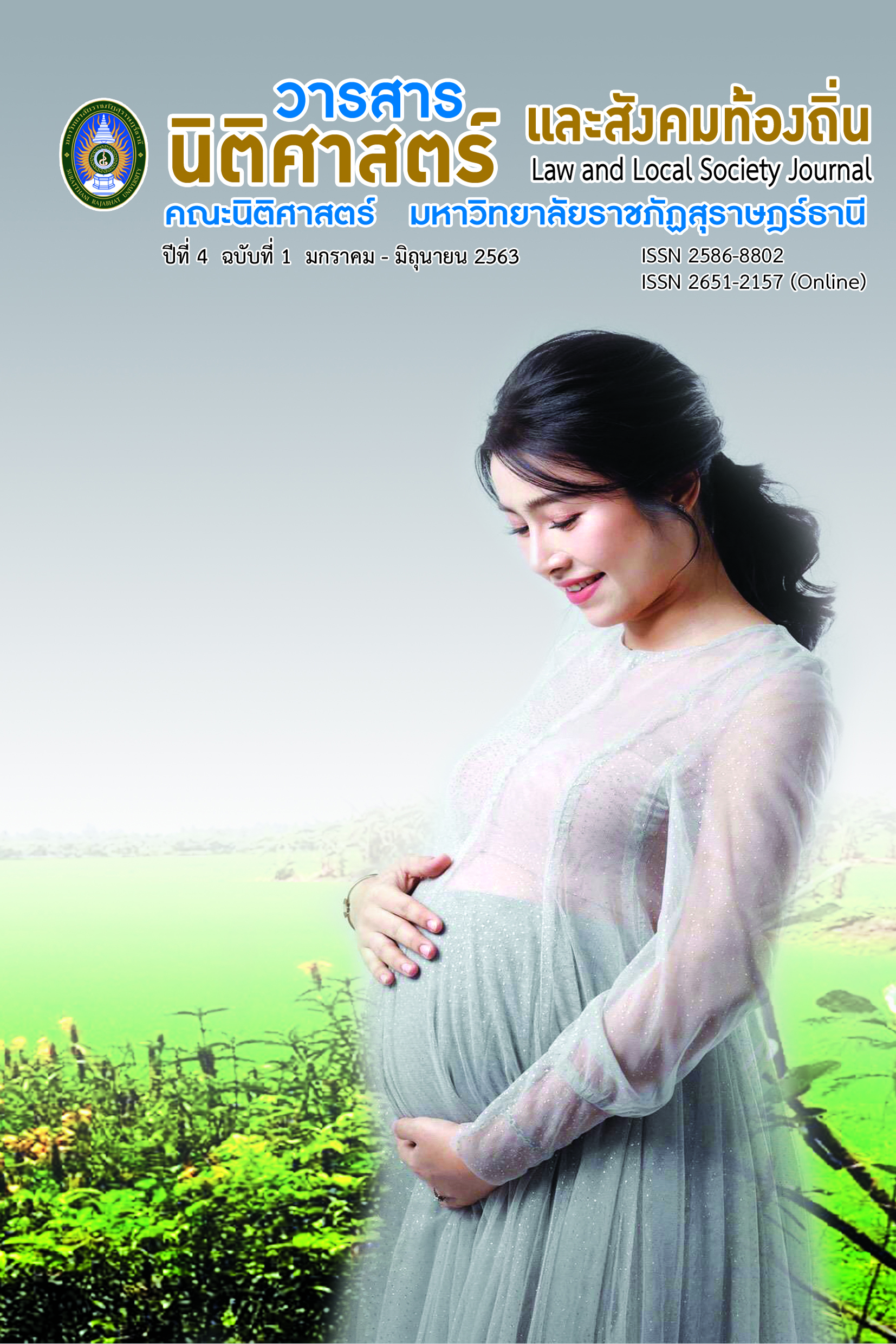
Legal Recognition of Right of Abnormality in Both Spouse Gamete in Adopting Assisted Reproductive Technology
Keywords:
Assisted Reproductive Technology, Gamete, Spouse, Right, Medical LawAbstract
This research study about Legal Recognition of Right of Abnormality in Both Spouse Gamete in Adopting Assisted Reproductive Technology, that make the legal gab of the said Thai law have been found upon the provisions and criteria of using Assisted Reproductive Technology Medical. That is to say, this law imposes certain restriction especially on husband and wife having problems on their germ cell. Although, the current Assisted Repro ductive Technology Medical is well developed and can assist to reduce infertility problems for married couples with abnormalities in germ cells and unable to have children naturally, the legal provision in relevant law does not govern the case of surrogacy upon the abnormalities in the germ cells of both husband and wife.
According to the study, the legal permission to use donated egg or sperm cell with the marriage couples’ sperm or egg cell. However, the utilizing of both donated sperm and egg cells is not subject to the legal permission despite there are abnormalities upon both couples due to lacking of legal provisions in this law. Apart from that, there will be another problem on legal parental status consideration since the surrogate mother and her husband would be determined as the parents of the child, not the couples in accordance with the law of family.
I would like to suggest that, the amendment on legal provisions of Protection of a Child Born via Medically Assisted Reproductive Technologies Act B.E. 2558, this is to add “is able to use donated sperm and egg cells”. is a way to diminish those problem which the abnormalities couples facing as well as the legal status of parenthood.
References
กุลพล พลวัน. พัฒนาการแห่งสิทธิมนุษยชน. กรุงเทพฯ: วิญญูชน, 2538.
ชลธิชา สถิระพจน์ และ วิชาญ โชคธนะศิริ. จากพื้นฐานสู่ความก้าวหน้าของการรักษาภาวะมีบุตรยาก. รามาธิบดีเวชสาร, 2560.
ธานี วรภัทร และคณะ. ศึกษาและวิเคราะห์การบังคับใช้กฎหมายเทคโนโลยีช่วยการเจริญพันธุ์ (รายงานการวิจัย). กรุงเทพฯ:มหาวิทยาลัยธุรกิจบัญฑิตย์, 2561.
ประกาศแพทยสภาที่ 1/2540. ราชกิจจานุเบกษา เล่มที่ 114 ตอนพิเศษ 123 ง.
ประกาศแพทยสภาที่ 21/2545. ราชกิจจานุเบกษา เล่มที่ 119 ตอนที่ 68 ง.
ประมวลกฎหมายแพ่งและพาณิชย์ พ.ศ. 2535. ราชกิจจานุเบกษา เล่มที่ 132 ตอนที่ 104 ก.
พระราชบัญญัติคุ้มครองเด็กที่เกิดโดยอาศัยเทคโนโลยีช่วยเจริญพันธุ์ทางการแพทย์ พ.ศ. 2558. ราชกิจจานุเบกษา เล่มที่ 132 ตอนที่ 38 ก
พิลาสินี โยงสมบัตร. วิเคราะห์ร่างพระราชบัญญัติคุ้มครองเด็กที่เกิดโดยอาศัยเทคโนโลยีช่วยเจริญพันธุ์ทางการแพทย์ พ.ศ.... กรุงเทพฯ คณะนิติศาสตร์ มหาวิทยาลัยธรรมศาสตร์, 2552
ไพโรจน์ กำพูสิริ. คำอธิบายประมวลกฎหมายแพ่งและพาณิชย์ บรรพ 5 ว่าด้วยครอบครัว. พิมพ์ครั้งที่ 6. กรุงเทพมหานคร: สำนักพิมพ์มหาวิทยาลัยธรรมศาสตร์, 2551.
วิฑูรย์ อึ้งประพันธ์. อุ้มบุญ-อุ้มบาป พ.ร.บ.คุ้มครองเด็กที่เกิดโดยอาศัยเทคโนโลยีช่วยเจริญพันธุ์ทางการแพทย์ พ.ศ. 255, (ม.ป.ป.).
ยศศักดิ์ โกไศยกานนท์. รายงานฉบับสมบูรณ์ มาตรการคุ้มครองเด็กที่เกิดโดยอาศัยเทคโนโลยีช่วยเจริญพันธุ์ทางการแพทย์ (รายงานการวิจัย). กรุงเทพฯ: คณะนิติศาสตร์ มหาวิทยาลัยเกษมบัณฑิต, 2555
ยศศักดิ์ โกไศยกานนท์. ความรู้เบื้องต้นเกี่ยวกับกฎหมายอุ้มบุญ. พิมพ์ครั้งที่ 1 กรุงเทพฯ: วิญญูชน, 2558.
อรรถกรณ์ อ้นอาจ. ปัญหาทางกฎหมายเกี่ยวกับความคุ้มครองสิทธแิ ละศักดิ์ศรีความเป็นมนุษย์ : ศึกษากรณีเด็กที่เกิดโดย อาศัยเทคโนโลยีช่วยเจริญพันธุ์ทางการแพทย์. กรุงเทพฯ: มหาวิทยาลัยธุรกิจบัณฑิตย์, 2556.
เอื้องอารีย์ อิ้งจะนิล. รายงานสรุปและวิเคราะห์ร่างพระราชบัญญัติคมุ้ ครองเด็กที่ เกิดโดยอาศัยเทคโนโลยีช่วยเจริญพันธุ์ทาง การแพทย์ พ.ศ..... กรุงเทพมหานคร: สำนักส่งเสริมวิชาการรัฐสภา สถาบันพระปกเกล้า, 2558.
Hofheimer A. Gestational Surrogacy : Unsettling State Parentage Law and Surrogacy Policy. Newyork, 1992.
Goodwin A. Determination of Legal Parentage in Egg Donation, Embryo Transplantation, and Gestational Surrogacy Arrangement, Family Law Quarterly, Vol. 26, No. 3. 1992.
L Elster,N Andrew. Regulating Reproductive Technologies. J. Legal Med, 2000.
Sonia Allan. The Review of the Western Australian Human Reproductive Technology Act 1991 and the surrogacy act 2008 (Report Part 2), 2019.
Sara Rintamo. Regulation of Cross-Border Surrogacy In Light of the European Conversation on Human Rights. Helsinki: University of Helsinki, 2016.
Warnock M. A Question of Life. The Warnock Report on Human Fertilisation and Empryology, Basil Blackwell, 1985.
Downloads
Published
How to Cite
Issue
Section
License
Articles published are copyright of local law and society journals. Faculty of Law Surat Thani Rajabhat University
Content and information in articles published in local law and society journals It is the opinion and responsibility of the author of the article directly. which the journal editor It is not necessary to agree or share any responsibility for articles, information, content, images, etc. published in local law and society journals. It is the copyright of the local jurisprudence journal. If any person or entity wants to distribute all or part of it or to take any action must have prior written permission from the local jurisprudence journal only.


