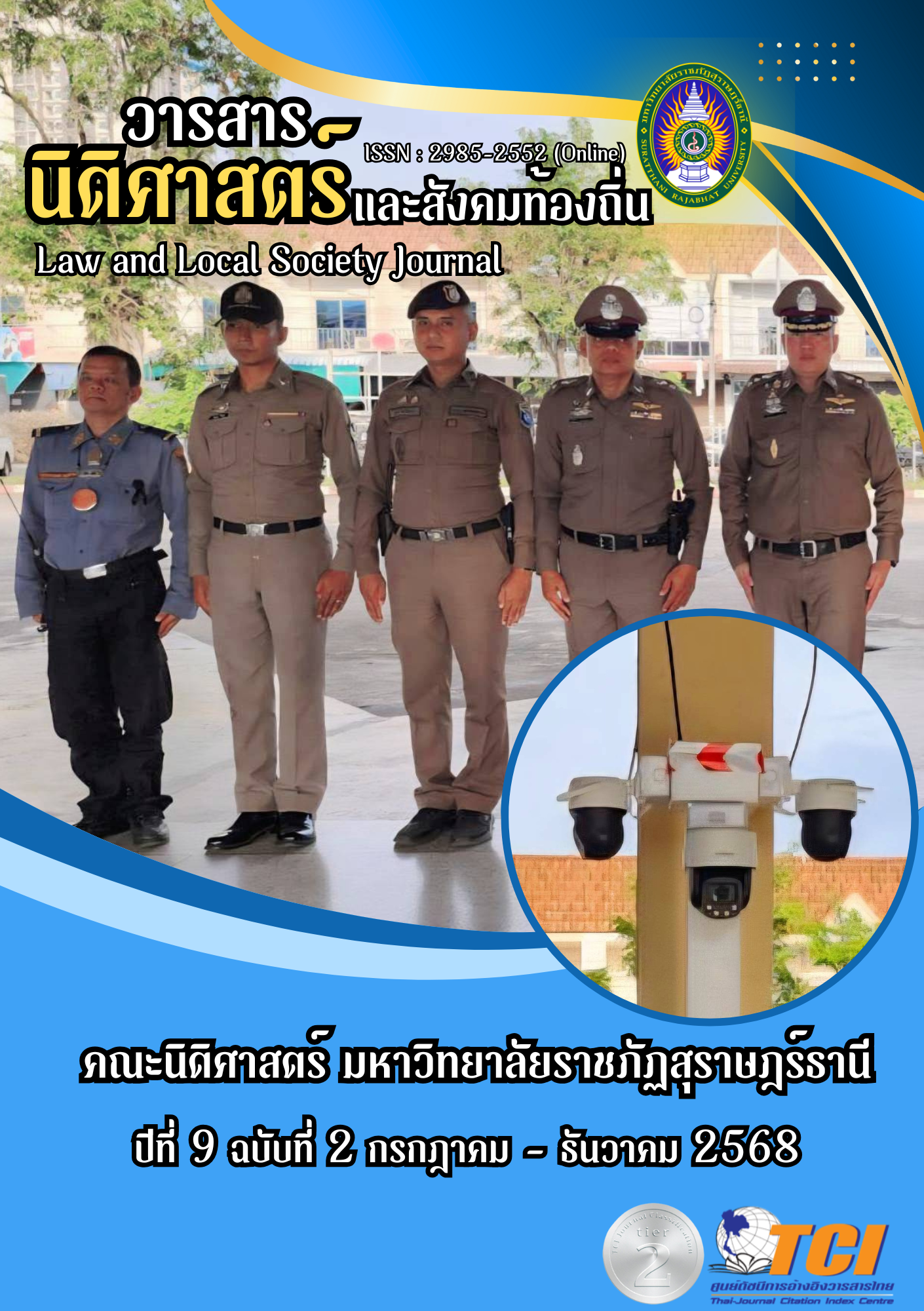
การป้องกันอาชญากรรมโดยเทคโนโลยีกล้องระบบ AI สู่สุราษฎร์ธานี เมืองอัจฉริยะ
คำสำคัญ:
การป้องกันอาชญากรรม, เทคโนโลยีกล้องระบบ AI, สถานีตำรวจภูธรเมืองสุราษฎร์ธานี, โครงการเมืองสุราษฎร์ สมาร์ต ซิตี้บทคัดย่อ
บทความวิชาการฉบับนี้มีวัตถุประสงค์เพื่อ ศึกษาบทเรียนจากกระบวนการทำงานและผลลัพธ์ที่เป็นรูปธรรมในการป้องกันอาชญากรรมโดยใช้เทคโนโลยีปัญญาประดิษฐ์ (Artificial Intelligence หรือ AI) ตามโครงการเมืองสุราษฎร์ สมาร์ต ซิตี้ ของสถานีตำรวจ ภูธรเมืองสุราษฎร์ธานี ซึ่งโครงการดังกล่าวได้นำเทคโนโลยีปัญญาประดิษฐ์มาใช้ในการทำงานของตำรวจ ทำให้การเฝ้าระวังเหตุร้ายและป้องกันอาชญากรรมเกิดขึ้นอย่างทันท่วงที ช่วยให้เจ้าหน้าที่ตำรวจอยู่ “ถูกที่ถูกเวลา” สามารถยับยั้งภัยคุกคามในรูปแบบต่าง ๆ ได้อย่างมีแบบแผนมากยิ่งขึ้น
ผลการศึกษาพบว่า เจ้าหน้าที่ตำรวจสามารถตรวจพบพร้อมจับกุมบุคคลกลุ่มเสี่ยงสูง อาทิ คนร้ายที่มีหมายจับ จำนวน 20 ราย และตรวจพบพร้อมยับยั้งพฤติกรรมบุคคล กลุ่มเฝ้าระวัง เช่น บุคคลพ้นโทษ จำนวน 161 เหตุการณ์ ซึ่งจากวิธีการปฏิบัติงานโดยปกติ มีโอกาสน้อยที่จะตรวจพบและยับยั้งได้แบบเรียลไทม์ โดยที่ไม่มีการสืบสวนมาก่อน โครงการนี้จึงมีส่วนสำคัญในการตัดปัจจัยการเกิดอาชญากรรม มิให้บุคคลกลุ่มเสี่ยงมีโอกาสได้ไปเจอเหยื่อ หรือสถานการณ์ที่เอื้อต่อการประกอบอาชญากรรม ส่งผลให้ชุมชนมีความปลอดภัยสูงขึ้น
ผู้เขียนมีข้อเสนอแนะว่า การวิเคราะห์อาชญากรรมเชิงภูมิศาสตร์ มีความจำเป็นต่อการนำเทคโนโลยีกล้องระบบ AI ไปสู่การประยุกต์ใช้ สถานที่ซึ่งถูกพิจารณาเพื่อติดตั้งกล้องปัญญาประดิษฐ์ ควรเป็นบริเวณซึ่งเปรียบเสมือนประตูเมือง รวมถึงสถานที่เปราะบางต่าง ๆ ที่ภาคเอกชน ผู้เป็นเจ้าของ มีการเฝ้าระวังป้องกันต่ำ หรือเป็น Hot Spot ทั้งนี้ เพื่อแยกตัวคนร้ายหรือบุคคลเฝ้าระวัง ตั้งแต่ทางเข้าของจังหวัด อันเป็นการตัดปัจจัยการเกิดอาชญากรรม โดยองค์ประกอบที่เป็นตัวชี้วัดประสิทธิภาพของกล้องปัญญาประดิษฐ์ ขึ้นอยู่กับปัจจัยด้านความสว่าง ด้านวัสดุอุปกรณ์ ด้านระยะทาง และด้านการเชื่อมต่อ เป็นต้น
เอกสารอ้างอิง
กรมการปกครอง. (2567). แผนปฏิบัติราชการประจำปีงบประมาณ พ.ศ. 2569 จังหวัดสุราษฎร์ธานี (ฉบับปรับปรุง). สำนักงานจังหวัดสุราษฎร์ธานี.
กรมพัฒนาสังคมและสวัสดิการ. (2568). รายงานสถานการณ์ทางสังคมจังหวัดสุราษฎร์ธานี ประจำปี 2568. สำนักงานพัฒนาสังคมและความมั่นคงของมนุษย์จังหวัดสุราษฎร์ธานี.
กุญชนิดา กุญชร ณ อยุธยา. (2567). การนำเทคโนโลยีปัญญาประดิษฐ์มาใช้ในการป้องกันอาชญากรรมบนท้องถนนของกองบัญชาการตำรวจนครบาล. ดุษฎีนิพนธ์ศิลปศาสตรดุษฎีบัณฑิต. จุฬาลงกรณ์มหาวิทยาลัย.
พรณรงค์ การอรชัย. (2558). เครือข่ายอาสาสมัครชุมชนเพื่อการป้องกันอาชญากรรม. ดุษฎีนิพนธ์ปรัชญาดุษฎีบัณฑิต. มหาวิทยาลัยทักษิณ.
สำนักงานตำรวจแห่งชาติ. (2561). ยุทธศาสตร์สำนักงานตำรวจแห่งชาติ 20 ปี (พ.ศ. 2561-2580). สำนักงานตำรวจแห่งชาติ, สำนักงานยุทธศาสตร์ตำรวจ.
สำนักงานตำรวจแห่งชาติ. (2567). แผนปฏิบัติราชการสำนักงานตำรวจแห่งชาติประจำปีงบประมาณ พ.ศ. 2568. สำนักงานตำรวจแห่งชาติ, สำนักงานยุทธศาสตร์ตำรวจ.
สำนักงานยุทธศาสตร์ตำรวจ. (2559). การป้องกันอาชญากรรมเชิงรุกโดยทฤษฎีสามเหลี่ยมอาชญากรรม (พิมพ์ครั้งที่ 2). โรงพิมพ์ตำรวจสำนักงานตำรวจแห่งชาติ.
สุพิศาล ภักดีนฤนาถ.(2555ก). Four dimensions. กองบังคับการปราบปราม กองบัญชาการสอบสวนกลาง.
สุพิศาล ภักดีนฤนาถ. (2555ข). Modern policing community policing in CSD. กองบังคับการปราบปราม กองบัญชาการสอบสวนกลาง.
หน่วยบริหารและจัดการทุนด้านการเพิ่มความสามารถในการแข่งขันของประเทศ. (2568, พฤศจิกายน 15). บพข.สนับสนุนการใช้เทคโนโยลี AI ในการพัฒนา Smart City เพื่อรักษาความปลอดภัยและยกระดับคุณภาพชีวิตของคน. https://pmuc.or.th/ pmuc-smart-city.
Palmiotto, M. J. (2000). Community policing; A policing strategy for the 21st century. An Aspen Publication.
ดาวน์โหลด
เผยแพร่แล้ว
รูปแบบการอ้างอิง
ฉบับ
ประเภทบทความ
สัญญาอนุญาต
ลิขสิทธิ์ (c) 2025 วารสารนิติศาสตร์และสังคมท้องถิ่น

อนุญาตภายใต้เงื่อนไข Creative Commons Attribution-NonCommercial-NoDerivatives 4.0 International License.
บทความที่ได้รับการตีพิมพ์ในวารสารนิติศาสตร์และสังคมท้องถิ่น คณะนิติศาสตร์ มหาวิทยาลัยราชภัฏสุราษฎร์ธานี ถือเป็นลิขสิทธิ์ของวารสาร ทั้งนี้ ข้อมูล เนื้อหา และข้อคิดเห็นที่ปรากฏในบทความเป็นความรับผิดชอบของผู้เขียนแต่เพียงผู้เดียว กองบรรณาธิการไม่มีความจำเป็นต้องเห็นด้วยหรือร่วมรับผิดชอบใด ๆ
เนื้อหา ข้อมูล รูปภาพ และองค์ประกอบอื่น ๆ ที่ได้รับการตีพิมพ์ในวารสารฯ อยู่ภายใต้ลิขสิทธิ์ของวารสารนิติศาสตร์และสังคมท้องถิ่น การนำไปเผยแพร่ ดัดแปลง หรือใช้ประโยชน์ในลักษณะใด ๆ ไม่ว่าเป็นบางส่วนหรือทั้งหมด ต้องได้รับอนุญาตเป็นลายลักษณ์อักษรจากวารสารก่อน


