
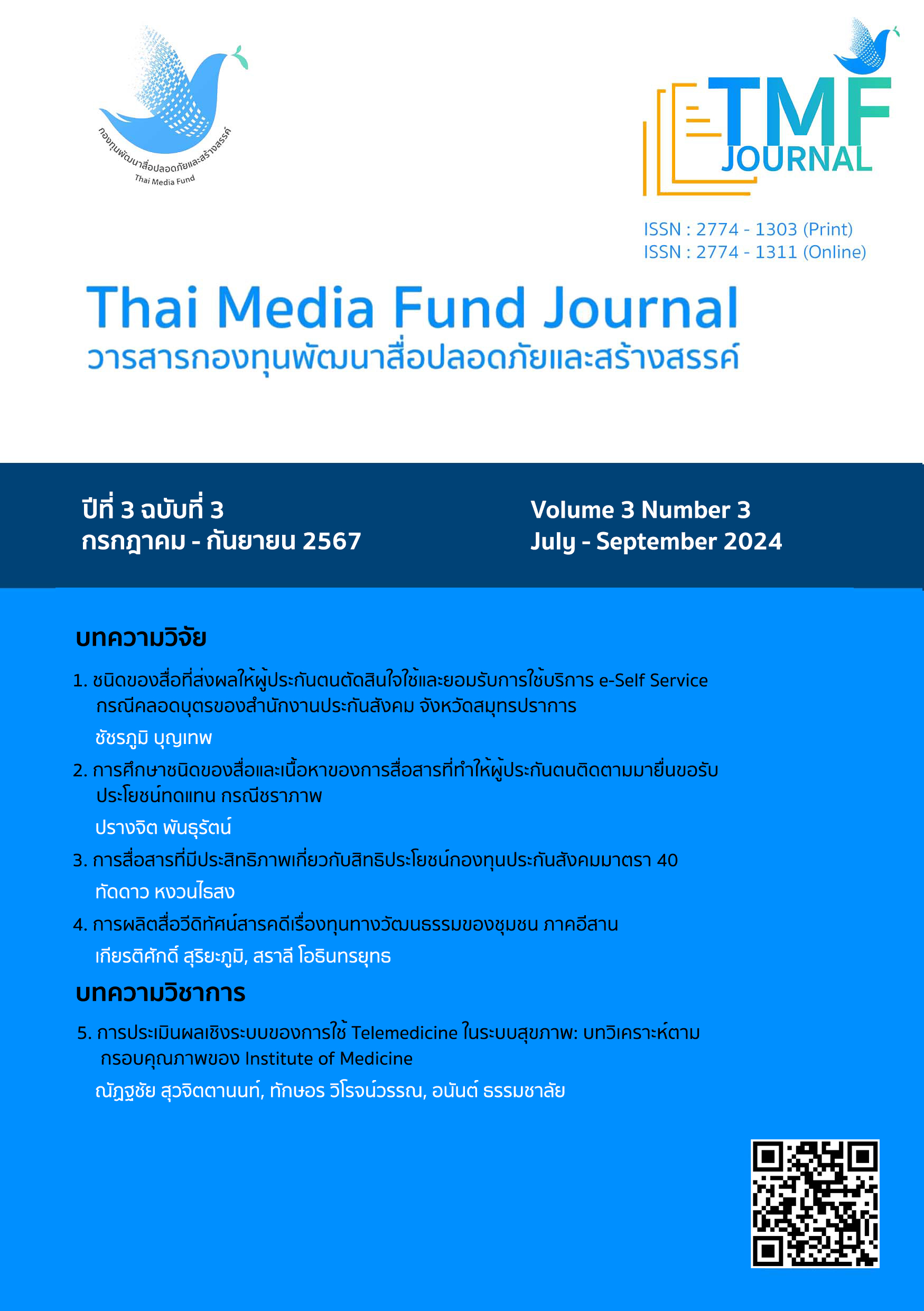
A SYSTEMATIC EVALUATION OF TELEMEDICINE IMPLEMENTATION IN HEALTHCARE SYSTEMS: AN ANALYSIS BASED ON THE INSTITUTE OF MEDICINE QUALITY FRAMEWORK
Article Sidebar
Main Article Content
Abstract
Abstract
Telemedicine has become a critical innovation in global healthcare systems, particularly during the COVID-19 pandemic. This article presents a systematic evaluation of telemedicine implementation using the Institute of Medicine (IOM) quality framework, encompassing six core domains: safety, effectiveness, patient-centeredness, timeliness and accessibility, efficiency, and health equity. A review of literature and empirical evidence indicates that telemedicine has the potential to enhance healthcare access, especially in remote areas and for populations with limited access to traditional services. It also demonstrates effectiveness in managing various chronic conditions and shows promise in reducing medical costs. However, challenges persist in data security, doctor-patient relationships, and technology access inequalities. The article proposes guidelines for quality telemedicine implementation, including developing evaluation standards, promoting empirical research, improving technological infrastructure, and refining relevant policies. Continuous and comprehensive evaluation is crucial for advancing telemedicine to enhance healthcare quality, increase service accessibility, and reduce health inequities, ultimately contributing to the development of a sustainable healthcare system.
Article Details

This work is licensed under a Creative Commons Attribution-NonCommercial-NoDerivatives 4.0 International License.
References
Agha, Z., Schapira, R. M., Laud, P. W., McNutt, G., & Roter, D. L. (2020). Patient satisfaction with physician-patient communication during telemedicine. Telemedicine and e-Health, 26(11), 1301-1307.
Barnett, M. L., Ray, K. N., Souza, J., & Mehrotra, A. (2018). Trends in telemedicine use in a large commercially insured population, 2005-2017. JAMA, 320(20), 2147-2149.
Bashshur, R. L., Shannon, G. W., Smith, B. R., & Woodward, M. A. (2015). The empirical foundations of telemedicine interventions for chronic disease management. Telemedicine and e-Health, 21(10), 769-800.
de la Torre-Díez, I., López-Coronado, M., Vaca, C., Aguado, J. S., & de Castro, C. (2015). Cost-utility and cost-effectiveness studies of telemedicine, electronic, and mobile health systems in the literature: A systematic review. Telemedicine and e-Health, 21(2), 81-85.
Dorsey, E. R., & Topol, E. J. (2016). State of telehealth. New England Journal of Medicine, 375(2), 154-161.
Eberly, L. A., Khatana, S. A. M., Nathan, A. S., Snider, C., Julien, H. M., Deleener, M. E., & Adusumalli, S. (2020). Telemedicine outpatient cardiovascular care during the COVID-19 pandemic: Bridging or opening the digital divide? Circulation, 142(5), 510-512.
Greenhalgh, T., Wherton, J., Shaw, S., & Morrison, C. (2020). Video consultations for covid-19. BMJ, 368, m998.
Institute of Medicine (US) Committee on Quality of Health Care in America. (2001). Crossing the quality chasm: A new health system for the 21st century. National Academies Press (US).
Jennett, P. A., Affleck Hall, L., Hailey, D., Ohinmaa, A., Anderson, C., Thomas, R., Young, B., Lorenzetti, D., & Scott, R. E. (2003). The socio-economic impact of telehealth: A systematic review. Journal of Telemedicine and Telecare, 9(6), 311-320.
Kruse, C. S., Karem, P., Shifflett, K., Vegi, L., Ravi, K., & Brooks, M. (2018). Evaluating barriers to adopting telemedicine worldwide: A systematic review. Journal of Telemedicine and Telecare, 24(1), 4-12.
Kvedar, J., Coye, M. J., & Everett, W. (2014). Connected health: A review of technologies and strategies to improve patient care with telemedicine and telehealth. Health Affairs, 33(2), 194-199.
Lacktman, N. M., Acosta, J. N., & Levine, S. J. (2019). 50-state survey of telehealth commercial payer statutes. Foley & Lardner LLP.
Langabeer, J. R., Gonzalez, M., Alqusairi, D., Champagne-Langabeer, T., Jackson, A., Mikhail, J., & Persse, D. (2016). Telehealth-enabled emergency medical services program reduces ambulance transport to urban emergency departments. Western Journal of Emergency Medicine, 17(6), 713.
Liddy, C., Afkham, A., Drosinis, P., Joschko, J., & Keely, E. (2019). Impact of and satisfaction with a new eConsult service: A mixed methods study of primary care providers. The Journal of the American Board of Family Medicine, 32(2), 146-157.
Marcin, J. P., Shaikh, U., & Steinhorn, R. H. (2016). Addressing health disparities in rural communities using telehealth. Pediatric Research, 79(1), 169-176.
Nguyen, M., Waller, M., Pandya, A., & Portnoy, J. (2020). A review of patient and provider satisfaction with telemedicine. Current Allergy and Asthma Reports, 20(11), 1-7.
Orlando, J. F., Beard, M., & Kumar, S. (2019). Systematic review of patient and caregivers' satisfaction with telehealth videoconferencing as a mode of service delivery in managing patients' health. PloS One, 14(8), e0221848.
Patel, S. Y., Mehrotra, A., Huskamp, H. A., Uscher-Pines, L., Ganguli, I., & Barnett, M. L. (2021). Variation in telemedicine use and outpatient care during the COVID-19 pandemic in the United States. Health Affairs, 40(2), 349-358.
Smith, J. A., & Johnson, B. C. (2024). The impact of AI-enhanced telemedicine on health outcomes in rural communities: A systematic review and meta-analysis. Journal of Telemedicine and e-Health, 30(2), 145-160
Tchero, H., Kangambega, P., Briatte, C., Brunet-Houdard, S., Retali, G. R., & Rusch, E. (2019). Clinical effectiveness of telemedicine in diabetes mellitus: A meta-analysis of 42 randomized controlled trials. Telemedicine and e-Health, 25(7), 569-583.
Totten, A. M., Womack, D. M., Eden, K. B., McDonagh, M. S., Griffin, J. C., Grusing, S., & Hersh, W. R. (2016). Telehealth: Mapping the evidence for patient outcomes from systematic reviews. Agency for Healthcare Research and Quality (US).
Tuckson, R. V., Edmunds, M., & Hodgkins, M. L. (2017). Telehealth. New England Journal of Medicine, 377(16), 1585-1592.
Wade, V. A., Karnon, J., Elshaug, A. G., & Hiller, J. E. (2010). A systematic review of economic analyses of telehealth services using real time video communication. BMC Health Services Research, 10(1), 233.
World Health Organization. (2010). Telemedicine: Opportunities and developments in Member States: Report on the second global survey on eHealth. World Health Organization.
