การพัฒนาสิ่งแวดล้อมตามหลักสัปปายะของชุมชนศาลามีชัย ตำบลในเมือง อำเภอเมือง จังหวัดนครศรีธรรมราช
คำสำคัญ:
การพัฒนา, สิ่งแวดล้อม,, ชุมชน, สัปปายะ, จังหวัดนครศรีธรรมราชบทคัดย่อ
ความเป็นมาและวัตถุประสงค์: ปัจจุบันประเทศไทยมีการพัฒนาความก้าวหน้าทางวิทยาศาสตร์และเทคโนโลยีมากขึ้น เพื่ออำนวยความสะดวกสบายให้กับประชาชนในประเทศ โดยนำทรัพยากรธรรมชาติและสิ่งแวดล้อมมาใช้ประโยชน์ และมิได้บำรุงรักษาและพัฒนาให้มีสภาพดีเหมือนเดิม นับวันยิ่งทวีความรุนแรงมากขึ้นเรื่อย ๆ ส่งผลกระทบ
ต่อความเป็นอยู่ของประชาชน สภาวะของสิ่งแวดล้อมรายรอบตัวทั้งหมด ทั้งที่เป็นวัตถุธรรมและนามธรรม กล่าวคือ ธรรมชาติที่ยังคงเป็นไปในลักษณะอิงอาศัยกัน มนุษย์ได้อาศัยธรรมชาติจากการที่ธรรมชาติผลิตและ
สร้างความสมดุลในโลกใบนี้ตามกฎของสากลจักรวาล การให้ความสำคัญธรรมชาติอย่างอิงอาศัยทางพุทธ
มีคำกล่าวว่า รมณียสถานบ้าง สัปปายะ และธรรมารมณ์ เนื่องด้วยชุมชนศาลามีชัยเป็นชุมชนขนาดใหญ่ที่ตั้งอยู่ในเขตตัวเมือง จังหวัดนครศรีธรรมราช ปัญหาสิ่งแวดล้อมในชุมชนเริ่มทวีความรุนแรงขึ้นอย่างต่อเนื่อง ชุมชนขาดพื้นที่
ในการพักผ่อนและสูดอากาศบริสุทธิ์ มลพิษทางอากาศจากการจราจรที่หนาแน่น จากความเป็นมาและความสำคัญดังกล่าว ผู้วิจัยจึงสนใจจัดทำวิจัยโดยกำหนดวัตถุประสงค์เพื่อศึกษาการพัฒนาสิ่งแวดล้อมตามหลักสัปปายะของชุมชนศาลามีชัย ตำบลในเมือง อำเภอเมือง จังหวัดนครศรีธรรมราช และนำผลการพัฒนาต่อชุมชนศาลามีชัย เพื่อสร้างชุมชนที่มีสิ่งแวดล้อมตามหลักการพัฒนาในรูปแบบของหลักสัปปายะต่อไป
วิธีดำเนินการวิจัย: เป็นการวิจัยแบบผสานวิธี มีขอบเขตเนื้อหา ประกอบด้วย 4 ด้าน คือ อาวาสสัปปายะ
ปุคคลสัปปายะ อาหารสัปปายะ และธรรมสัปปายะ มีการวิเคราะห์ข้อมูลจากแบบสอบถามและแบบสัมภาษณ์ โดยได้เก็บรวบรวมข้อมูลจากแบบสอบถาม จำนวน 298 คน จากประชากรทั้งหมด 1,323 คน และสัมภาษณ์เชิงลึก
จากกลุ่มผู้ให้ข้อมูลสำคัญ แบ่งออกเป็น 4 กลุ่ม ประกอบด้วย 1) กลุ่มผู้บริหารเทศบาลนครนครศรีธรรมราช จำนวน 5 คน 2) กลุ่มผู้นำชุมชนศาลามีชัย จำนวน 5 คน 3) กลุ่มเจ้าอาวาส/พระสงฆ์วัดศาลามีชัย จำนวน 5 รูป และ 4) กลุ่มตัวแทนชาวบ้านชุมชนศาลามีชัย จำนวน 5 คน รวมเป็นจำนวนทั้งหมด 20 รูป/คน
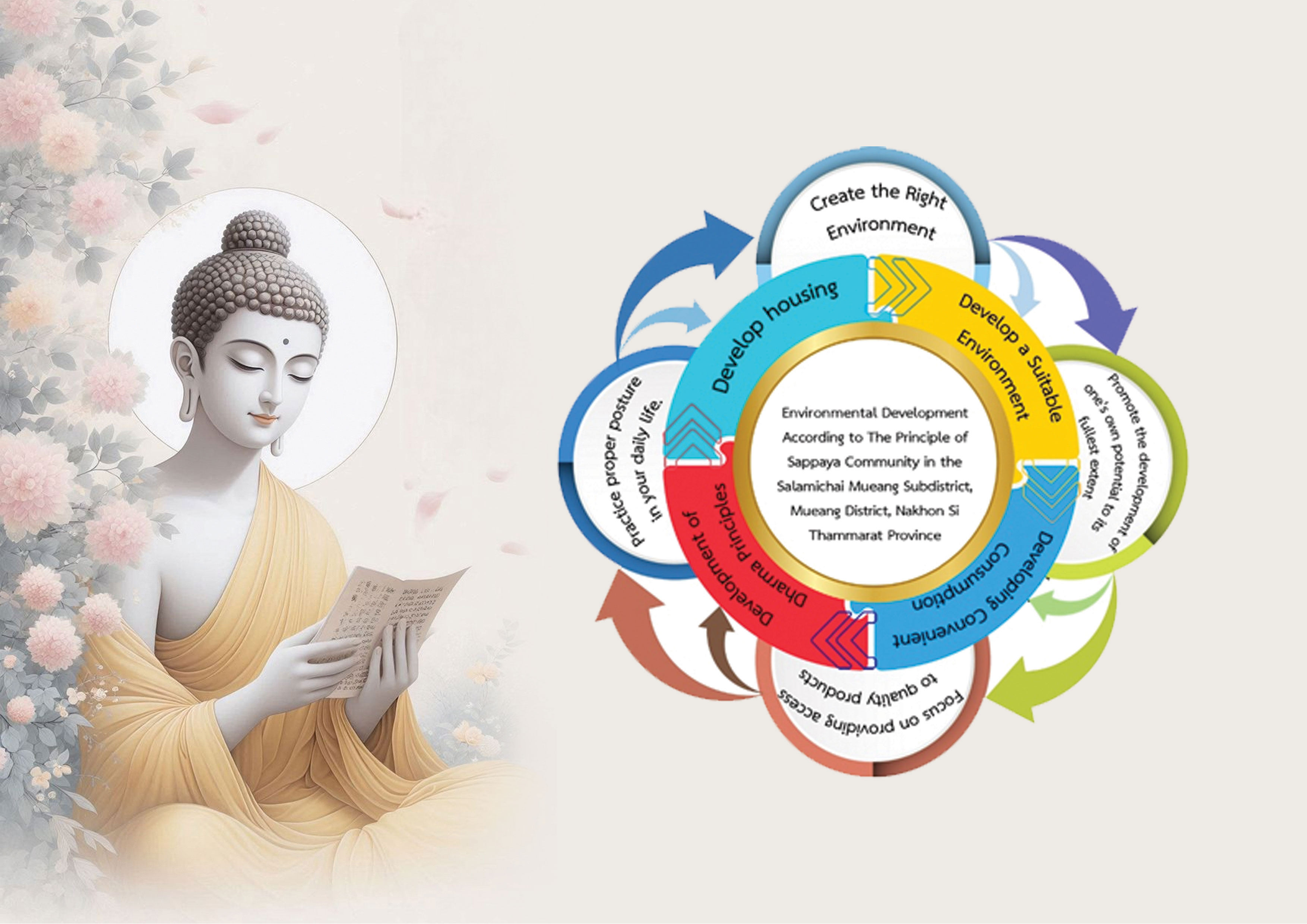
ผลการวิจัย: พบว่า การพัฒนาสิ่งแวดล้อมตามหลักสัปปายะของชุมชนศาลามีชัย ตำบลในเมือง อำเภอเมือง จังหวัดนครศรีธรรมราช เป็นการนำหลักสัปปายะทั้ง 4 ด้าน มาเป็นแนวทางหลักในการจัดการสิ่งแวดล้อมชุมชนและสามารถสังเคราะห์เป็นโมเดลองค์ความรู้ เพื่อนำไปสู่กระบวนการพัฒนาสิ่งแวดล้อมอย่างมั่นคง มั่งคั่ง และยั่งยืนต่อไป
ความเกี่ยวข้องกับหลักธรรมคําสอนทางพระพุทธศาสนา: หลักธรรมทางพระพุทธศาสนา ในการพัฒนาสิ่งแวดล้อมของชุมชนศาลามีชัย คือ หลักสัปปายะ 4 ได้แก่ อาวาสสัปปายะ คือ การพัฒนาที่อยู่อาศัย
ปุคคลสัปปายะ คือ การพัฒนาบุคคลแวดล้อมที่เหมาะสม อาหารสัปปายะ คือ การพัฒนาการบริโภคสะดวก และ ธรรมสัปปายะ คือ การพัฒนาอิริยาบถ ซึ่งสอดคล้องกับหลักพระพุทธศาสนากับการพัฒนาที่ยั่งยืน
สรุป: การพัฒนาสิ่งแวดล้อมของชุมชนศาลามีชัย ดำเนินการตามหลักสัปปายะ โดยเน้นความสะอาด ร่มรื่น และเอื้อต่อการอยู่อาศัยอย่างสงบสุข ชาวบ้านร่วมแรงร่วมใจปรับปรุงพื้นที่สาธารณะ วัด และบ้านเรือน ให้สอดคล้องกับวิถีวัฒนธรรมและธรรมชาติ ส่งผลให้ชุมชนเกิดความสมดุลทั้งด้านกายภาพและจิตใจอย่างยั่งยืน
เอกสารอ้างอิง
Bunyasiri, P. (2023). Life and environment. Bangkok: MAC Education.
Chiangthong, J., Fuengfusakul, A. & Buadaeng, K. (2024). Sociology-Anthropology Chiang Mai : The first mission of the drive. Journal of Social Sciences, Chiang Mai University, 36(2), 12-31.
Jansamood, C. (2012). Environmental Law : International agreements about Biodiversity. Journal of Political Science and Law, Kalasin Rajabhat University, 1(2), 47-62.
Phra Ratcha Ratnamuni. (1995). The provision of public utilities and public welfare of the temple. Bangkok: Religious Printing House.
Phra Wirasak Chaiyathammo. (2015). The Ways of The Management in Buddhist Temples for Peace According to Sappaya 7 : The Case Study of Wat Thannamlai, Suratthani Province. Journal of MCU Peace Studies, 3(2), 98-114.
Phramaha Anucha Siriwanno. (2013). Monastic education and local development: A case study of Wat Theppoonaram, Tambon Tham Phra, Mueang District, Khon Kaen Province. [Master's dissertation, National Institute of Development Administration]. NIDA Wisdom Repository National Institute of Development Administration. http://repository.nida.ac.th/handle/662723737/3070.
Phramaha Wichai Yatichayo. (2013). Study of the development of Wat Nak as a meditation center according to Buddhist scriptures.[Unpublished master's dissertation]. Mahachulalongkorn rajavidyalaya University. Bangkok, Thailand.
Techarin, P. (2024). The meaning of participation in development. Bangkok: Saksopa Printing.
Wongrat, C. (2021). Techniques for using statistics for research. Bangkok: Chulalongkorn University Book Center.
Yaot, S. (2019). Suitable Monastic Areas Development. Journal of Educational Review Faculty of Education in MCU, 6(2), 200-208.
ดาวน์โหลด
เผยแพร่แล้ว
รูปแบบการอ้างอิง
ฉบับ
ประเภทบทความ
สัญญาอนุญาต
ลิขสิทธิ์ (c) 2025 วารสารมานุษยวิทยาเชิงพุทธ

อนุญาตภายใต้เงื่อนไข Creative Commons Attribution-NonCommercial-NoDerivatives 4.0 International License.