THE PRINCIPLE OF IDDHIPĀDA 4 TO PROMOTE THE LIVELIHOOD OF THE ELDERLY FROM CREATIVE WISDOM
คำสำคัญ:
The Principle of Iddhipāda 4, Livelihood Promotion, Elderly, Creative Wisdomบทคัดย่อ
Background and Objectives: Currently, in Thailand, Thai society is entering an aging society, which results in the increasing burden of caring for the elderly. Searching for hidden potential in the elderly is a guideline or process that makes the community see the importance and value of the elderly, who are considered to be the wisdom of the community. The purposes include bringing those potentials out to find career paths and increasing economic value for the benefit of the elderly and the community at the same time. It also helps the elderly to have sufficient income for their lives without the need to depend on their descendants, as well as being a necessary force in driving the country's development to solve poverty. If there is a gathering to develop careers for increasing income, it will develop the quality of life of the elderly to have the ability to rely on themselves. From such problems, the researchers, therefore, study the promotion of the livelihood of the elderly from creative wisdom and apply the principle of Iddhipāda 4 to promote the livelihood of the elderly from creative wisdom.
Methodology: The study employed a qualitative research method by collecting data from related documents and in-depth interviews.
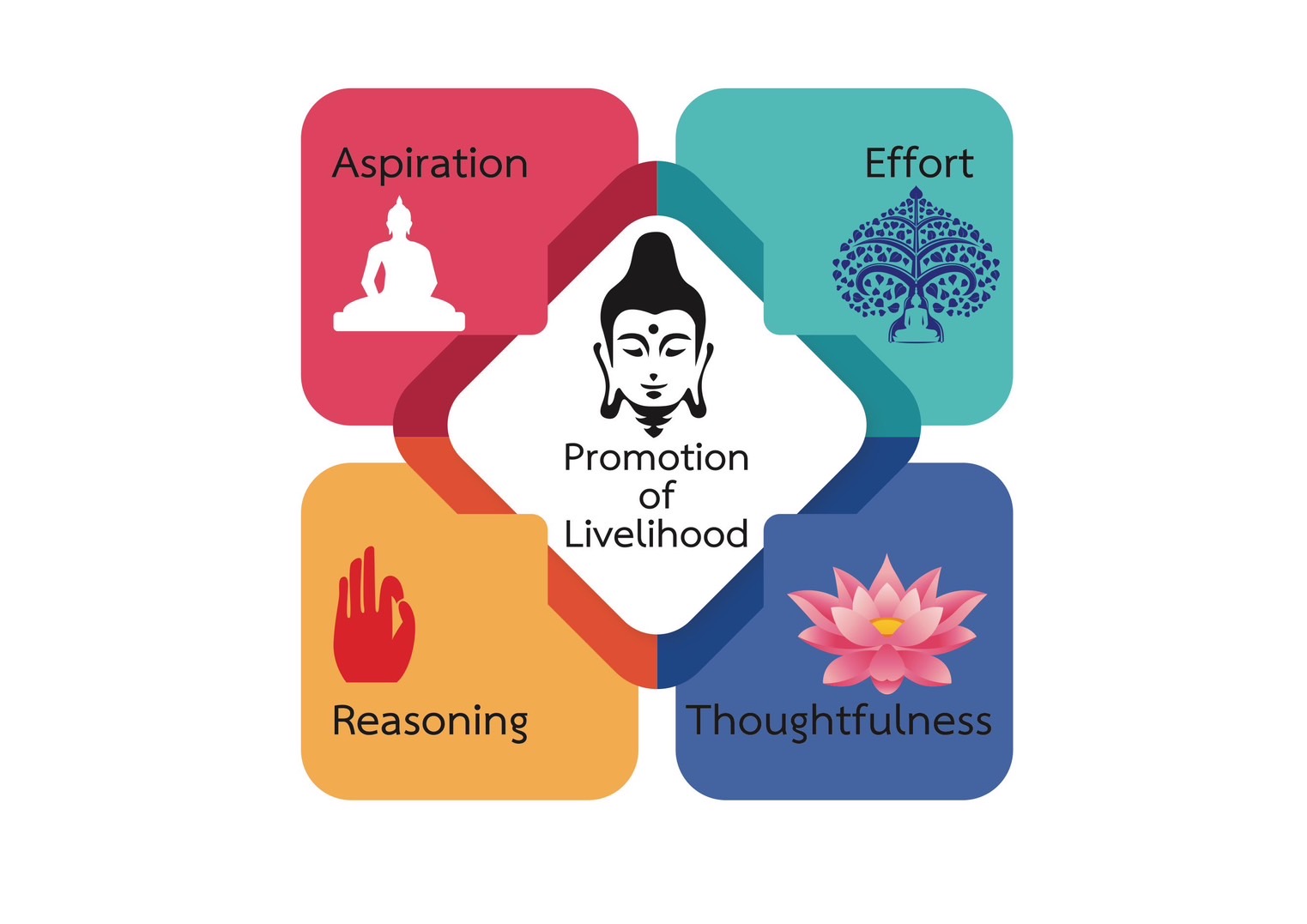
Main Results: The results of the study indicated these details: 1) The promotion for the livelihood of the elderly from creative wisdom, which consisted of the participation of community members to the promotion of livelihood promoted the livelihood of the elderly with local resources by developing basketry skills that had become the product of the elderly wisdom to create jobs, income, and making use of free time to be beneficial. It also promoted physical and mental health for the elderly. The guidelines to promote livelihood for increasing income to the elderly promoted the elderly into participating more in creating jobs or any activity within occupational groups. It was the method that made the elderly felt as if they could join such activities. The elderly would have participated more in conducting activities; 2) The principle of Iddhipāda 4 promoted livelihood to the elderly from creative wisdom. It was the use of Buddhist principles that could have anchored the spirit of the elderly to achieve success in promoting livelihood for the elderly. The principle of Iddhipāda 4 consisted of Chanda (Satisfaction), Viriya (Effort), Citta (Thoughtfulness), and Vīṁamsā (Investigation).
Involvement to Buddhadhamma: The principle of Iddhipāda in promoting livelihood for the elderly from creative wisdom is involved in the characteristics of Applied Buddhism. The principle of Iddhipāda 4 consisted of Chanda (Satisfaction), Viriya (Effort), Citta (Thoughtfulness), and Vīṁamsā (Investigation). The principle was one of Buddhist principles. If it were to be applied to the lives of the elderly, it could have created happiness for them.
Conclusions: The promotion of the livelihood for the elderly in present day was considered important because the proportion of elderly people in Thai society was constantly increasing. Promoting the elderly to have the ability to rely on themselves and adapt to the deterioration of their body. The assistance and support from network partners in promoting livelihoods that could have responded to the needs of the elderly would have resulted in reducing the burden of care from the government sector.
เอกสารอ้างอิง
Chansarn, S. (2012). Active Ageing of Elderly People and Its Determinants: Empirical Evidence from Thailand. Asia-Pacific Social Science Review, 12(1), 1-18.
Cronbach, L. J. (1990). Essentials of Psychological Testing (5th ed.). New York, United States of America: HarperCollinsPublishers.
Department of Older Persons (DOP). (2023). Department of Older Persons Strategic Plan B.E. 2565-2569 (2022-2026). Bangkok, Thailand: Department of Older Persons.
Kowtrakul, S. (1993). The Elderly Problems, The National Council on Social Welfare of Thailand under the Royal Patronage. Samut Prakan, Thailand: Somchai Publishing.
National Labor Development Advisory Council. (2013). Promotion of Career Opportunity for the Elderly. Bangkok, Thailand: National Labor Development Advisory Council.
Netwong, T. & Thirawan, R. (2019). The Effect of the Promotion Health Program to Enhance Mind Healthy Life for Elderly Following the Main Buddhist. Journal of Ratchasuda College, 15(1), 50-62.
Office of the National Economic and Social Development Board. (2016). Summary of Development Plan National Economy and Society Twelfth Edition 2017-2021. Bangkok, Thailand: Office of the National Economic and Social Development Board, Prime Minister's office.
Phangnarean, P. (2021). Community Participation in Career Development for Increasing the Elderly's incomes. Dhonburi Rajabhat University Journal, 15(1), 42-58.
Saardiam, T. (2020). Concept of Right Livelihood and Responsibility as Depicted in Buddhist Texts. Journal of MCU Peace Studies, 8(2), 432-444.
Saranjit, T. (2015). Problem of Poverty in Thailand. Eau Heritage Journal Social Science and Humanities, 5(2), 12-21.
Wanlamso, S. (2020). Guidelines for Occupational Promotion of The Elderly in Banrai Sub District Municipalities Hat Yai District Province Songkhla. [Unpublished master's dissertation]. Khon Kaen University. Khon Kaen, Thailand.
Zhan, L. (1992). Quality of Life: Concept and Measurement Issues. Journal of Advanced Nursing, 17(3), 795-800.
ดาวน์โหลด
เผยแพร่แล้ว
รูปแบบการอ้างอิง
ฉบับ
ประเภทบทความ
สัญญาอนุญาต
ลิขสิทธิ์ (c) 2024 วารสารมานุษยวิทยาเชิงพุทธ

อนุญาตภายใต้เงื่อนไข Creative Commons Attribution-NonCommercial-NoDerivatives 4.0 International License.