ทัศนะของวัยรุ่นไทยต่อความสำคัญของการนับถือพระพุทธศาสนากับชีวิตที่ดี
คำสำคัญ:
ชีวิตที่ดี, พุทธจริยศาสตร์, ปัจเจกนิยม, ประโยชน์นิยม, ฆราวาสนิยมบทคัดย่อ
ความเป็นมาและวัตถุประสงค์: ตลอดช่วงประวัติศาสตร์ไทย พระพุทธศาสนาทำหน้าที่เป็นกรอบจริยธรรม และแหล่งสร้างความหมายชีวิต ผ่านหลักศีลธรรมและการฝึกสติที่กำกับพฤติกรรมส่วนบุคคลและความสัมพันธ์ทางสังคม อย่างไรก็ตาม ในบริบทสังคมดิจิทัลและเศรษฐกิจแข่งขันสูงช่วงทศวรรษที่ผ่านมา บทบาทของศาสนา ในชีวิตประจำวันของวัยรุ่นไทยลดลงอย่างเห็นได้ชัด การปฏิบัติศาสนกิจและการศึกษาหลักธรรมมีความสม่ำเสมอน้อยลง ขณะที่ความสำเร็จทางวัตถุและการยอมรับในสื่อสังคมออนไลน์กลับกลายเป็นเกณฑ์วัดคุณค่าชีวิตหลัก ภาวะดังกล่าวสัมพันธ์กับปัญหาความเครียด ความสับสนเชิงอัตลักษณ์ และการขาดหลักยึดเหนี่ยวทางจิตใจ จึงก่อให้เกิดคำถามสำคัญว่า “ชีวิตที่ดี” ของเยาวชนไทยร่วมสมัยยังมีรากฐานเชื่อมโยงกับหลักศาสนาเพียงใดวิธีดำเนินการวิจัย: การวิจัยใช้ระเบียบวิธีวิจัยเชิงคุณภาพ กลุ่มผู้ให้ข้อมูลคือ นักศึกษาระดับปริญญาตรี มหาวิทยาลัยเชียงใหม่ ปีการศึกษา 2567 คัดเลือกโดยใช้การสุ่มแบบเจาะจงและการสุ่มแบบสโนว์บอล แบ่งออกเป็น 2 กลุ่ม ได้แก่ วัยรุ่นไทยที่นับถือพระพุทธศาสนาและเข้าร่วมกิจกรรมชมรมพุทธศิลป์ จำนวน 10 คน และวัยรุ่นไทยที่ไม่นับถือศาสนา ซึ่งเคยนับถือพระพุทธศาสนามาก่อนและประกาศตนว่าไม่นับถือศาสนา เป็นระยะเวลาไม่น้อยกว่า 1 ปี จำนวน 10 คน รวมเป็นจำนวนทั้งสิ้น 20 คน หรือจนกว่าข้อมูลถึงจุดอิ่มตัว (Data Saturation) เครื่องมือที่ใช้ในการวิจัยประกอบด้วยแบบสอบถามข้อมูลทั่วไป แบบสัมภาษณ์เชิงลึกแบบกึ่งโครงสร้าง และการสังเกตแบบไม่มีส่วนร่วม ข้อมูลจากการสัมภาษณ์ถูกบันทึกเสียงและถอดความแบบคำต่อคำ จากนั้นผู้วิจัยอ่านทบทวนข้อมูลหลายครั้งเพื่อทำความคุ้นเคยกับข้อมูลและดำเนินการเข้ารหัสข้อมูล (Coding) จากประเด็นสำคัญที่ปรากฏในข้อมูล ต่อมานำรหัสที่มีความสัมพันธ์กันมาจัดกลุ่มและสังเคราะห์เป็นประเด็นหลักและประเด็นย่อยตามแนวทางการวิเคราะห์ตามประเด็น (Thematic Analysis) แล้วนำเสนอ ผลการวิเคราะห์ในรูปแบบการพรรณนาเชิงวิเคราะห์ตามประเด็น (Thematic Analytical Description) โดยใช้คำกล่าวของผู้ให้ข้อมูลประกอบการอธิบายผลการวิจัย
ผลการวิจัย: วัยรุ่นไทยทั้งที่นับถือพระพุทธศาสนาและไม่นับถือศาสนาเห็นพ้องกันว่า หลักธรรมบางประการ ของพระพุทธศาสนาสามารถนำไปใช้ส่งเสริมการดำเนินชีวิตที่ดีได้จริงในทางปฏิบัติ โดยเฉพาะในฐานะเครื่องมือ ในการทำความเข้าใจปัญหา ควบคุมอารมณ์ และตัดสินใจอย่างมีเหตุผล แม้วัยรุ่นที่ไม่นับถือศาสนาจะไม่มองว่าชีวิตที่ดีจำเป็นต้องตั้งอยู่บนศาสนาโดยตรง แต่ยังคงเลือกใช้หลักธรรมบางประการ เช่น อริยสัจ 4 ไตรลักษณ์ กฎแห่งกรรม และการฝึกสติสมาธิ เป็นแนวทางในการจัดการชีวิตประจำวัน
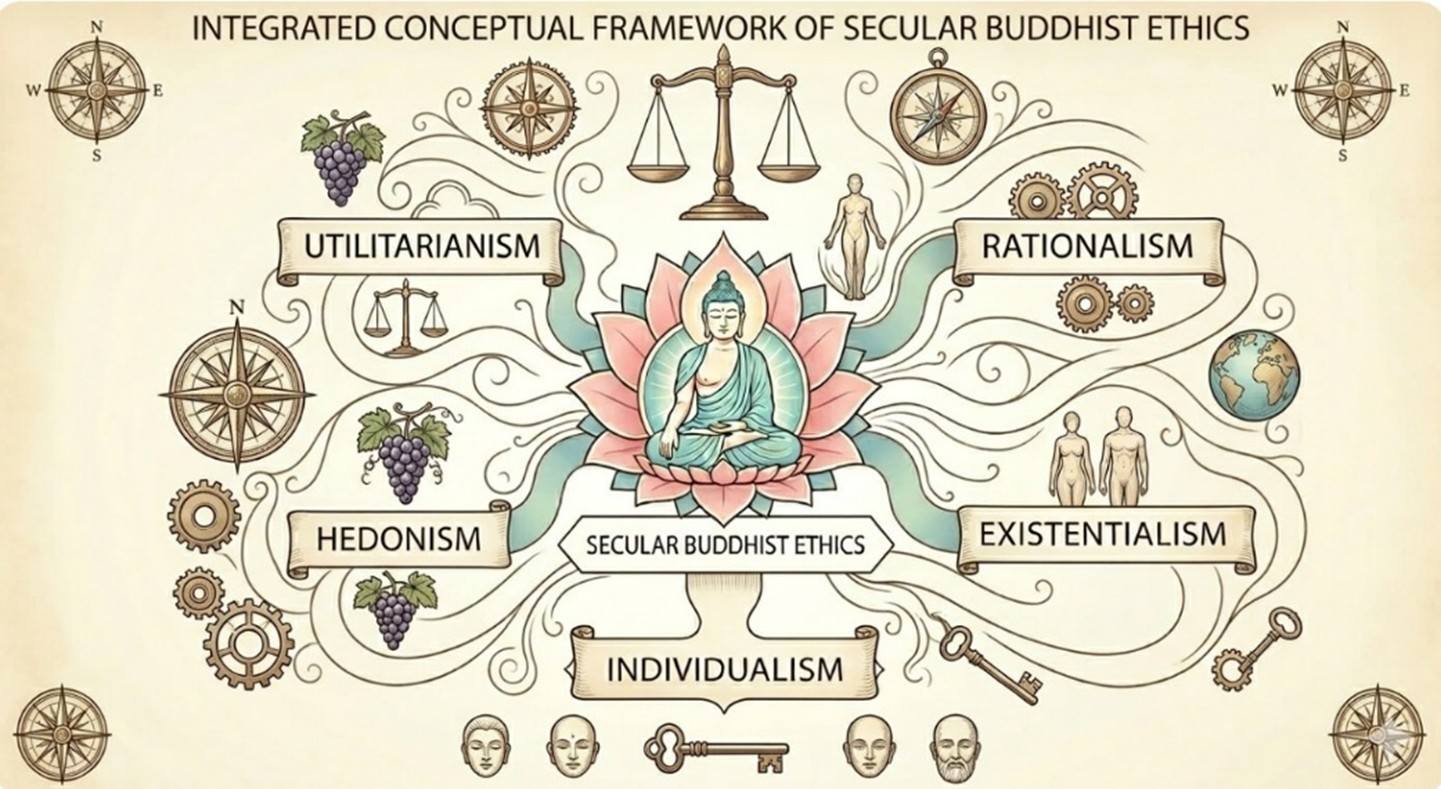
ความเกี่ยวข้องกับหลักธรรมคำสอนทางพระพุทธศาสนา: เมื่อพิจารณาในเชิงพุทธจริยศาสตร์ ผลการวิจัยสะท้อนว่าทัศนะของวัยรุ่นไทยเกี่ยวกับชีวิตที่ดีมีความสอดคล้องกับพุทธจริยศาสตร์ทั้งสามระดับ ได้แก่ ศีล 5 กุศลกรรมบถ 10 และอริยมรรคมีองค์ 8 อย่างไรก็ตาม ความแตกต่างที่สำคัญระหว่างวัยรุ่นทั้งสองกลุ่ม อยู่ที่แรงจูงใจและฐานความชอบธรรมของการยึดถือศาสนา โดยวัยรุ่นที่นับถือพระพุทธศาสนามักได้รับอิทธิพล จากสถาบันครอบครัว ศาสนา และการศึกษา ขณะที่วัยรุ่นที่ไม่นับถือศาสนาให้ความสำคัญกับเหตุผลเชิงปัจเจกนิยม ประโยชน์นิยม และประสบการณ์ตรงเป็นหลัก
สรุป: ผลการวิจัยนี้สะท้อนให้เห็นกระบวนการทำให้พระพุทธศาสนาเป็น “ฆราวาสนิยมเชิงจริยศาสตร์” (Secular Buddhist Ethics) ที่ไม่ได้ปฏิเสธศาสนา แต่ทำให้ศาสนาแปรรูปเป็นกรอบคุณค่าทางจริยธรรมที่อิงเหตุผล ประสบการณ์ และความรับผิดชอบของปัจเจกบุคคล
เอกสารอ้างอิง
Anamwathana, P. (2025). Examining Religious Engagement Among Thai Buddhist Undergraduates. ISEAS Perspective, 42(1), 2335-6677.
Chotima, M. & Blauw, J. (2016). The Influence of Materialism on Well-Being among Thai Adolescents. Scholar: Human Sciences, 8(1), 141-158.
Chueatapra, S. (2020). The application of Buddhism in enhancing quality of life in Khampi Subdistrict, Nakae District, Nakhon Phanom Province. [Master's dissertation, Mahasarakham Rajabhat University]. Thesis Central Library Mahasarakham Rajabhat University. https://fulltext.rmu.ac.th/fulltext/2563/M128551/Chuatapra%20Sirichai.pdf.
Laksanawat, P. (2020). The application of Buddhist Teaching for Self-Development: A . Ramkhamhaeng Research Journal of Humanities and Social Sciences, 23(2), 33-44.
Mittsatsirikul, S. (2022). An application of Buddhist principles in encourage for well-being of the elderly in nan province in the situation of the Covid-19 epidemic.[Master's dissertation, Mahachulalongkornrajavidyalaya University]. Thesis Central Library Mahachulalongkornrajavidy. https://e-thesis.mcu.ac.th/items/4693.
Nithiuthai, S. (2011). The Development of the Youths according to the Buddhist way in Thai societies.[Master's dissertation, Mahachulalongkornrajavidyalaya University]. Thesis Central Library MahachulalongkornrajavidyalayaUniversity. http://kb.mcu.ac.th/userfiles/file/library1/Thesis/832554.pdf.
Phra Pittaya Sawekpan. (2005). Buddhist Beliefs and good life in Thai society: A case study of Buddhists in Bangkok. [Master's dissertation, Mahidol University].Thesis Central Library MahidolUniversity. https://digital.library.tu.ac.th/tu_dc/frontend/Info/item/dc:84994#.
Phra Suphakit Supanyo. (2021). The Application for Mindfulness Clear Comprehension In Living Daily Life. Journal of Political Science Suan Sunandha Rajabhat University, 4(2), 99-107.
Phra Thammapitaka (P.A. Payutto). (1999). Dhamma and Thai in the present situation (2nd ed.). Bangkok, Thailand: Kurusapa Printing House, Lat Phrao.
Phrakhru Palad Nabhichaya Ñāṇavīro (Lapimthong). (2021). An analytical study of irreligious people’s reasons. [Master's dissertation, Mahachulalongkornrajavidyalaya University]. Thesis Central Library Mahachulalongkornrajavidyalaya University. https://e-thesis.mcu.ac.th/items/2547.
R1. (2025). Thai Adolescent’s Perceptions of The Importance of Buddhism for A Good Life. (Sukham, S., Interviewer)
R10. (2025). Thai Adolescent’s Perceptions of The Importance of Buddhism for A Good Life. (Sukham, S., Interviewer)
R11. (2025). Thai Adolescent’s Perceptions of The Importance of Buddhism for A Good Life. (Sukham, S., Interviewer)
R12. (2025). Thai Adolescent’s Perceptions of The Importance of Buddhism for A Good Life. (Sukham, S., Interviewer)
R15. (2025). Thai Adolescent’s Perceptions of The Importance of Buddhism for A Good Life. (Sukham, S., Interviewer)
R17. (2025). Thai Adolescent’s Perceptions of The Importance of Buddhism for A Good Life. (Sukham S., Interviewer)
R2. (2025). Thai Adolescent’s Perceptions of The Importance of Buddhism for A Good Life. (Sukham, S., Interviewer)
R3. (2025). Thai Adolescent’s Perceptions of The Importance of Buddhism for A Good Life. (Sukham, S., Interviewer)
R9. (2025). Thai Adolescent’s Perceptions of The Importance of Buddhism for A Good Life. (Sukham, S., Interviewer)
Satchayanon, K. (2024). The role of non-religious individuals in modern society in shaping their professional aspirations. [Master's dissertation, Mahidol University]. Thesis Central Library Mahidol University. https://archive.cm.mahidol.ac.th/handle/123456789/5774.
Satyawongthip, P. (2015). Buddhadasa Bhikku's Viewpoints on Dealing with Teenagers. Journal of Humanities and Social Sciences, 23(43), 85-104.
Supanusont, S. (2003). The good life from the perspective of Buddhist ethics. [Master's dissertation, Mahidol University]. Thesis Central Library Mahidol University. https://mulinet11.li.mahidol.ac.th/e-thesis/4137753.pdf.
Verhaeghen, P. (2015). Good and Well: The Case for Secular Buddhist Ethics. Contemporary Buddhism, 16(1), 43-54. https://doi.org/10.1080/14639947.2015.1006802.
ดาวน์โหลด
เผยแพร่แล้ว
รูปแบบการอ้างอิง
ฉบับ
ประเภทบทความ
สัญญาอนุญาต
ลิขสิทธิ์ (c) 2026 วารสารมานุษยวิทยาเชิงพุทธ

อนุญาตภายใต้เงื่อนไข Creative Commons Attribution-NonCommercial-NoDerivatives 4.0 International License.