DHAMMA LANGUAGE-HUMAN LANGUAGE IN PHRA BODHIÑÃNATHERA (AJAHN CHAH SUBHADDO)'S PERSPECTIVE
คำสำคัญ:
Dhamma language, Human language, Sammutisacca, Paramatthasacca, Phra Bodhiñãnatheraบทคัดย่อ
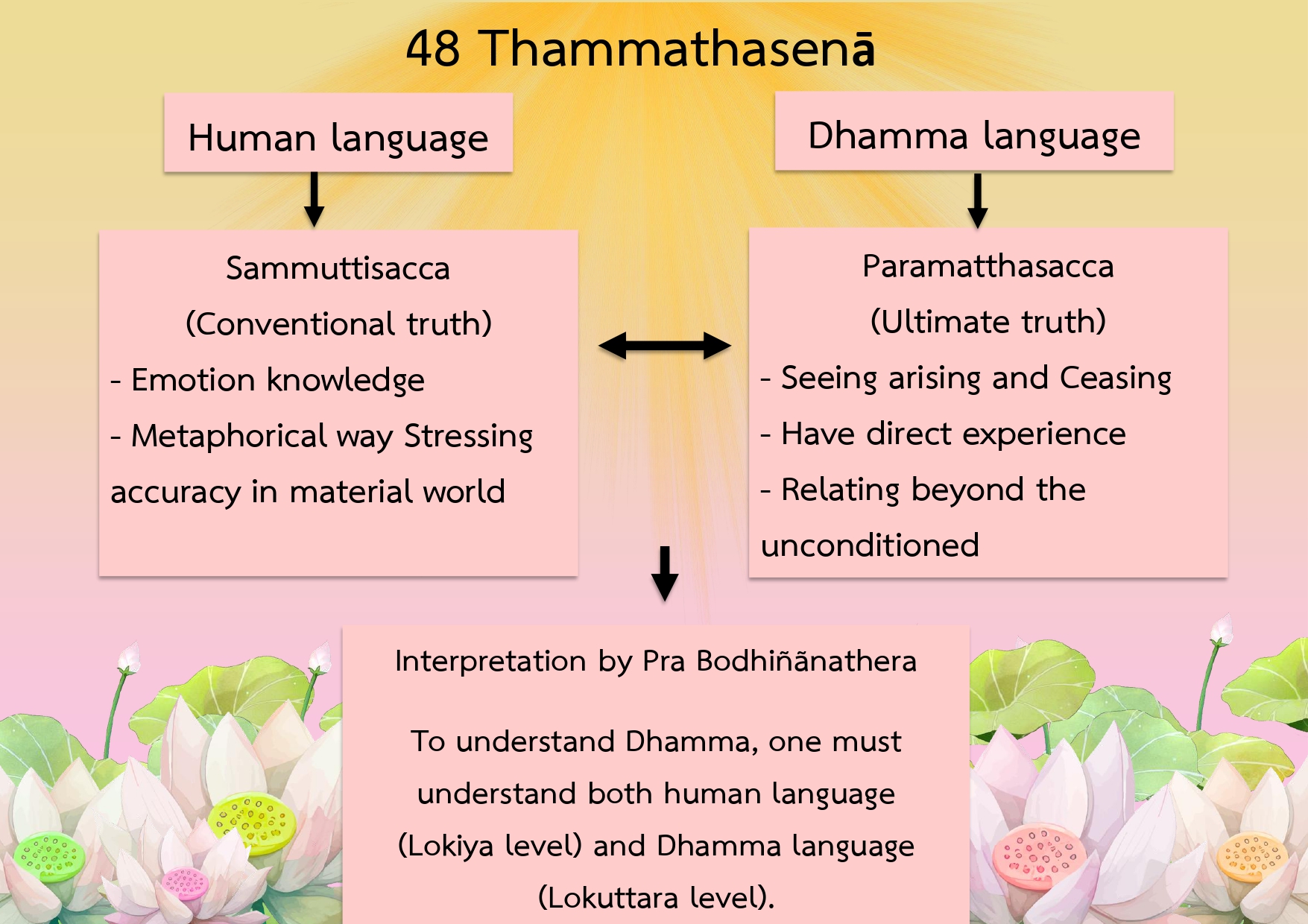
Background and Objective: The transmission of something from the sender to the receiver, when aimed at creating understanding, uses language as a means of communication. However, worldly language that people commonly use often causes misunderstanding, just as the attempt to understand truth through language points to something deeper than what the senses can perceive. This research article aims to analyze how to understand the truth by Dhamma language and human language theory from the perspective of Phra Bodhiñãnathera (Chah Subhaddo). This interpretation is from "48 Thamthasenā" and "Human Language, Dhamma Language by Buddhadāsa Bhikkhu" that are shown about understanding the truth by distinction between human language and Dhamma language, which depend on conventional truth (Sammutisacca) and ultimate truth (Paramatthasacca).
Methodology: The study used a qualitative research methodology, employing documentary research. The data scope by analyzing and interpreting from two books was 1) "48 Thamthasenā" of Pra Bodhiñãnathera (Chah Subhaddo), a Mō̜radoktham volume 37, published by the disciples of Wat Nong Pa Pong, Wat Pa Kanthi Dhammaram (Branch 147), and the Galayanadhamma Club that was published in 2016, which collects all his teachings and important ideas, and 2) Human Language Dhamma Language by Buddhadāsa Bhikkhu, published in 1971. The aim was to show how to understand the truth by analyzing and interpreting these books.
Main Results: This analysis showed that the distinction between Dhamma language and human language from the perspective of Phra Bodhiñãnathera (Ajahn Chah Subhaddo), a prominent figure in modern Theravada Buddhism. Ajahn Chah's teachings highlight the limitations of human language, which is tied to sensory experiences and social norms, and its potential to obscure deeper spiritual truths. In contrast, Dhamma language seeks to convey the ultimate truth (Paramatthasacca) beyond conventional language's capacity. The study explores key concepts from Ajahn Chah's 48 Thamthasenā and Human Language Dhamma Language by Buddhadāsa Bhikkhu, emphasizing the importance of experiential understanding in Buddhist practice. This paper provided insights into how language shapes our understanding of spiritual truths and promotes a practice-oriented approach to Buddhist teachings, enhancing our comprehension of Ajahn Chah's linguistic and philosophical contributions.
Involvement to Buddhadhamma: This article is situated within the Application of Buddhism and the development of wisdom and morality, focusing on understanding the truth in everything by analyzing and interpreting it through the conventional truth (Sammutisacca) and ultimate truth (Paramatthasacca) theories, which are based on the Buddha's thought. A key part of Buddhist discussion is the difference between conventional truth (Sammutisacca) and ultimate truth (Paramatthasacca). The two types of truth in Buddhism are very important for understanding how language and reality relate to each other.
Conclusions: The study of this article contributes to analyze and interpret the truth from the literary works "48 Thamthasenā" of Phra Bodhiñãnathera through the theories of the Dhamma language and human language by Buddhadāsa Bhikkhu which found that humans could perceive truth through language, and language could be assisted to understand the truth. Understanding the truth was divided into two types: Conventional truth (Sammutisacca), the truth according to the state of things, and ultimate truth (Paramatthasacca), the fundamental and absolute truth. These truths were related to important theories that were to interpret and find the truth. Human language is the language commonly used to denote things perceived through the senses, and Dhamma language is used by ordinary language to explain the truth, but the speaker must have thorough training in Dhamma. Both theories were explained and presented through the perspective of Phra Bodhiñãnathera.
เอกสารอ้างอิง
Adivatthanasit, C. (2008). Language and Social Organization. Journal of Thai Language and Thai Culture, 2(3), 1-9.
Buddhadāsa Bhikkhu. (1971). Human Language and Dhamma Language of Buddhadāsa Bhikkhu. Bangkok, Thailand: Karnpimpranakhon.
Buddhadāsa Bhikkhu. (2004). Handbook for mankind (15th ed.). Bangkok, Thailand: thammasapa.
Buddhadāsa, Bhikkhu. (2024). Two Kinds of Language: Everyday Language & Dhamma Languageby Buddhadāsa Bhikkhu. Trans. Roderick S. Bucknell. Bangkok, Thailand: Buddhadāsa Indapañño Archives.
Jackson, P. A. (2013). Buddhadāsa: Theravada Buddhism and Modernist Reform in Thailand. (Monkol Dechnakarin, Translator). Bangkok, Thailand: Chulalongkorn University.
Kenaphoom, S., Savatsomboon, G., Senawiang, P. & Pawala, T. (2024). DESIGNED TECHNIQUES OF RESEARCH CONCEPT FRAMEWORKS BASED ON CONCEPTS OF PAṬICCASAMUPPĀDA- BUDDHIST PHILOSOPHY. Asian Education and Learning Review, 3(1), Article 5. https://doi.org/10.14456/aelr.2025.5.
Lynch, M. P. (2005). TRUE TO LIFE: WHY TRUTH MATTERS. London, England: MIT Press.
Ngamchitcharoen, W. (2018). Theravada Buddhism (4th ed.). Bangkok, Thailand: Thammasat University.
Phra Bodhiñãnathera (Chah Subhaddo). (2005). Dharma on trees (4th ed.). Ubon Ratchathani, Thailand: Wittaya offset Karnpim.
Phra Bodhiñãnathera (Chah Subhaddo). (2016). 48 Thamthasenā. Nakhon Pathom, Thailand: Salapimpakarn.
Tankaew, B. (2002). Theravada Buddhism. Bangkok, Thailand: OS Printing House.
ดาวน์โหลด
เผยแพร่แล้ว
รูปแบบการอ้างอิง
ฉบับ
ประเภทบทความ
สัญญาอนุญาต
ลิขสิทธิ์ (c) 2026 วารสารมานุษยวิทยาเชิงพุทธ

อนุญาตภายใต้เงื่อนไข Creative Commons Attribution-NonCommercial-NoDerivatives 4.0 International License.