พุทธนวัตกรรม “โมเดล ส.น.6” ธรรมนูญจัดการน้ำชุมชนบูรณาการหลักสาราณียธรรม 6 ลุ่มน้ำแม่แคม จังหวัดแพร่
คำสำคัญ:
พุทธนวัตกรรม, โมเดล ส.น.6, ธรรมนูญจัดการน้ำชุมชน, หลักสาราณียธรรม 6, ลุ่มน้ำแม่แคมบทคัดย่อ
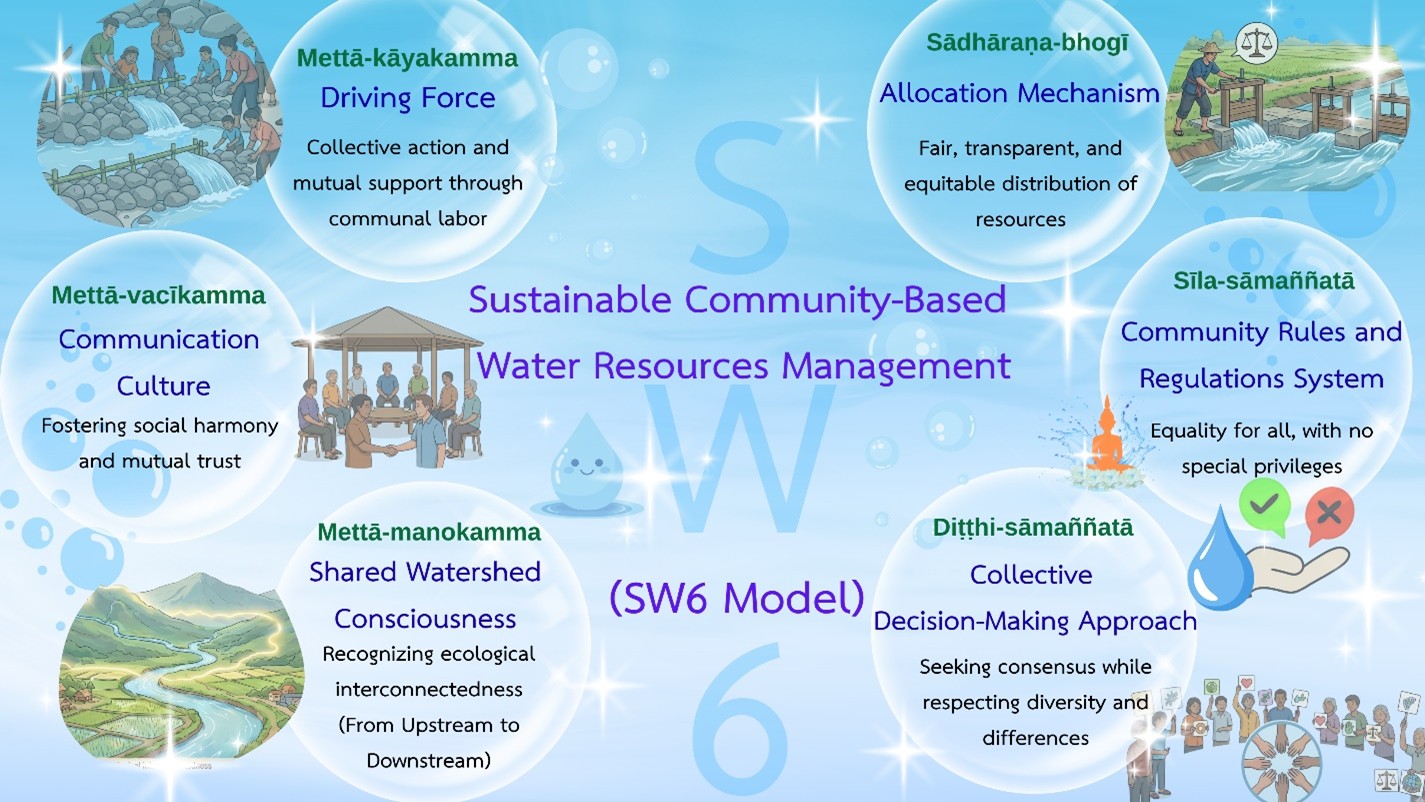
ความเป็นมาและวัตถุประสงค์: การบริหารจัดการทรัพยากรน้ำระดับชุมชนในบริบทสังคมไทย จำเป็นต้องอาศัยกลไกการมีส่วนร่วมที่สอดคล้องกับบริบททางสังคม วัฒนธรรม และภูมิปัญญาท้องถิ่น โดยเฉพาะการประยุกต์ หลักพุทธรรม ในการส่งเสริมความร่วมมือของผู้มีส่วนได้ส่วนเสีย การวิจัยครั้งนี้มีวัตถุประสงค์เพื่อนำเสนอกระบวนการจัดทำร่างธรรมนูญจัดการน้ำชุมชนที่บูรณาการหลักสาราณียธรรม 6 ในลุ่มน้ำแม่แคม อำเภอเมืองแพร่ จังหวัดแพร่ และเสนอพุทธนวัตกรรม “โมเดล ส.น.6 (SW6 Model)” ในฐานะกรอบการจัดการน้ำชุมชนเชิงพุทธที่พัฒนาได้จากผลการวิจัย
วิธีดำเนินการวิจัย: การวิวิจัยครั้งนี้เป็นการวิจัยเชิงคุณภาพ ดำเนินการในพื้นที่ 4 ตำบลของลุ่มน้ำแม่แคม ได้แก่ ตำบลสวนเขื่อน ตำบลป่าแดง ตำบลกาญจนา และตำบลนาจักร ผู้ให้ข้อมูลสำคัญจำนวน 60 รูป/คน คัดกรอง แบบเจาะลึก เก็บรวบรวมข้อมูลโดยการสัมภาษณ์เชิงลึก การสนทนากลุ่มการสังเกตแบบมีส่วนร่วม และการประชุมเชิงปฏิบัติการ วิเคราะห์ข้อมูลด้วยการวิเคราะห์เนื้อหาและการตีความแบบอุปนัย
ผลการวิจัย: ผลการวิจัยพบว่า ข้อค้นพบสำคัญ 2 ประการ ได้แก่ 1) การพัฒนาร่างธรรมนูญจัดการน้ำชุมชน ลุ่มน้ำแม่แคมจำนวน 4 ฉบับ ตามบริบทของตำบลสวนเขื่อน ป่าแดง กาญจนา และนาจักร ซึ่งสะท้อนลักษณะ การบริหารจัดการน้ำที่สอดคล้องกับสภาพพื้นที่ต้นน้ำ กลางน้ำ และปลายน้ำ และ 2) การพัฒนาพุทธนวัตกรรม “โมเดล ส.น.6 (SW6 Model)” ซึ่งประกอบด้วยองค์ประกอบสำคัญ 6 ด้าน ได้แก่ เมตตากายกรรมร่วมประสานงาน เมตตาวจีกรรมสื่อสารสร้างสรรค์ เมตตามโนกรรมตั้งจิตกัลยาณมิตร สาธารณโภคีจัดสรรทรัพยากรอย่างเป็นธรรม สีลสามัญญตาปฏิบัติตามกฎกติกาเสมอกัน และทิฏฐิสามัญญตาสร้างวิสัยทัศน์ร่วมผืนน้ำ แบบจำลองนี้ถือเป็นกลไกเชิงพุทธที่มีศักยภาพสูง สามารถนำไปขยายผลและประยุกต์ใช้เพื่อการบริหารจัดการทรัพยากรน้ำอย่างยั่งยืนในพื้นที่ลุ่มน้ำอื่น ๆ ที่มีบริบทใกล้เคียง โดยเฉพาะชุมชนวิถีพุทธที่มีศาสนสถานเป็นศูนย์กลางทางสังคม โดยเป็นกรอบแนวทางส่งเสริมการมีส่วนร่วมและการจัดการทรัพยากรน้ำของชุมชนอย่างยั่งยืน
ความเกี่ยวข้องกับหลักธรรมคําสอนทางพระพุทธศาสนา: ผลการวิจัยสะท้อนการประยุกต์ใช้พุทธนวัตกรรม หลักสาราณียธรรม 6 ในการส่งเสริมความร่วมมือการสื่อสารที่สร้างสรรค์ การปฏิบัติตามกติกาชุมชน การแบ่งปันทรัพยากรอย่างเป็นธรรม และการสร้างเป้าหมายร่วมในการบริหารจัดการทรัพยากรน้ำของชุมชน
สรุป: การวิจัยครั้งนี้ แสดงให้เห็นว่าการบูรณาการหลักสาราณียธรรม 6 เข้ากับกระบวนการจัดทำธรรมนูญ จัดการน้ำชุมชนที่สามารถส่งเสริมการมีส่วนร่วมของประชาชน และพัฒนาแนวทางการบริหารจัดการทรัพยากรน้ำที่สอดคล้องกับบริบทของพื้นที่ได้อย่างเหมาะสม ทั้งนี้โมเดล ส.น.6 (SW6 Model) สามารถใช้เป็นกรอบแนวทางสำหรับการบริหารจัดการทรัพยากรน้ำในชุมชนวิถีพุทธ และพื้นที่ที่มีบริบทใกล้เคียงเพื่อให้เกิดความยั่งยืนต่อไป
เอกสารอ้างอิง
Cheevapattananuwong, P. & Khamnu, N. (2023). Plan on Water Management in 20Years: The Machinery of Thai State Power and Participation. Journal of Humanities & Social Sciences (JHUSOC), 21(2), 193-215.
Chirakitnimit, N. (2024). Water Problems in The Area of Ban Huai Salop, Huai Pha Subdistrict, Mueang District, Mae Hong Son Province. Journal of Social Science and Cultural, 8(2), 336-347.
Dangrat, J., Wangukkarangkul, A. & Jaturat, W. (2025). The Development of Water User Organizations Participation in Water Management in the Western Southern River Basin. School of Administrative Studies Academic Journal, 8(4), 225-242.
Dulyapach, K. (2025). Upgrading Community Products to be a "SMART Local" Business Organization. Thaksin Law Journal, 13(1), 17-28.
Kaewnim, P. (2025). Participatory Local Water Management by Water User Organizations around Bung Boraphet, Nakhon Sawan Province, Based on the Principles of Aparihaniya Dhamma. Journal of Public Administration and Interdisciplinary Studies for Society, 1(1), e1840. https://doi.org/10.14456/jpais.2025.1.
Laeni, N. (2024). The Institutional Landscape Analysis of Thailand's Water Management System: A Systematic View on Water-Related Agencies. Journal of Political Science Review, 10(1), 117-168.
Nuanmanee, R., Taweekul, K. & Borisutdhi, Y. (2024). Productivity of Agricultural Water Use in the Dry Season of Huai Kut Daeng Reservoir Use Association Member, Chaturaphakphiman District, Roi-Et Province. Rajabhat Agriculture Journal, 23(1), 57-64.
Office of the National Water Resources. (2000). The 20-Year Water Resources Management Strategy. Bangkok, Thailand: Office of the National Water Resources.
Phrakhrusuwanthammapimon (Somchai Charoenpha), Phueakbuakao, S. & Seepradit, P. (2022). Application to the principle of the administration of local administrative organizations in muang district suphanburi province. Mahachula Academic Journal, 9(3), 222-236.
Phramaha Suphachai Piyadhammajayo (Tivapee), Ruansangsanka, R. & Boonpoo, S. (2024). Educational Management based on the Principles of Sāraṇīyadhamma in Sunday Dhamma School. Dhammadhara Journal of Buddhist Ideology for Development, 2(5), 40-55.
Rattanarat, N., Phramaha Somboon Vudฺdhikaro & Kraichakr, O. (2024). Buddhist Perspective on Prevention of Domestic Violence by The Community Participation. Mahachula Academic Journal, 11(2), 435-450.
Rattanayotasakul, J. & Sukmaitree, J. (2025). Management of Local Water Resources in Thailand. Modern Academic Development and Promotion Journal, 3(2), 17-31.
Thipchai, K. & Onnamkham, W. (2024). Issuing an order for Subdistrict Administrative Organization Mayorto be removal from their positions in accordance with the District Assembly and District Administrative Organization Act B.E. 2537: In case study of the supreme count of Administrative Cour. Journal of Local Governance and Innovation, 8(3), 379-398.
Wongrat, C. (1998). Techniques for using statistics for research. Bangkok, Thailand: Thepneramit Printing.
ดาวน์โหลด
เผยแพร่แล้ว
รูปแบบการอ้างอิง
ฉบับ
ประเภทบทความ
สัญญาอนุญาต
ลิขสิทธิ์ (c) 2026 วารสารมานุษยวิทยาเชิงพุทธ

อนุญาตภายใต้เงื่อนไข Creative Commons Attribution-NonCommercial-NoDerivatives 4.0 International License.