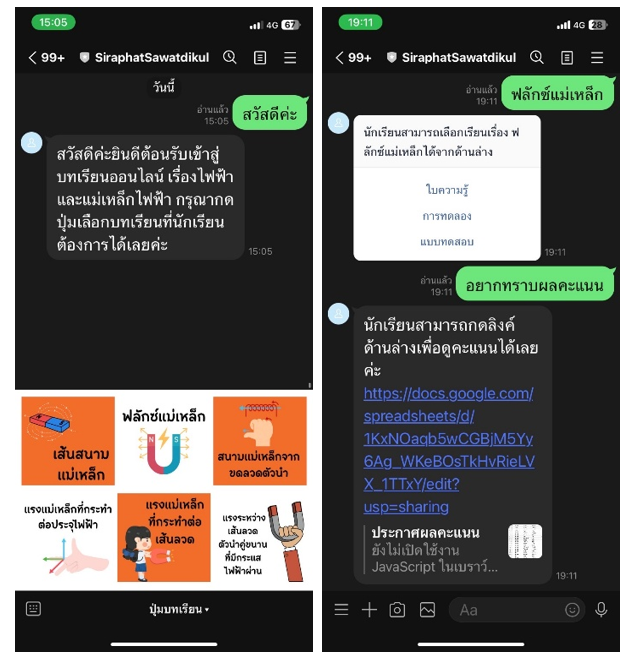
ผลการจัดกิจกรรมการเรียนรู้วิชาฟิสิกส์โดยใช้แอปพลิเคชันแชทบอทร่วมกับการจัดการเรียนรู้แบบห้องเรียนกลับด้าน (Flipped classroom) ที่มีต่อผลสัมฤทธิ์ทางการเรียนวิชาฟิสิกส์เพิ่มเติม 5 และความพึงพอใจของนักเรียนชั้นมัธยมศึกษาปีที่ 6
Article Sidebar
Main Article Content
บทคัดย่อ
การวิจัยครั้งนี้มีวัตถุประสงค์ 1) เพื่อเปรียบเทียบผลสัมฤทธิ์ทางการเรียนก่อนและหลังจากการได้รับการจัดการเรียนรู้วิชาฟิสิกส์โดยใช้แอปพลิเคชันแชทบอทร่วมกับห้องเรียนกลับด้าน 2) เพื่อเปรียบเทียบผลสัมฤทธิ์ทางการเรียนหลังได้รับการจัดการเรียนรู้วิชาฟิสิกส์โดยใช้แอปพลิเคชันแชทบอทร่วมกับห้องเรียนกลับด้านและหลังการจัดการเรียนรู้แบบปกติ 3) เพื่อศึกษาความพึงพอใจของผู้เรียนที่มีต่อการจัดการเรียนรู้วิชาฟิสิกส์โดยใช้แอปพลิเคชันแชทบอทร่วมกับห้องเรียนกลับด้าน กลุ่มตัวอย่างที่ใช้ในการวิจัย ได้แก่ นักเรียนชั้นมัธยมศึกษาปีที่ 6 โรงเรียนสังกัดเขตพื้นที่มัธยมศึกษานครศรีธรรมราช จำนวน 2 ห้องเรียน ภาคเรียนที่ 1 ปีการศึกษา 2567 จำนวน 2 กลุ่ม คือกลุ่มทดลอง 40 คนและกลุ่มควบคุม 40 คน ได้มาจากวิธีการสุ่มแบบกลุ่ม วิเคราะห์ข้อมูลผลสัมฤทธิ์ทางการเรียน ก่อนเรียนและหลังเรียนของกลุ่มทดลอง โดยใช้สถิติ t-test แบบ Dependent Independent และ One sample ผลการวิจัยพบว่า (1) ผลสัมฤทธิ์ทางการเรียนของนักเรียนหลังจากการได้รับการจัดการเรียนรู้วิชาฟิสิกส์โดยใช้แอปพลิเคชันแชทบอทร่วมกับห้องเรียนกลับด้านสูงกว่าก่อนเรียน อย่างมีนัยสำคัญทางสถิติที่ระดับ .05 (2) ผลสัมฤทธิ์ทางการเรียนหลังได้รับการเรียนรู้โดยใช้แอปพลิเคชันแชทบอทร่วมกับห้องเรียนกลับด้านสูงกว่าหลังได้รับการเรียนรู้แบบปกติ อย่างมีนัยสำคัญทางสถิติที่ระดับ .05 และ (3) ความพึงพอใจของนักเรียนที่มีต่อการจัดการเรียนรู้วิชาฟิสิกส์โดยใช้แอปพลิเคชันแชทบอทร่วมกับห้องเรียนกลับด้านในภาพรวมอยู่ในระดับมากที่สุด มากกว่าค่าคงที่ 4.51 อย่างมีนัยสำคัญทางสถิติที่ระดับ .05
Article Details

อนุญาตภายใต้เงื่อนไข Creative Commons Attribution-NonCommercial-NoDerivatives 4.0 International License.
วารสารวิทยาศาสตร์และวิทยาศาสตร์ศึกษา (JSSE) เป็นผู้ถือลิสิทธิ์บทความทุกบทความที่เผยแพร่ใน JSSE นี้ ทั้งนี้ ผู้เขียนจะต้องส่งแบบโอนลิขสิทธิ์บทความฉบับที่มีรายมือชื่อของผู้เขียนหลักหรือผู้ที่ได้รับมอบอำนาจแทนผู้เขียนทุกนให้กับ JSSE ก่อนที่บทความจะมีการเผยแพร่ผ่านเว็บไซต์ของวารสาร
แบบโอนลิขสิทธิ์บทความ (Copyright Transfer Form)
ทางวารสาร JSSE ได้กำหนดให้มีการกรอกแบบโอนลิขสิทธิ์บทความให้ครบถ้วนและส่งมายังกองบรรณาธิการในข้อมูลเสริม (supplementary data) พร้อมกับนิพนธ์ต้นฉบับ (manuscript) ที่ส่งมาขอรับการตีพิมพ์ ทั้งนี้ ผู้เขียนหลัก (corresponding authors) หรือผู้รับมอบอำนาจ (ในฐานะตัวแทนของผู้เขียนทุกคน) สามารถดำเนินการโอนลิขสิทธิ์บทความแทนผู้เขียนทั้งหมดได้ ซึ่งสามารถอัพโหลดไฟล์บทความต้นฉบับ (Manuscript) และไฟล์แบบโอนลิขสิทธิ์บทความ (Copyright Transfer Form) ในเมนู “Upload Submission” ดังนี้
1. อัพโหลดไฟล์บทความต้นฉบับ (Manuscript) ในเมนูย่อย Article Component > Article Text
2. อัพโหลดไฟล์แบบโอนลิขสิทธิ์บทความ (Copyright Transfer Form) ในเมนูย่อย Article Component > Other
ดาวน์โหลด ไฟล์แบบโอนลิขสิทธิ์บทความ (Copyright Transfer Form)
เอกสารอ้างอิง
Anderson, L. W. and Krathwohl, D.R. (2001). A Taxonomy for Learning, Teaching and Assessing: A Revision of Bloom’s Taxonomy of Educational Objectives: Complete Edition. New York: Longman.
Baskara, F. R. (2023). Chatbots and Flipped Learning: Enhancing Student Engagement and Learning Outcomes through Personalised Support and Collaboration. International Journal of Recent Educational Research, 4(2), 223-238.
Buakaew, V. and Netinun, P. (2020). The Development of Grad School's Line Bot (in Thai). Master’s Thesis Bangkok: Rangsit University.
Fryer, L. K., Nakao, K. and Thompson, A. (2019). Chatbot learning partners: Connecting learning experiences, interest and competence. Computers in human Behavior, 93, 279-289.
Gadiyar, A. R. (2017). The Chatbot Imperative: Intelligence, Personalization and Utilitarian Design. Cognizant’s Global Technology.
Imoak, E. (2023). The Outcomes of Employing a Chatbot to Support a Flipped Classroom Approach for 5th High School Students (in Thai). Master’s Thesis. Loei: Loei Rajabhat University.
Lemma, S. (2018). Chatbot for E-Learning: A Case of Study. International Journal of Mechanical Engineering and Robotics Research, 7(5), 528-533.
Phetchamras, S. (2017). Results of the flipped classroom learning management that affects the ability to write and communicate science achievement of eight grade students (in Thai). Master’s Thesis. Bangkok: Srinakharinwirot University.
Promla, P. and Krootjohn, S. (2020). The effect of using chatbot in blended learning for vocational certificate students in the colleges under the institute of vocational education northeastern region 1 (in Thai). Journal of Industrial Education, 19(2), 100-109.
Saipanya, T. (2022). Chatbot for Blended Learning to Develop Infographics Design (in Thai). Technical Education Journal King Mongkut's University of Technology North Bangkok. 13(3), 125-134.
Sangsiri, M. (2019). Application of chatbot (in Thai). Retrieved 16 March 2024, from Knowledge bank science math: https://www.scimath.org/article-technology/item/10452-chatbot
Srisa-ard, B. (2002). Introduction to Research (in Thai). Bangkok: Suweerivasarn Company Limited.
Suwansi, P. (2017). Intent-Based vs. Flow-Based Conversation (in Thai). Retrieved 16 March 2024, from Medium: https://medium.com/hbot/intent-based-vs-flow-based-conversation-e0f7551e674b
Wiboonsin, K. (2017). Effects of organizing mathematics learning activities using the flipped classroom approach and active learning on mathematical problem solving and critical thinking abilities of eleven grade students (in Thai). Master’s Thesis. Bangkok: Chulalongkorn University.
