การส่งเสริมความสามารถในการแก้ปัญหาทางวิทยาศาสตร์ โดยใช้การจัดการเรียนรู้แบบเปิดเสริมด้วยเทคนิคการเรียนรู้ไฟยน์แมน เรื่อง แรงไฟฟ้าเเละพลังงานไฟฟ้า ของนักเรียนชั้นประถมศึกษาปีที่ 6
Article Sidebar
Main Article Content
บทคัดย่อ
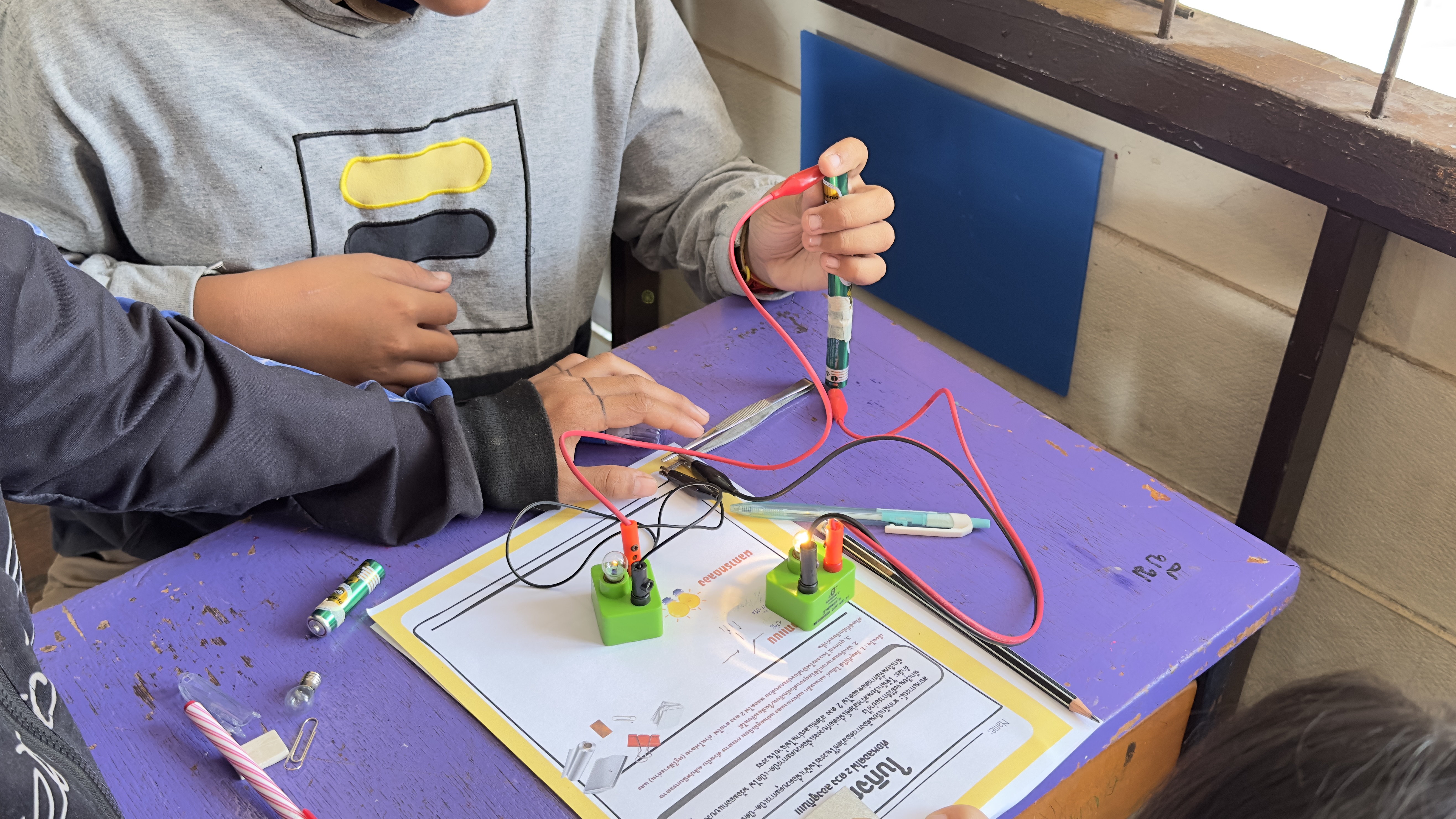
การวิจัยครั้งนี้มีวัตถุประสงค์เพื่อเปรียบเทียบความสามารถในการแก้ปัญหาทางวิทยาศาสตร์ ก่อนเรียน ระหว่างเรียนและหลังเรียน ด้วยการจัดการเรียนรู้แบบเปิด เสริมด้วยเทคนิคการเรียนรู้ไฟยน์แมน เรื่องแรงไฟฟ้าเเละพลังงานไฟฟ้า ของนักเรียนชั้นประถมศึกษาปีที่ 6 โดยกลุ่มเป้าหมายการวิจัยในครั้งนี้เป็นนักเรียนชั้นประถมศึกษาปีที่ 6 โรงเรียนขนาดเล็กแห่งหนึ่งในจังหวัดอุดรธานี สำนักงานเขตพื้นที่การศึกษาประถมศึกษาอุดรธานี เขต 4 ภาคเรียนที่ 2 ปีการศึกษา 2567 จำนวน 6 คน ซึ่งได้มาจากการเลือกแบบเจาะจง มีแบบแผนการวิจัยแบบกลุ่มเดียว เครื่องมือที่ใช้ในการวิจัยประกอบด้วย 1) การจัดการเรียนรู้แบบเปิดเสริมด้วยเทคนิคการเรียนรู้ไฟยน์แมน เรื่อง แรงไฟฟ้าและพลังงานไฟฟ้า จำนวน 6 แผน 2) แบบวัดความสามารถในการแก้ปัญหาทางวิทยาศาสตร์ชนิด 4 ตัวเลือก จำนวน 24 ข้อ โดยอ้างอิงตามแนวคิดของ Weir (1974) ประกอบด้วย 4 องค์ประกอบ ได้แก่ การระบุปัญหา การวิเคราะห์ปัญหา การนำเสนอวิธีการคิดแก้ปัญหา และการตรวจสอบผลลัพธ์ 3) แบบประเมินความสามารถในการแก้ปัญหาทางวิทยาศาสตร์ระหว่างเรียน 4) แบบประเมินด้วยวิธีการสัมภาษณ์กึ่งโครงสร้าง ผู้วิจัยวิเคราะห์ข้อมูลเชิงปริมาณจากแบบวัดความสามารถในการแก้ปัญหาทางวิทยาศาสตร์ก่อนและหลังการจัดการเรียนรู้ และวิเคราะห์เชิงคุณภาพจากแบบแบบประเมินสังเกตพฤติกรรมการแก้ปัญหาทางวิทยาศาสตร์ระหว่างเรียนและผลการสัมภาษณ์กึ่งโครงสร้างหลังเรียนจบแต่ละบทเรียนตลอด 6 แผนการจัดการเรียนรู้โดยนำข้อมูลมาบรรยายเป็น ความเรียง ผลการวิจัยพบว่า นักเรียนที่เรียนรู้ด้วยการจัดการเรียนรู้แบบปิดเสริมด้วยเทคนิคการเรียนรู้ไฟยน์แมน มีความสามารถในการแก้ปัญหาทางวิทยาศาสตร์หลังเรียน ( = 33.50, S.D.= 5.86) สูงกว่าก่อนเรียน ( = 26.72, S.D.= 5.75) จากผลการวิเคราะห์ข้อมูลความสามารถในการแก้ปัญหาทางวิทยาศาสตร์ระหว่างเรียนผ่าน 6 แผนการเรียนรู้ พบว่านักเรียนมีพัฒนาการความสามารถในการแก้ปัญหาทางวิทยาศาสตร์ที่ดีขึ้นอย่างต่อเนื่อง โดยภาพรวมและรายองค์ประกอบทั้ง 4 องค์ประกอบ จุดเด่นที่พบคือ ความสามารถในการเสนอแนวทางแก้ปัญหา และ การตรวจสอบผลลัพธ์ ของนักเรียนพัฒนาขึ้นอย่างชัดเจนและอยู่ในระดับดีในแผนการจัดการเรียนรู้ที่ 4-6 ซึ่งเป็นผลมาจากการที่นักเรียนได้ลงมือปฏิบัติและเรียนรู้ด้วยตนเอง ทำให้เกิดความเข้าใจในหลักการและวิธีการแก้ปัญหาที่ถูกต้อง
Article Details

อนุญาตภายใต้เงื่อนไข Creative Commons Attribution-NonCommercial-NoDerivatives 4.0 International License.
วารสารวิทยาศาสตร์และวิทยาศาสตร์ศึกษา (JSSE) เป็นผู้ถือลิสิทธิ์บทความทุกบทความที่เผยแพร่ใน JSSE นี้ ทั้งนี้ ผู้เขียนจะต้องส่งแบบโอนลิขสิทธิ์บทความฉบับที่มีรายมือชื่อของผู้เขียนหลักหรือผู้ที่ได้รับมอบอำนาจแทนผู้เขียนทุกนให้กับ JSSE ก่อนที่บทความจะมีการเผยแพร่ผ่านเว็บไซต์ของวารสาร
แบบโอนลิขสิทธิ์บทความ (Copyright Transfer Form)
ทางวารสาร JSSE ได้กำหนดให้มีการกรอกแบบโอนลิขสิทธิ์บทความให้ครบถ้วนและส่งมายังกองบรรณาธิการในข้อมูลเสริม (supplementary data) พร้อมกับนิพนธ์ต้นฉบับ (manuscript) ที่ส่งมาขอรับการตีพิมพ์ ทั้งนี้ ผู้เขียนหลัก (corresponding authors) หรือผู้รับมอบอำนาจ (ในฐานะตัวแทนของผู้เขียนทุกคน) สามารถดำเนินการโอนลิขสิทธิ์บทความแทนผู้เขียนทั้งหมดได้ ซึ่งสามารถอัพโหลดไฟล์บทความต้นฉบับ (Manuscript) และไฟล์แบบโอนลิขสิทธิ์บทความ (Copyright Transfer Form) ในเมนู “Upload Submission” ดังนี้
1. อัพโหลดไฟล์บทความต้นฉบับ (Manuscript) ในเมนูย่อย Article Component > Article Text
2. อัพโหลดไฟล์แบบโอนลิขสิทธิ์บทความ (Copyright Transfer Form) ในเมนูย่อย Article Component > Other
ดาวน์โหลด ไฟล์แบบโอนลิขสิทธิ์บทความ (Copyright Transfer Form)
เอกสารอ้างอิง
Bussaya, P. (2016). The effects of learning activities using the open approach on mathematical problem-solving ability and creativity of Mathayomsuksa Five Students (in Thai). Journal of Education, Burapha University, 27(3), 133-146.
Campbell, D. T., Stanley, J. C. and Gage, N. L. (1963). Experimental and quasi-experimental designs for research. Boston: Houghton Mifflin.
Feynman, R. P. (2018). Feynman lectures on computation. CRC Press.
Furtak, E. M., Seidel, T., Iverson, H. and Briggs, D. C. (2012). Experimental and quasi-experimental studies of inquiry-based science teaching: A meta-analysis. Review of Educational Research, 82(3), 300-329.
Goldstein, T. R., Lerner, M. D., Paterson, S., Jaeggi, L., Toub, T. S., Hirsh-Pasek, K. and Golinkoff, R. (2019). Stakeholder Perceptions of the Effects of a Public School-Based Theatre Program for Children with ASD. Journal for Learning through the Arts, 15(1), 33-41.
Harahap, A. R. (2020). An alternative method of online learning using the Feynman technique. Proceedings of the International Conference Labma Scientific Fair 2020 (pp. 59-69). Indonesia: LabMa, Universitas Islam Indonesia.
Iffat, G., Kader, A. and Nattinee, M. (2017). The impact of the Open Approach in enhancing students' problem-solving ability in secondary science education. Journal of Educational Psychology, 26(3), 122–137.
Khammani, T. (2014). The art of teaching: Knowledge for effective learning process management (in Thai). Bangkok: Chulalongkorn University Press.
NGSS Lead States. (2020). Next generation science standards For states, by states. The National Academies Press.
Nohda, N. (1986). A study of open-approach method in school mathematics teaching focusing on mathematical problem solving activities. Tsukuba Journal of Educational Study in Mathematics, 5, 19-31.
Nohda, N. (2000). Teaching by open-approach method in Japanese mathematics classroom. In T. Nakahara, and M. Koyama (Eds.), Proceedings 24th of the Conference of the International Group for the Psychology of Mathematics Education, 1, 39-53.
Organisation for Economic Co-operation and Development (OECD) (2013). Skills outlook 2023: Future-ready education for 21st century learners. OECD Publishing.
Phechsum, P., Sathitphakigul, A. and Bangtho, K. (2017). The effects of learning activities using the open approach on mathematical problem-solving ability of grade 8 students (in Thai). Ratchaphruek Journal, 15(1), 124-133.
Piaget, J. (1965). The moral judgment of the child. Free Press.
Polit, D. F. and Beck, C. T. (2006). The content validity index: are you sure you know what's being reported Critique and recommendations. Research in nursing & health, 29(5), 489-497.
Reyes, L., Medina, P. and Santos, R. (2021). Feynman technique: Simplifying complex ideas to improve scientific problem-solving skills. Journal of Educational Development, 35(2), 45–56.
Srisuksaard, B. (2002). Basic research (in Thai). Bangkok: Suviriyasarn.
Wanitbancha, K. (2006). Statistics for research (in Thai). Bangkok: Chulalongkorn University Press.
Wea, K. N., Dua, Y. S. and Elizabeth, A. (2023). An Exploratory Study to Investigate the Implementation of Feynman Learning Method in a Physics Classroom Setting. Journal of Innovative Science Education, 12(3), 331-339.
Weir, S. (1974). Development of problem-solving capabilities. Final Report. Cambridge, MA: Harvard University.
Winter, A. J., McAuliffe, M. B., Hargreaves, D. J., and Chadwick, G. (2009). The transition to academagogy. Retrieved 5 January 2025, from ePrints QUT: https://eprints.qut.edu.au/17367/5/17367b.pdf
