การพัฒนาผลสัมฤทธิ์ทางการเรียน ความก้าวหน้าทางการเรียน และทักษะกระบวนการ ทางวิทยาศาสตร์ขั้นสูงของนักเรียนชั้นมัธยมศึกษาปีที่ 3 ด้วยรูปแบบการเรียนรู้แบบสืบสอบร่วมกับสื่อการทดลองเสมือนจริง เรื่อง คลื่นและแสง
Article Sidebar
Main Article Content
บทคัดย่อ
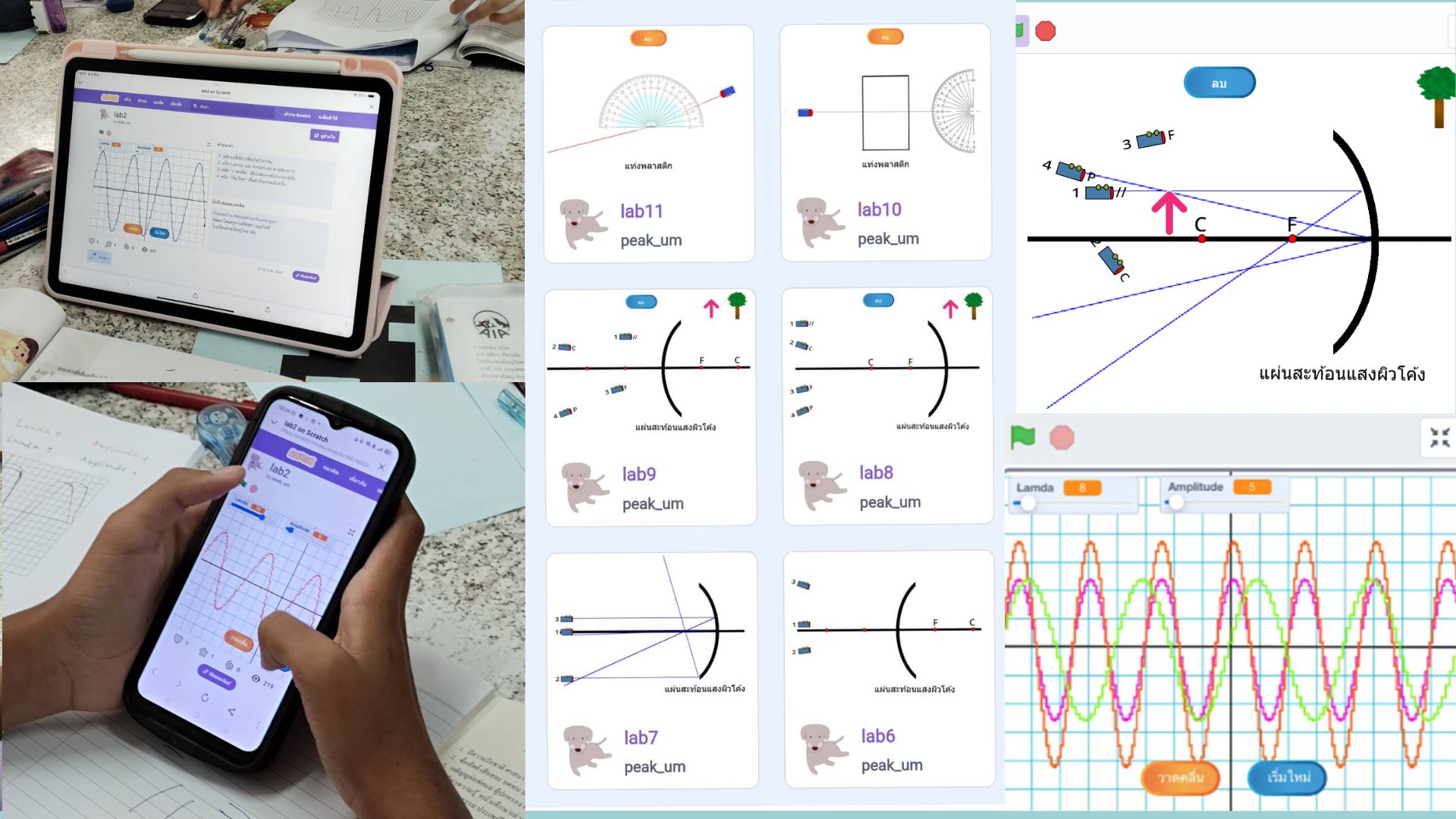
This research aimed to (1) develop and evaluate the efficiency of virtual experimental media on the topic waves and light using Scratch, for Grade-9 students, based on the 80/80 criterion, (2) investigate students’ post-instruction learning achievement against a 70% benchmark, (3) compare students’ pre- and post-instruction achievement, (4) examine students’ learning progress, (5) evaluate students’ advanced scientific process skills, (6) explore the relationship between their learning achievement and the advanced science process skills, and (7) assess students’ satisfaction with the media. The samples included two groups, (1) 45 Grade-9 students for evaluating the media’s efficiency, and (2) 159 Grade-9 students for evaluating learning outcomes, selected via cluster sampling from Hatyaiwittayalai School, Songkhla Province. The research instruments included (1) virtual experimental media on the topic of waves and light, (2) inquiry-based learning lesson plans integrated with the media, (3) pre- and post-tests of learning achievement, (4) a science process skills assessment and (5) a student satisfaction questionnaire. Data were analyzed using mean, percentage, standard deviation, t-test for dependent samples, and Pearson’s correlation coefficient. The results revealed that (1) the developed virtual experimental media had an efficiency of 83.07/82.67, exceeding the 80/80 standard. (2) the students’ average post-test score was 24.23 out of 30, significantly exceeding the 70% benchmark (21 points) at the .05 significance level, (3) students’ post-test scores were significantly higher than their pre-test scores at the .05 significance level, (4) over 80% of students demonstrated moderate to high learning gains (gain = 0.62), (5) 77.36% of students achieved good to excellent levels of advanced science process skills, (6) students’ learning achievement was positively correlated with advanced science process skills (r = 0.774) at the .05 significance level and (7) students reported high levels of satisfaction with the media.
Article Details

อนุญาตภายใต้เงื่อนไข Creative Commons Attribution-NonCommercial-NoDerivatives 4.0 International License.
วารสารวิทยาศาสตร์และวิทยาศาสตร์ศึกษา (JSSE) เป็นผู้ถือลิสิทธิ์บทความทุกบทความที่เผยแพร่ใน JSSE นี้ ทั้งนี้ ผู้เขียนจะต้องส่งแบบโอนลิขสิทธิ์บทความฉบับที่มีรายมือชื่อของผู้เขียนหลักหรือผู้ที่ได้รับมอบอำนาจแทนผู้เขียนทุกนให้กับ JSSE ก่อนที่บทความจะมีการเผยแพร่ผ่านเว็บไซต์ของวารสาร
แบบโอนลิขสิทธิ์บทความ (Copyright Transfer Form)
ทางวารสาร JSSE ได้กำหนดให้มีการกรอกแบบโอนลิขสิทธิ์บทความให้ครบถ้วนและส่งมายังกองบรรณาธิการในข้อมูลเสริม (supplementary data) พร้อมกับนิพนธ์ต้นฉบับ (manuscript) ที่ส่งมาขอรับการตีพิมพ์ ทั้งนี้ ผู้เขียนหลัก (corresponding authors) หรือผู้รับมอบอำนาจ (ในฐานะตัวแทนของผู้เขียนทุกคน) สามารถดำเนินการโอนลิขสิทธิ์บทความแทนผู้เขียนทั้งหมดได้ ซึ่งสามารถอัพโหลดไฟล์บทความต้นฉบับ (Manuscript) และไฟล์แบบโอนลิขสิทธิ์บทความ (Copyright Transfer Form) ในเมนู “Upload Submission” ดังนี้
1. อัพโหลดไฟล์บทความต้นฉบับ (Manuscript) ในเมนูย่อย Article Component > Article Text
2. อัพโหลดไฟล์แบบโอนลิขสิทธิ์บทความ (Copyright Transfer Form) ในเมนูย่อย Article Component > Other
ดาวน์โหลด ไฟล์แบบโอนลิขสิทธิ์บทความ (Copyright Transfer Form)
เอกสารอ้างอิง
Artino, A. R. Jr. (2009). Think, feel, act: Motivational and emotional influences on military students' online academic success. Journal of Computing in Higher Education, 21(2), 146–166.
Artswang, P. (2015). The Development of Virtual Chemistry Laboratory for the Properties of Elements and Compound for Mathayomsuksa 4 Students (in Thai). Master's Thesis. Nakhon Pathom: Silpakorn University.
Assawasowan, A., Butsayanon, K., Laksana, K., Phakhaphol, P., Mahaman, Y., Kulamat, K. and Phonrat, T. (2024). Effects of learning activities using inquiry-based learning with virtual museums on learning achievement and knowledge construction ability of social studies major students (in Thai). Journal of Roi Kaensarn Academy, 9(3), 249–264.
Bell, T., Urhahne, D., Schanze, S. and Ploetzner, R. (2010). Collaborative Inquiry Learning: Models, Tools, and Challenges. International Journal of Science Education, 32(3), 349–377.
Biswal, S. and Behera, B. (2023). Enhancing Science Process Skills through Inquiry-Based Learning: A Comprehensive Literature Review and Analysis. International Journal of Science and Research , 12(8), 1583–1589.
Boonchaiyuthasak, J. (2021). The effectiveness of learning management using virtual laboratory on acid and base solutions for Mathayomsuksa 1 students (in Thai). The 1st National Conference on Sarattaprasanmit Research: Educational Research and Innovation Under the New Normal (pp. 125-135). Bangkok: Srinakharinwirot University.
Boonlert, S. (2013). The study of learning achievement and satisfaction for Mathayomsuksa 1 students using virtual laboratory for acid – base solution (in Thai). Master's Thesis. Bangkok: Srinakharinwirot University.
Borg, W. R. and Gall, M. D. (1983). Educational research: An introduction (4th ed.). Longman.
Bybee, R. W., Taylor, J. A., Gardner, A., Van Scotter, P., Powell, J. C., Westbrook, A. and Landes, N. (2006). The BSCS 5E instructional model: Origins, effectiveness, and applications. Colorado Springs, CO: BSCS.
Chiu, J. L., DeJaegher, C. J. and Chao, J. (2015). The effects of augmented virtual science laboratories on middle school students' understanding of gas properties. Computers & Education, 85, 59–73.
Chotimuk, A. and Khochon, K. (2024). The development of inquiry-based learning activities integrated with a virtual laboratory to enhance scientific explanation ability of Grade 11 students (in Thai). Journal of Mahasarakham Rajabhat University, 18(1), 252–266.
Cronbach, L. J. (1951). Coefficient alpha and the internal structure of tests. Psychometrika, 16(3), 297–334.
Dalgarno, B., Bishop, A. G., Adlong, W. and Bedgood, D. R. Jr. (2009). Effectiveness of a virtual laboratory as a preparatory resource for distance education chemistry students. Computers & Education, 53(3), 853-865.
Dolapcioglu, S. and Subasi, M. (2022). The relationship between scientific process skills and science academic achievement: A meta-analysis study. Journal of Science Learning, 5(2), 363–372
Fredricks, J. A., Blumenfeld, P. C. and Paris, A. H. (2004). School engagement: Potential of the concept, state of the evidence. Review of Educational Research, 74(1), 59–109.
Gunawan, G., Harjono, A., Sahidu, H. and Suranti, N. M. Y. (2019). Guided Inquiry Model through Virtual Laboratory to Enhance Students’ Science Process Skills on Heat Concept. International Journal of Instruction, 12(2), 307–318.
Hake, R. R. (1998). Interactive-engagement versus traditional methods: A six-thousand-student survey of mechanics test data for introductory physics courses. American Journal of Physics, 66(1), 64-74.
Herga, N. R. and Dinevski, D. (2012). Virtual laboratory in the role of visualization of chemistry experimental work. Turkish Online Journal of Educational Technology, 1(4), 113–120.
Institute for the Promotion of Teaching Science and Technology. (2021). A teacher’s manual for assessing science process skills. Institute for the Promotion of Teaching Science and Technology
Joshi, A., Kale, S., Chandel, S. and Pal, D. K. (2015). Likert Scale: Explored and explained. British Journal of Applied Science & Technology, 7(4), 396–403.
Kaewkoy, J. (2011). Effects of inquiry-based virtual laboratory with and without guidance on analytical thinking and science learning achievement of secondary school students. Journal of Science Education, 53(3), 321-334.
Kamcharean, C., Kuadnok.K. (2023). Development of Fundamental Physics Laboratory by using Interactive Simulations (in Thai). Journal of Library and Information Science Srinakharinwirot University, 16(2), 51-61
Klankeson, P. (2017). The development of science activity packages to enhance scientific process skills using inquiry-based learning with virtual media (in Thai). Master’s thesis. Srinakharinwirot University.
Lazonder, A. W. and Harmsen, R. (2016). Meta-Analysis of Inquiry-Based Learning: Effects of Guidance. Review of educational research, 86(3), 681-718
Maneekham, S. (2008). Effects of using virtual field trips through virtual classrooms, Strand 4: History, Social Studies, Religion and Culture Learning Area for lower secondary school students (in Thai). Master's Thesis. Bangkok: Srinakharinwirot University.
Makransky, G., Borre-Gude, S. and Mayer, R. E. (2019). Motivational and cognitive benefits of training in immersive virtual reality based on multiple assessments. Journal of Computer Assisted Learning, 35(6), 691–707.
Mazur, E. (1997). Peer instruction: A user's manual. Pearson Education.
Mery, B., Nurazidawati, M. A., Dilva, H., Yovita. and Nasution, D. N. (2024). Development of Scratch Learning Media to Improve Scientific Literacy and Computational Thinking in Primary Education in The Society 5.0 Era. Journal of Natural Science and Integration, 7(1), 94-110.
Ministry of Education. (2017). Indicators and core science content (Revised Edition 2017) according to the Basic Education Core Curriculum B.E. 2551 (A.D. 2008) (in Thai). Bangkok: Cooperative League of Thailand Press
National Institute of Educational Testing Service (Public Organization). (2023). O-NET 2023 examination results report (in Thai). Retrieved 12 December 2023, from NIETS; https://www.niets.or.th
National PISA Center, Institute for the Promotion of Teaching Science and Technology. (2021). PISA 2018 assessment results: Reading, mathematics, and science (in Thai). Bangkok: Institute for the Promotion of Teaching Science and Technology (IPST).
Nitko, A. J. and Brookhart, S. M. (2014). Educational Assessment of Students (7th ed.). Pearson Education.
OECD. (2019). PISA 2018 results (Volume I): What students know and can do. Paris: OECD Publishing.
Phromwong, C. (2013). Testing the efficiency of media or teaching kits. Silpakorn Educational Research Journal, 5(1), 7–20.
Rutten, N., van Joolingen, W. R. and van der Veen, J. T. (2012). The learning effects of computer simulations in science education. Computers & Education, 58(1), 136–153.
Roberts, D. and Lau, T. (2017). The effects of hands-on activities on students' science achievement: A meta-analysis. Journal of Research in Science Teaching, 54(8), 1033-1052
Siripattanakulkhajorn, S. (2004). The development of a virtual classroom model using simulation with practice on television program production (in Thai). Doctoral Dissertation. Bangkok: Srinakharinwirot University.
Smetana, L. K. and Bell, R. L. (2012). Computer Simulations to Support Science Instruction and Learning: A critical review of the literature. International Journal of Science Education, 34(9),1337-1370
Smith, J. and Johnson, R. (2018). Challenges and opportunities in science education reform. Routledge.
Soratyatorn, J. (2022). Development of inquiry-based learning activities with virtual laboratory to enhance science concepts under the COVID-19 pandemic situation for Prathomsuksa 6 students (in Thai). Master's Thesis. Phitsanulok: Naresuan University.
Srirasa, N., Chaiprasert. P. and Sirisawat, C. (2021). The Learning Achievement and Satisfaction of Upper Secondary School Students on Learning Management of Inquiry-Based Learning (5E) with an Electronic Book (in Thai). Journal of Education Studies, 49(4), 1-13
Srisa-ard, B. (2010). Introduction to research (8th ed.). Bangkok: Suwiriyasarn.
Suman, S. (2020). Relationship between science process skills and achievement in science of secondary school students. International Journal of Creative Research Thoughts, 8(10), 3719–3725.
Zacharia, Z. C. and Olympiou, G. (2011). Physical versus virtual manipulative experimentation in physics learning. Learning and Instruction, 21(3), 317-331.
