
การพัฒนามโนมติ เรื่อง ฮอร์โมน โดยใช้การจัดการเรียนรู้แบบสืบเสาะ ร่วมกับผังมโนมติสำหรับผู้เรียนชั้นมัธยมศึกษาตอนปลาย
Article Sidebar
Main Article Content
บทคัดย่อ
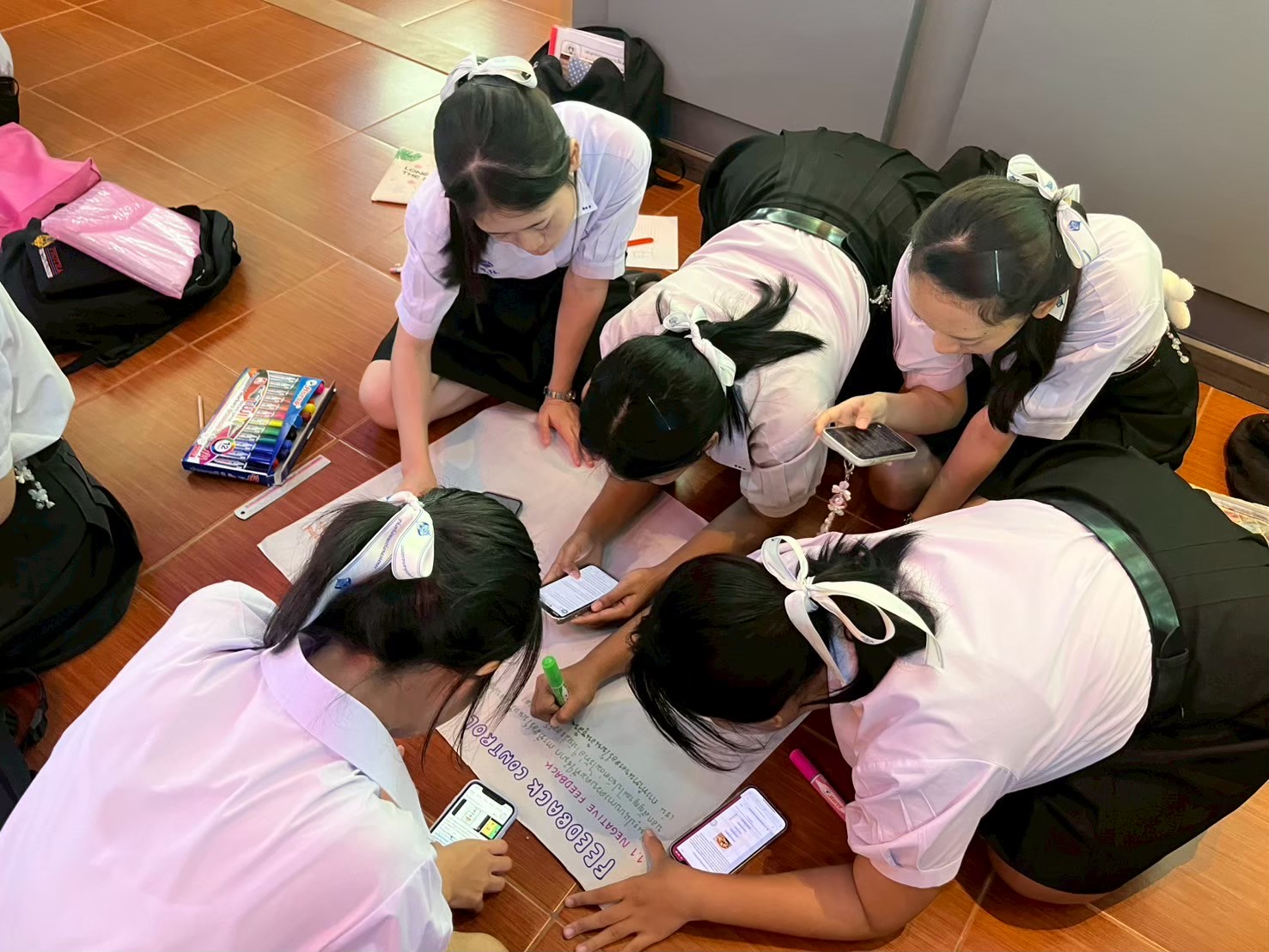
การวิจัยครั้งนี้มีวัตถุประสงค์เพื่อเปรียบเทียบมโนมติเรื่องฮอร์โมนของผู้เรียน ศึกษาพัฒนาการความก้าวหน้าทางการเรียนรายบุคคล และประเมินความพึงพอใจของผู้เรียนชั้นมัธยมศึกษาตอนปลายที่มีต่อการจัดการเรียนรู้แบบสืบเสาะ 5 ขั้นร่วมกับการใช้ผังมโนมติ เรื่อง ฮอร์โมน ในรายวิชาชีววิทยา กลุ่มศึกษาในการวิจัยนี้ ได้แก่ นักเรียนชั้นมัธยมศึกษาปีที่ 6 แผนการเรียนวิทยาศาสตร์–คณิตศาสตร์ ภาคเรียนที่ 1 ปีการศึกษา 2568 จำนวน 40 คน ได้มาโดยวิธีการชักตัวอย่างแบบเจาะจง เครื่องมือที่ใช้ในการวิจัยประกอบด้วยแผนการจัดการเรียนรู้จำนวน 4 แผน และแบบทดสอบวัดมโนมติ เรื่อง ฮอร์โมน สถิติพรรณนา (descriptive statistics) ที่ใช้ในการวิเคราะห์ข้อมูล ได้แก่ ความถี่ ค่าเฉลี่ย ค่าร้อยละ ส่วนเบี่ยงเบนมาตรฐาน และสถิติทดสอบ t–test for dependent samples ผลการศึกษาพบว่า คะแนนผลสัมฤทธิ์ทางการเรียนเฉลี่ยหลังเรียนสูงกว่าก่อนเรียนอย่างมีนัยสำคัญทางสถิติที่ระดับ .05 (t.05, 39 = 19.166 และ p < .05) เมื่อพิจารณาระดับความก้าวหน้าทางการเรียนรายบุคคล พบว่า ผู้เรียนมีความก้าวหน้าในระดับปานกลางขึ้นไปคิดเป็นร้อยละ 95 และระดับต่ำคิดเป็นร้อยละ 5 นอกจากนี้ผู้เรียนมีความพึงพอใจต่อการจัดการเรียนรู้ในภาพรวมอยู่ในระดับมากที่สุด (4.82±0.43) โดยมีความพึงพอใจครอบคลุมทั้งด้านเนื้อหา ด้านการจัดการเรียนรู้ ด้านสื่อการจัดการเรียนรู้ และด้านการวัดและประเมินผล
Article Details

อนุญาตภายใต้เงื่อนไข Creative Commons Attribution-NonCommercial-NoDerivatives 4.0 International License.
วารสารวิทยาศาสตร์และวิทยาศาสตร์ศึกษา (JSSE) เป็นผู้ถือลิสิทธิ์บทความทุกบทความที่เผยแพร่ใน JSSE นี้ ทั้งนี้ ผู้เขียนจะต้องส่งแบบโอนลิขสิทธิ์บทความฉบับที่มีรายมือชื่อของผู้เขียนหลักหรือผู้ที่ได้รับมอบอำนาจแทนผู้เขียนทุกนให้กับ JSSE ก่อนที่บทความจะมีการเผยแพร่ผ่านเว็บไซต์ของวารสาร
แบบโอนลิขสิทธิ์บทความ (Copyright Transfer Form)
ทางวารสาร JSSE ได้กำหนดให้มีการกรอกแบบโอนลิขสิทธิ์บทความให้ครบถ้วนและส่งมายังกองบรรณาธิการในข้อมูลเสริม (supplementary data) พร้อมกับนิพนธ์ต้นฉบับ (manuscript) ที่ส่งมาขอรับการตีพิมพ์ ทั้งนี้ ผู้เขียนหลัก (corresponding authors) หรือผู้รับมอบอำนาจ (ในฐานะตัวแทนของผู้เขียนทุกคน) สามารถดำเนินการโอนลิขสิทธิ์บทความแทนผู้เขียนทั้งหมดได้ ซึ่งสามารถอัพโหลดไฟล์บทความต้นฉบับ (Manuscript) และไฟล์แบบโอนลิขสิทธิ์บทความ (Copyright Transfer Form) ในเมนู “Upload Submission” ดังนี้
1. อัพโหลดไฟล์บทความต้นฉบับ (Manuscript) ในเมนูย่อย Article Component > Article Text
2. อัพโหลดไฟล์แบบโอนลิขสิทธิ์บทความ (Copyright Transfer Form) ในเมนูย่อย Article Component > Other
ดาวน์โหลด ไฟล์แบบโอนลิขสิทธิ์บทความ (Copyright Transfer Form)
เอกสารอ้างอิง
Anastasiou, D., Wirngo, C. N. and Bagos, P. (2024). The effectiveness of concept maps on students’ achievement inscience: A meta–analysis. Educational and Psychological Reviews, 36(2), 39.Bell, R. L., Smetana, L. . and Binns, I. . (2005) Simplifying inquiry instruction. The Science Teacher, 72(7), 30–33.
Bramwell–Lalor, S. and Rainford, M. (2014). The effects of using concept mapping for improving advanced level biology students’ lower– and higher–order cognitive skills. International Journal of Science Education, 36(5), 839–864.
Bybee, R. W. (2024). The 5E instructional model: A learning cycle for all students. USA: NSTA Press.
Bybee, R. W., Taylor, J. A., Gardner, A., Van Scotter, P., Powell, J. C., Westbrook, A. and Landes, N. (2006). The BSCS 5E instructional model: Origins and effectiveness. USA: BSCS.
Cakir, M. (2008). Constructivist approaches to learning in science and their implications for science pedagogy: A theoretical review. International Journal of Environmental and Science Education, 3(4), 193–206.
Chengere, A. M., Bono, B. D., Zinabu, S. A. and Jilo, K. W. (2025). Enhancing secondary school students’ science process skill through guided inquiry–based laboratory activities in biology. PLoS ONE, 20(4), e0320692.
D’Avanzo, C. (2008). Biology concept inventories: believing is seeing. Advances in Physiology Education, 32(4), 273–282.
Demirci, C. (2012). The effect of inquiry–based learning approach. Educational Sciences: Theory & Practice, 12(2), 1138–1143.
Hake, R. R. (1998). Interactive–engagement versus traditional methods: A six–thousand–student survey of mechanics test data for introductory physics courses. American Journal of Physics, 66(1), 64–74.
Hattie, J. and Donoghue, G. M. (2022). Learning strategies: A synthesis of research. London: Routledge.Khazem, D. (2025). Systematic integration of concept maps in 21st–century pedagogy: Tools for synthesis and analysis. USA: Academic Press.
Kinchin, I. M. (2000). Concept mapping in biology. Journal of Biological Education, 34(2), 61–68.
Kinchin, I. M. (2016). Visualising powerful knowledge to develop the expert student: A knowledge structures perspective on teaching and learning at university. Rostterdam: Sense Publishers.
Kuder, G. F. and Richardson, M. W. (1937). The theory of the estimation of test reliability. Psychometrika, 2(3), 151–160.
Likert, R. (1932). A Technique for the Measurement of Attitudes. Archives of Psychology, 140, 1–55.
Linn, R. L. and Gronlund, N. E. (2000). Measurement and assessment in teaching. Upper Saddle River, NJ: Merrill/Prentice Hall.
Mason, C. L. (1992). Concept Mapping: A Tool to Develop Reflective Science Instruction. Science Education, 76(1), 51–63.
Novak, J. D. and Cañas, A. J. (2008). The theory underlying concept maps and how to construct and use them (Technical Report No. IHMC CmapTools 2006–01 Rev 01–2008). Institute for Human and Machine Cognition. Retrieved 15 December 2025, from Cmap: http://cmap.ihmc.us/Publications /ResearchPapers/ TheoryUnderlyingConceptMaps.pdf
Novak, J. D. and Gowin, D. B. (1984). Learning how to learn. New York: Cambridge University Press.
OECD. (2023). OECD skills Outlook 2023: Skills for a resilient youth. USA: OECD Publishing.
Piaget, J. (1970). Science of education and the psychology of the child. New York: Orion Press.
Posner, G. J., Strike, K. A., Hewson, P. W. and Gertzog, W. A. (1982). Accommodation of a scientific conception: Toward a theory of conceptual change. Science Education, 66(2), 211–227.
Sawyer, R. K. (2006). The Cambridge handbook of the learning sciences. USA: Cambridge University Press.
Schwendimann, B. A. (2021). Concept mapping as a tool for learning and assessment in biology education. USA: Springer.
Tanner, K. D. (2010). Order matters: using the 5E model to align teaching with how people learn. CBE—Life Sciences Education, 9(3), 159–164.
Tripto, J., Assaraf, O. B. Z. and Amit, M. (2013). Mapping what they know: Concept maps as an effective tool for assessing students’ systems thinking. American Journal of Operations Research, 3(1), 245–258.
Vagias, W. M. (2006). Likert–type scale response anchors. Clemson University: International Initiative for Tourism & Outcomes of Leisure. USA: Clemson University.
Vygotsky, L. S. (1978). Mind in society: The development of higher psychological processes. Cambridge: Harvard University Press.
Wallace, J. D. and Mintzes, J. J. (1990). The concept map as a research tool: Exploring conceptual change in biology. Journal of Research in Science Teaching, 27(10), 1033–1052.
